Advice Center
Why pipes freeze in Aurora homes even with the heat on
A warm living room doesn't protect a pipe inside a cold exterior wall. This guide explains how freezes happen in heated Aurora homes, which spots fail first during an arctic front, and the fixes that actually work.
By Mavis Vickery, Advice Center EditorUpdated October 18, 20266 minute read
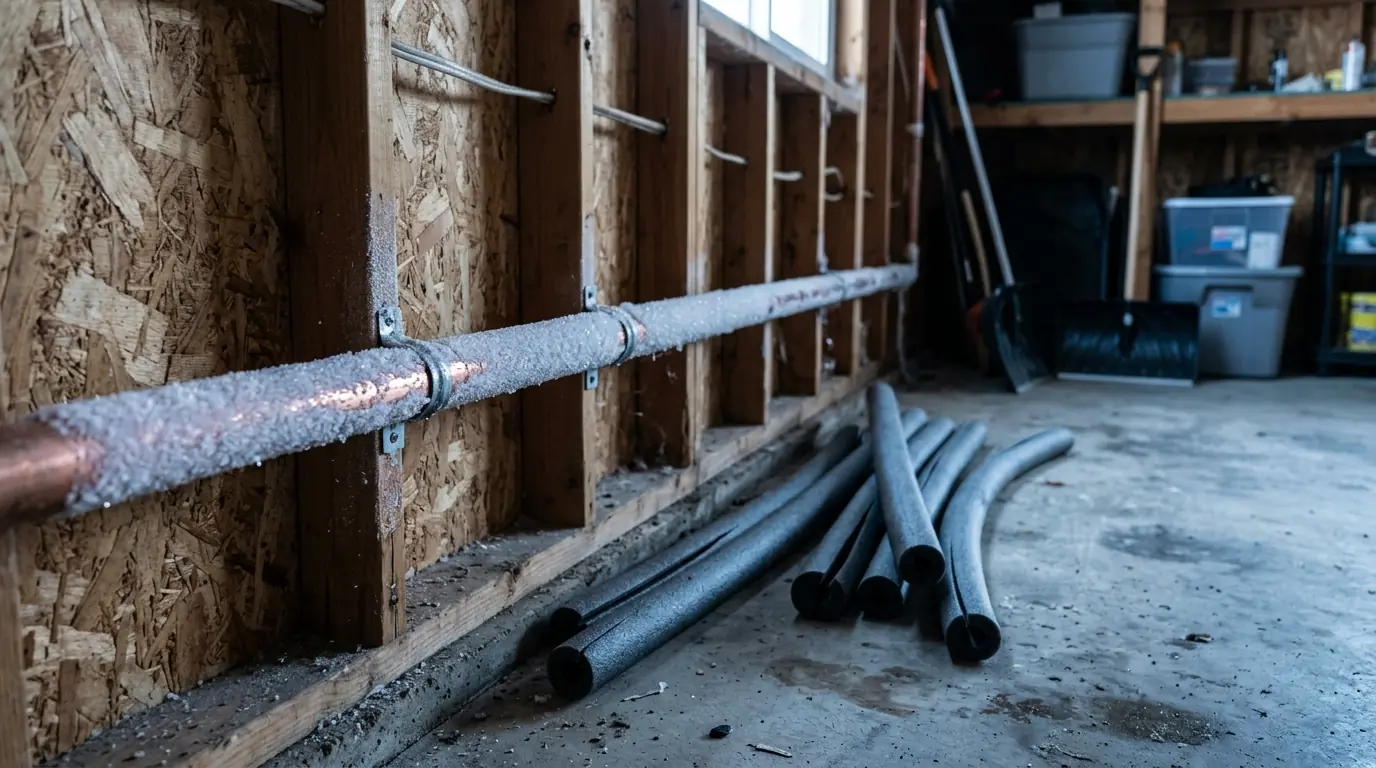
It surprises a lot of people. The furnace is running, the thermostat reads 68, and a pipe still freezes. In Aurora it happens most often during the hard arctic fronts that slide down the Front Range, when the temperature falls fast and the wind finds every gap in the house. Heat in the living space doesn't protect a pipe that sits outside it. Here is why freezes happen in heated homes, where they happen, and what prevents them.
Why does a heated house still get frozen pipes?
A pipe freezes when the water inside it loses heat faster than the space around it can replace it. Your thermostat measures the air in a hallway, not the air inside the exterior wall behind your kitchen sink. In that wall, a pipe may have only a few inches of insulation between it and the siding. If there is a gap in that insulation, or a draft leaking through the framing, the pipe can sit close to the outdoor temperature for hours.
Wind makes it worse. Moving air strips heat from a pipe much faster than still air does, so a pipe in a drafty spot can freeze on a night that would be harmless if it were calm. Walls that take the brunt of winter wind, and plumbing near a garage door that opens and closes all day, are frequent trouble spots for that reason.
Speed matters too. On December 22, 2022, an arctic front dropped Denver to 24 degrees below zero, with a 37 degree temperature drop in a single hour. Normal January lows in the area are around 18 to 19 degrees. A house that handles an ordinary cold night without trouble can lose the battle when the temperature falls that far, that fast, before anyone has time to open cabinets or start dripping faucets.
Where do pipes freeze first in Aurora homes?
| Location | Why it freezes | What usually helps |
|---|---|---|
| Kitchen sink on an outside wall | Pipes run in the exterior wall, and the closed cabinet blocks room heat | Open the cabinet doors and run a thin stream on very cold nights |
| Garage walls and ceilings | Garages are unheated, and the big door lets cold air rush in | Keep the door closed and insulate and seal the wall cavity |
| Basement rim joists | The framing band on top of the foundation is often poorly sealed | Seal the gaps and insulate the rim joist where pipes run |
| Crawlspaces | Vents and thin or torn insulation let outdoor air in | Close vents for winter and insulate exposed pipes |
| Hose bibs and sillcocks | The valve sits in or just through the exterior wall | Remove hoses, use frost-free sillcocks and add insulated covers |
| Sprinkler backflow devices | The brass assembly sits fully above ground | Shut off, drain and winterize before the first hard freeze |
Bonus rooms over garages, floors that hang out past the foundation, and plumbing in attics are also common in two-story homes built from the 1980s onward. If a bathroom sits above an unheated space, the supply lines in its floor deserve a look before winter.
The hose bib mistake that floods basements in spring
A frost-free sillcock keeps its valve seat far back inside the wall, in heated space, with a long stem reaching out to the handle. It drains itself after you shut it off, but only if nothing is attached. Leave a hose connected and water stays trapped in the stem, freezes and splits the pipe inside the wall. Because the valve is closed, nothing leaks all winter. The first time you turn it on in spring, water pours into the wall or the basement ceiling instead of out the spout.
- Disconnect every hose before the first hard freeze, which in Aurora usually means by late October.
- If your home still has an older standard hose bib with a separate indoor shutoff, close the indoor valve, then open the outdoor spigot to drain it and leave it open for the winter.
- Check that each sillcock slopes slightly downward toward the outside so it can drain.
- The first time you open each spigot in spring, have someone inside watch the wall or ceiling behind it for drips.
What actually prevents frozen pipes?
Most freezes start at a handful of weak points, so fixing those few spots does more than anything else. Start with the places in the table above and work in from the coldest walls.
- Seal air leaks first. Caulk or foam the gaps where pipes pass through exterior walls and rim joists. Insulation can't do its job while cold air blows straight past it.
- Insulate exposed pipes in garages, crawlspaces and unfinished basements with foam sleeves sized to the pipe, and tape the seams and joints.
- Use heat cable on pipes that can't be protected any other way. Choose a self-regulating cable made for water pipes, follow the instructions exactly and plug it into a GFCI outlet.
- On nights forecast well below zero, open sink cabinets on outside walls and let a pencil-thin stream run from faucets on those walls. Moving water is much harder to freeze, and an open faucet relieves pressure if ice does form.
- If you travel, keep the heat at 55 degrees or higher and close the main water valve while you are gone.
- For a pipe that freezes every winter, consider moving it into heated space. It costs more once and ends the problem for good.
Buy an inexpensive wireless thermometer and put the sensor in the coldest spot that holds pipes, such as the garage wall or the crawlspace. When an arctic front is on the way, you'll see that spot approaching freezing before the pipe does, and you'll have time to act.
How do you know a pipe has frozen, and what should you do?
The first sign is usually a faucet that gives a trickle or nothing at all while others in the house work normally. You may see frost on an exposed pipe or a slight bulge in it. If one fixture is dead on a bitter morning, assume a freeze and act before the ice thaws on its own, because a split often shows itself only when water starts moving again.
- Open the affected faucet so melting water has somewhere to go.
- Warm the pipe gently with a hair dryer, warm towels or a space heater kept well away from anything that can burn. Start near the faucet and work back toward the frozen section.
- Never use a torch or any open flame. It can start a fire inside the wall and can damage the pipe and its fittings.
- Know where your main shutoff is before you start, in case the pipe has already split and begins to spray as it thaws.
If you can't find the frozen section, if it is buried inside a finished wall or ceiling, or if a pipe has already cracked, close the main and call a plumber. We thaw and repair frozen lines through every cold snap, and once the water is back on we can show you which spots in your house to protect so it doesn't happen again next winter.
Questions readers ask about this
At what outdoor temperature do pipes in an Aurora house start to freeze?
There's no single number, because insulation, drafts and wind matter as much as the thermometer. As a rough rule, risk climbs once temperatures sit in the low 20s or colder for several hours, and it rises sharply in the teens and below zero. Pipes in garages, crawlspaces and exterior walls fail first, often well before pipes anywhere else in the house.
Should I drip every faucet in the house during a cold snap?
No. Drip only the faucets on exterior walls or above unheated spaces, since those are the lines at risk. A pencil-thin stream of both hot and cold through a single handle faucet is enough. Dripping every fixture wastes water and does little for pipes that already sit in warm interior walls.
Can PEX pipe freeze and burst like copper does?
PEX can freeze, but it stretches as ice forms, so it splits far less often than copper or galvanized pipe. The weak points are the brass or plastic fittings and the valves on either end, which can crack when the ice pushes against them. A frozen PEX line still needs thawing, and its fittings still need checking afterward.
Services related to this guide
Frozen Pipe Thawing & Repair
Frozen water lines thawed safely without open flame, then checked for splits and repaired before the ice turns into a flood.
Learn morePipe Freeze Protection
Pipe insulation, heat cable, rerouting and winter shutdown plans that keep water lines from freezing in deep cold.
Learn moreOutdoor Faucet & Sillcock Repair
Leaking hose bibs and freeze-damaged sillcocks repaired or replaced with frost-free valves built for Colorado winters.
Learn moreRather have a plumber look at it?
Call any time. We answer around the clock.