Leaks & pipes
Leak detection in Aurora, CO
A water bill that jumps for no reason or a stain spreading across the ceiling means water is going somewhere it should not. We find the leak with listening gear, thermal imaging and pressure tests, so the repair opening is as small as possible.
SERVICE PLATE
- Service
- Leak Detection
- Typical range
- $145 to $265
- Area
- Aurora and the east metro
- Hours
- Answered 24/7
- Phone
- (720) 894-1012
Brands we work on every week
Professional leak detection finds hidden leaks without tearing out walls or floors on a hunch. We start by confirming a leak with the water meter, then isolate the system with pressure tests and pinpoint the spot with acoustic and thermal tools. Most Aurora detection visits cost $185 to $485 and end with a marked location.
Warning signs
Clues that water is leaking where you cannot see it
The water meter moves with everything off
Turn off every tap and appliance, then watch the meter's small leak indicator for a few minutes. If it spins, water is flowing somewhere in the system.
A higher bill without more use
A jump in your Aurora Water bill outside sprinkler season, with no change in household habits, is one of the earliest signs of a hidden supply leak.
Stains, bubbling paint or soft drywall
Water travels along framing before it shows itself, so a stain may sit a few feet from the actual leak. That is why pinpointing matters before anyone cuts drywall.
A musty smell in one room
A persistent damp odor in a closet, basement corner or bathroom often means slow moisture behind a surface. Mold can follow if the leak runs long enough.
The sound of running water
Hearing water moving inside a wall or under the floor when nothing is running is a strong hint of an active supply leak under pressure.
Unexplained wet spots in the yard
A soggy patch of lawn that never dries, or grass that stays greener in one strip, can point to a leak in the buried service line or sprinkler supply.
Step by step
How a leak detection visit works
- 01
Confirm a leak exists
We shut off fixtures and watch the meter's leak indicator. If it moves, we know water is escaping and roughly how fast it is going.
- 02
Isolate the source
We close valves to separate the hot side, cold side, irrigation and service line, then pressure test sections to find the one losing water.
- 03
Pinpoint the location
Acoustic gear, thermal imaging and moisture readings narrow the leak to a specific spot on the wall, floor, ceiling or yard.
- 04
Mark and explain
We mark the leak, show you the readings, explain what likely failed and outline the repair choices, with prices for each option.
- 05
Repair if you approve
Many leaks can be repaired the same visit through a small access opening. Larger jobs are scheduled with a clear scope and price.
The tools that let us find leaks without guessing
Acoustic listening gear picks up the hiss water makes as it escapes a pressurized pipe. Through a floor or wall, the sound is faint, but a sensitive ground microphone and headphones can narrow a leak to a small area. Thermal imaging adds another view: hot water leaks show as warm spots, and evaporating moisture often shows as cool patches on drywall.
Moisture meters confirm what the camera suggests by reading the water content of drywall, wood and subfloor. For drain leaks, which are not under pressure, we may use a sewer camera or a dye test instead. Combining methods is what turns a guess into a confident mark on the wall or floor.
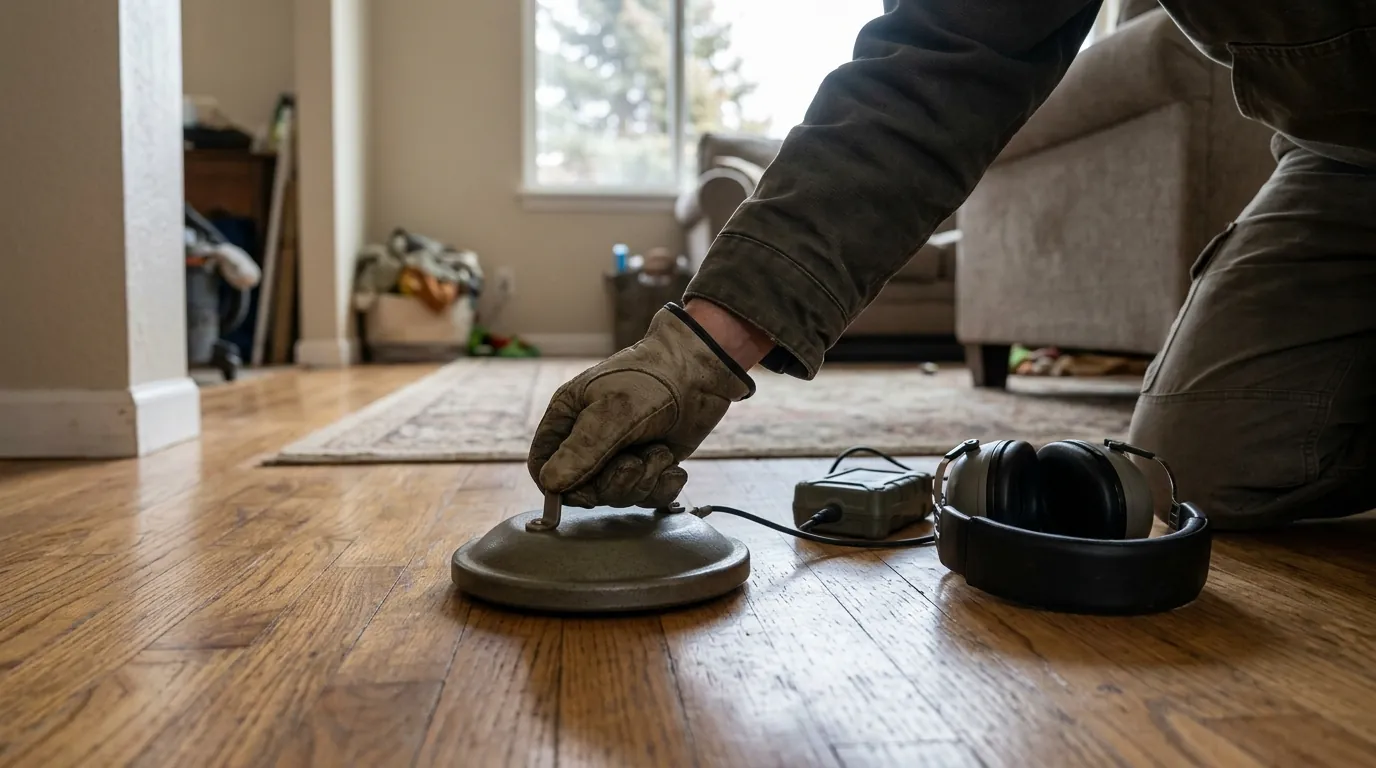
Isolating the system narrows the search fast
Before we listen anywhere, we figure out which part of the plumbing is losing water. Closing the valve at the water heater tells us whether the leak is on the hot side. Shutting off the irrigation supply rules the sprinkler system in or out. A pressure test on individual sections confirms which branch is dropping pressure.
This step saves the most time and money. Instead of sweeping the entire house with listening gear, we focus on the one section that is actually losing water. In many homes, that alone points to a single bathroom, a run under the kitchen, or the buried line between the meter and the foundation.
What happens once the leak is found
We mark the spot and explain what we think failed: a pinhole in copper, a split fitting, a cracked PEX connection or a failing joint on older pipe. Then we give you options. Some leaks call for a small access opening and a quick repair. Others are a sign that a whole run of aging pipe is wearing out.
If the leak is under a concrete slab, we talk through slab repair options in detail. If it is in the service line in the yard, we discuss spot repair versus replacing the line. You decide what happens next, and the location we found does not change, so the detection work is still useful whichever repair route you choose.
Aurora notes
Why hidden leaks are common in Aurora homes
Original Aurora near Colfax has many 1940s and 1950s homes with galvanized steel supply pipe, which corrodes from the inside and develops pinholes at threaded joints. Southeast Aurora homes built roughly 1978 to 1995 may have polybutylene, the gray plastic supply pipe known for failing at its fittings. Both are frequent sources of leaks that start small and hide inside walls or ceilings.
Front Range expansive clay soils swell and shrink with moisture, and that movement can stress buried water lines and pipes under slabs. Many Aurora homes also have finished basements, so a leak above a basement ceiling can soak drywall and carpet before anyone notices. Checking your water meter for movement once in a while is a simple way to catch problems early.
Pricing
How much does leak detection cost in Aurora?
TYPICAL AURORA PRICE RANGES
| Leak confirmation and isolation testing | $145 to $265 |
|---|---|
| Electronic leak detection inside the home | $185 to $485 |
| Slab leak location | $285 to $585 |
| Buried service line leak location | $265 to $545 |
| Small access opening and pipe repair after detection | $285 to $745 |
These are typical Aurora ranges, not a quote. Your price depends on the home, the leak and what we find during testing.
- Size of the search areaA leak isolated to one bathroom is quicker to pinpoint than a slow leak somewhere in a large home with several plumbing zones.
- Type of leakPressurized supply leaks are easier to hear. Slow drain leaks or very small drips may need camera work, dye tests or several readings.
- Floor and wall materialsTile, hardwood and thick concrete muffle sound differently, so some surfaces take more time and more methods to read accurately.
- Repair scopeDetection is priced separately from the repair. The fix depends on pipe material, access and how much drywall or flooring has to be opened.
Compare more jobs in our plumbing price guide.
Questions
Leak Detection questions from Aurora homeowners
How do I check my water meter for a hidden leak?
Turn off every faucet, appliance and the sprinkler system. Find the meter and look for the small triangle or dial that spins with low flow. If it moves over several minutes, water is leaving the system somewhere. Write down the reading and check again in an hour to confirm.
Will you have to cut open my walls to find a leak?
Usually not to find it. Our detection tools work through drywall, tile and concrete. Once the leak is pinpointed, a small access opening is often needed to repair the pipe. Because we know where to cut, that opening is much smaller than exploratory demolition.
Can a leak be hidden in a finished basement ceiling?
Yes. Supply lines and drains for upstairs bathrooms often run through basement ceilings, and water can travel along joists before staining the drywall. We use thermal imaging and moisture readings to locate the source above the finished ceiling before any opening is made.
Is high water pressure a cause of leaks?
It can be. Pressure that runs too high strains fittings, valves and appliance hoses, and repeated spikes speed up wear. If we find pressure above normal during detection, we may recommend checking the pressure reducing valve or adding an expansion tank.
Do you find sprinkler system leaks too?
We can find leaks in the irrigation supply line and backflow area as part of isolating the system. If the sprinkler system turns out to be the source, we tell you and help with repairs on the supply side up to the backflow assembly.
Related work
Other plumbing jobs that often go with this one
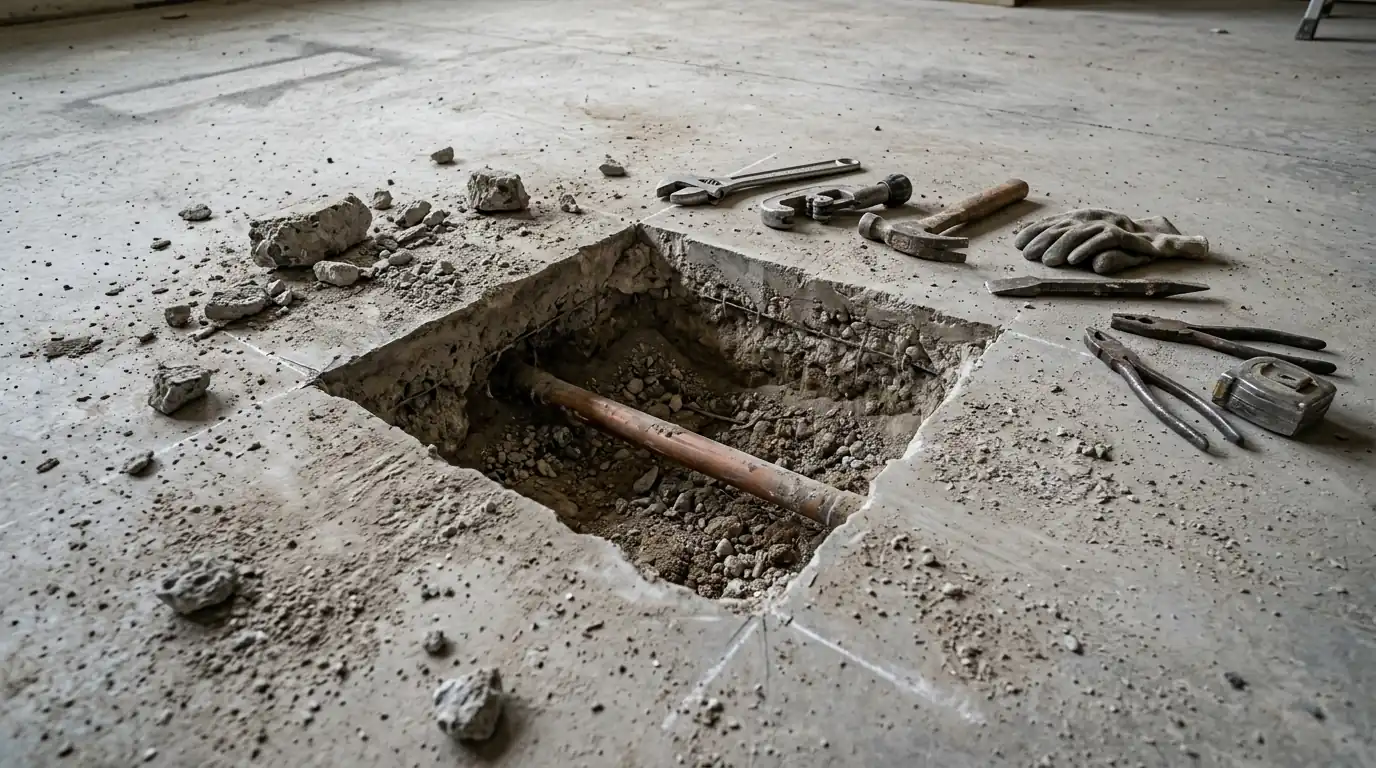
Slab Leak Repair
Leaks under concrete slabs repaired by spot access, rerouting through walls or ceilings, or replacing the affected lines.
Learn more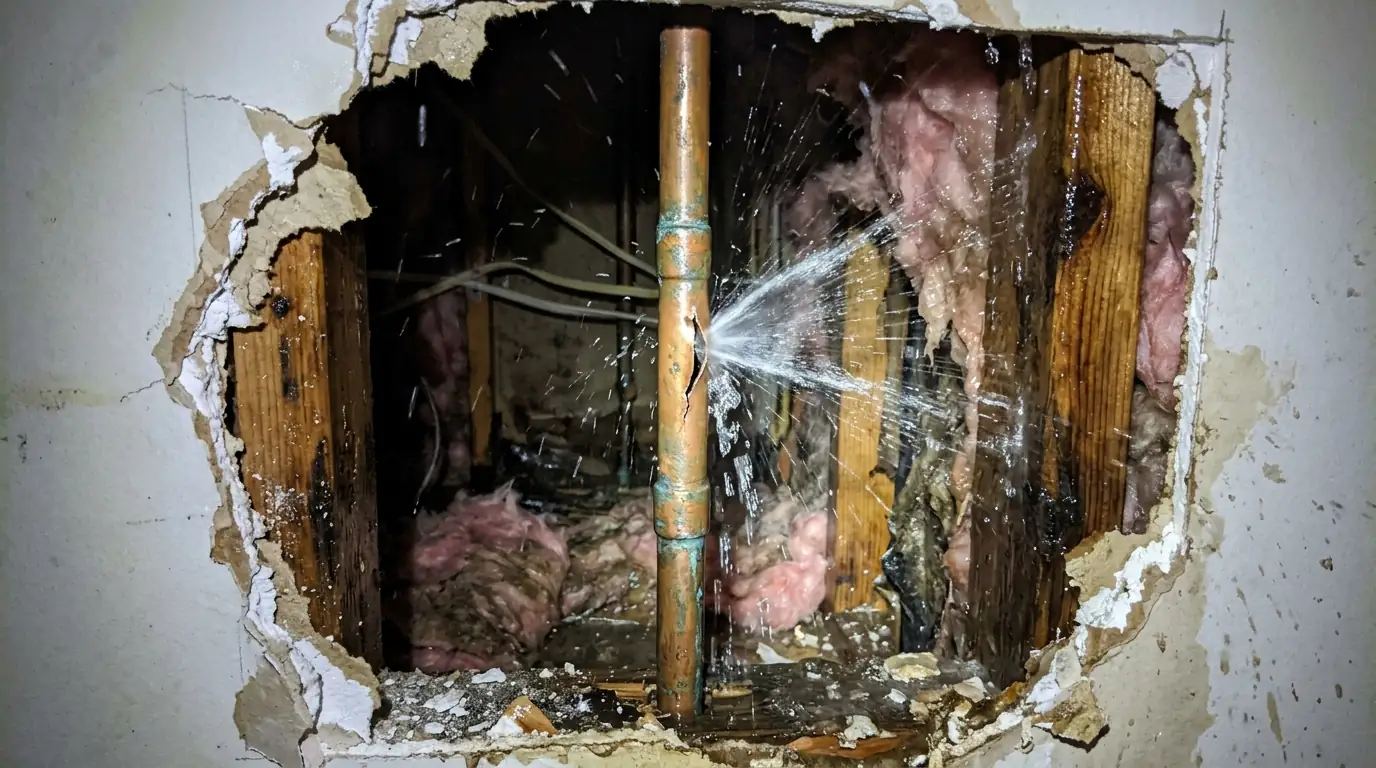
Burst Pipe Repair
Split and burst water pipes stopped, cut out and repaired fast, day or night, with damage kept to a minimum.
Learn more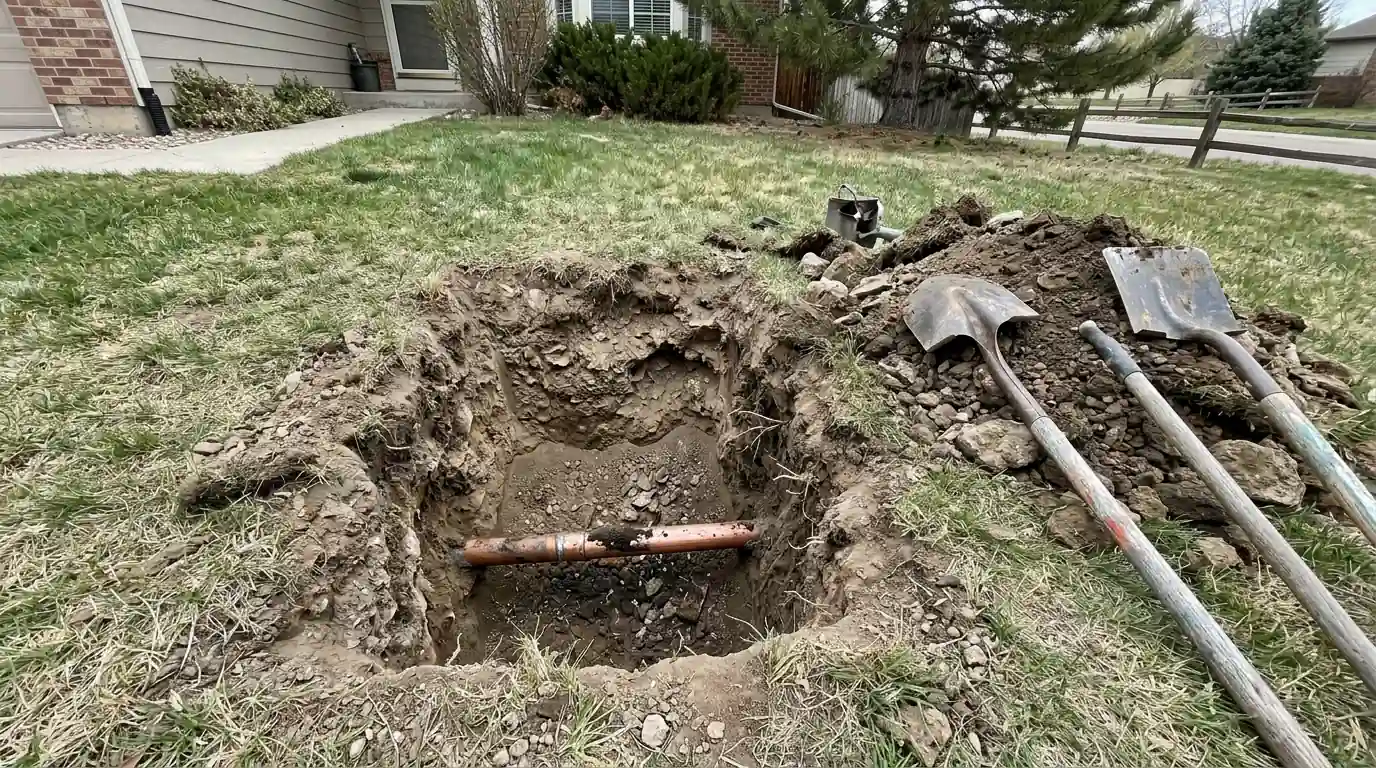
Main Water Line Repair & Replacement
Repair or replace the buried water service line between your meter and house when it leaks, breaks or loses pressure.
Learn more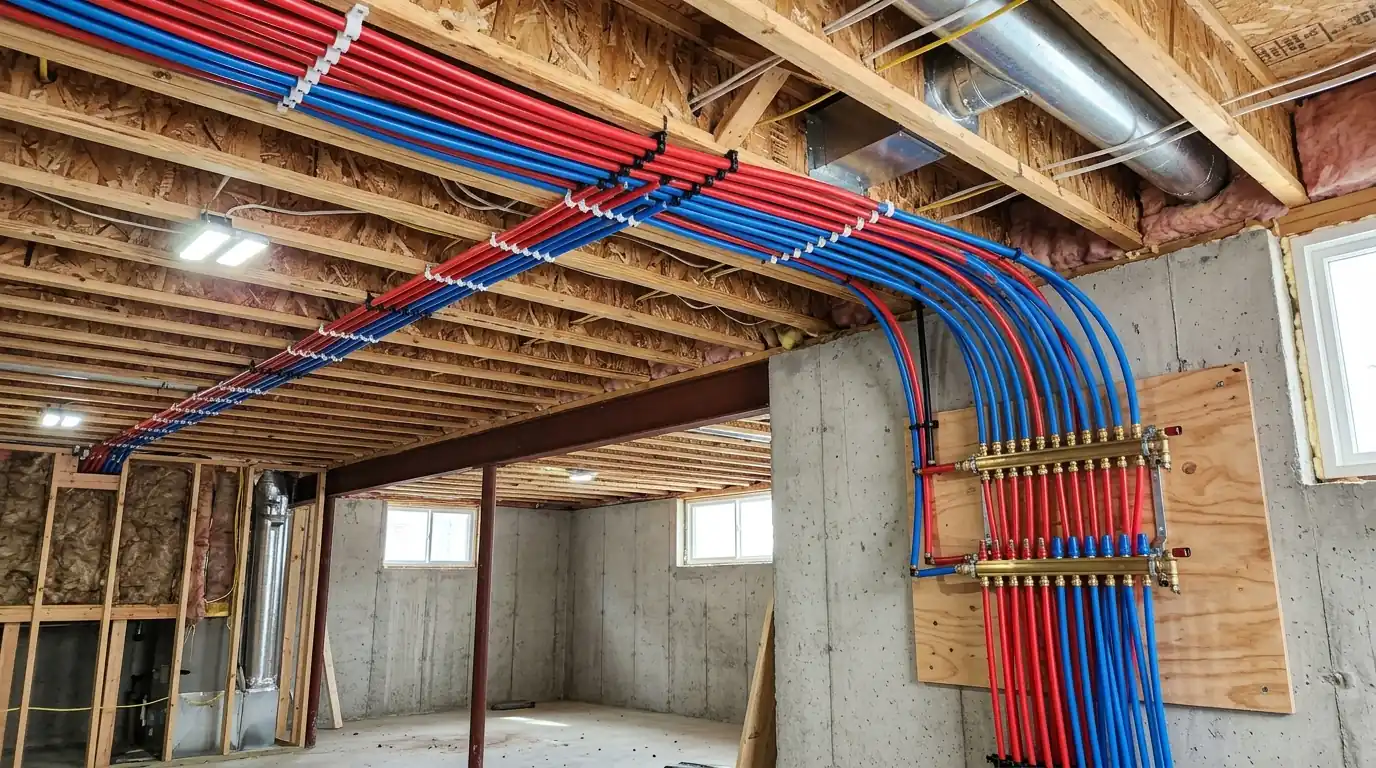
Whole-House Repiping
Replace failing galvanized, polybutylene or pinholed copper supply pipe with new PEX or copper throughout the whole house.
Learn moreCoverage
Where we do leak detection around Aurora
These neighborhoods and nearby cities cover most of the households we serve. Not listed? Call and ask.
- Original Aurora, Aurora 80010
- Del Mar, Aurora 80010
- Hoffman Heights, Aurora 80011
- Aurora Hills, Aurora 80012
- Village East, Aurora 80012
- Willow Park, Aurora 80012
- Aurora Knolls, Aurora 80012
- Heather Gardens, Aurora 80014
- Aurora 80012
- Denver 80202
- Centennial 80112
- Parker 80134
- Englewood 80110
- Littleton 80120
- Greenwood Village 80111
- Lone Tree 80124
Need help with leak detection?
Call any time, day or night. A real person answers and tells you what happens next.