Gas, water quality & more
Whole-house water filtration in Aurora, CO
Chlorine taste, a faint pool smell in the shower or grit in faucet screens are the usual reasons people start thinking about filtration. We install whole-house and point-of-use systems matched to what you actually want removed, with filters you can change yourself.
SERVICE PLATE
- Service
- Whole-House Water Filtration
- Typical range
- $285 to $585
- Area
- Aurora and the east metro
- Hours
- Answered 24/7
- Phone
- (720) 894-1012
Brands we work on every week
A whole-house filter treats every tap by sitting on the main line after the shutoff. For city water in Aurora, the most common choice is a sediment prefilter followed by a large carbon tank that reduces chlorine taste and odor. If you want cleaner drinking water specifically, an under-sink reverse osmosis unit is usually the better and cheaper tool.
Match the filter to the problem you want solved
No single filter removes everything, so we start by asking what bothers you about the water. Taste and smell usually mean chlorine or chloramine, which carbon handles well. Grit means sediment. A spotty glass or crusty showerhead is hardness, which a softener addresses rather than a filter. Knowing the goal keeps you from buying equipment that misses the point.
If you have specific health concerns, a water test from an independent lab is the right first step. The results show what is present and in what amounts, and they help us choose between carbon, reverse osmosis or a combination. We would rather install the right system once than sell you something that treats the wrong issue.
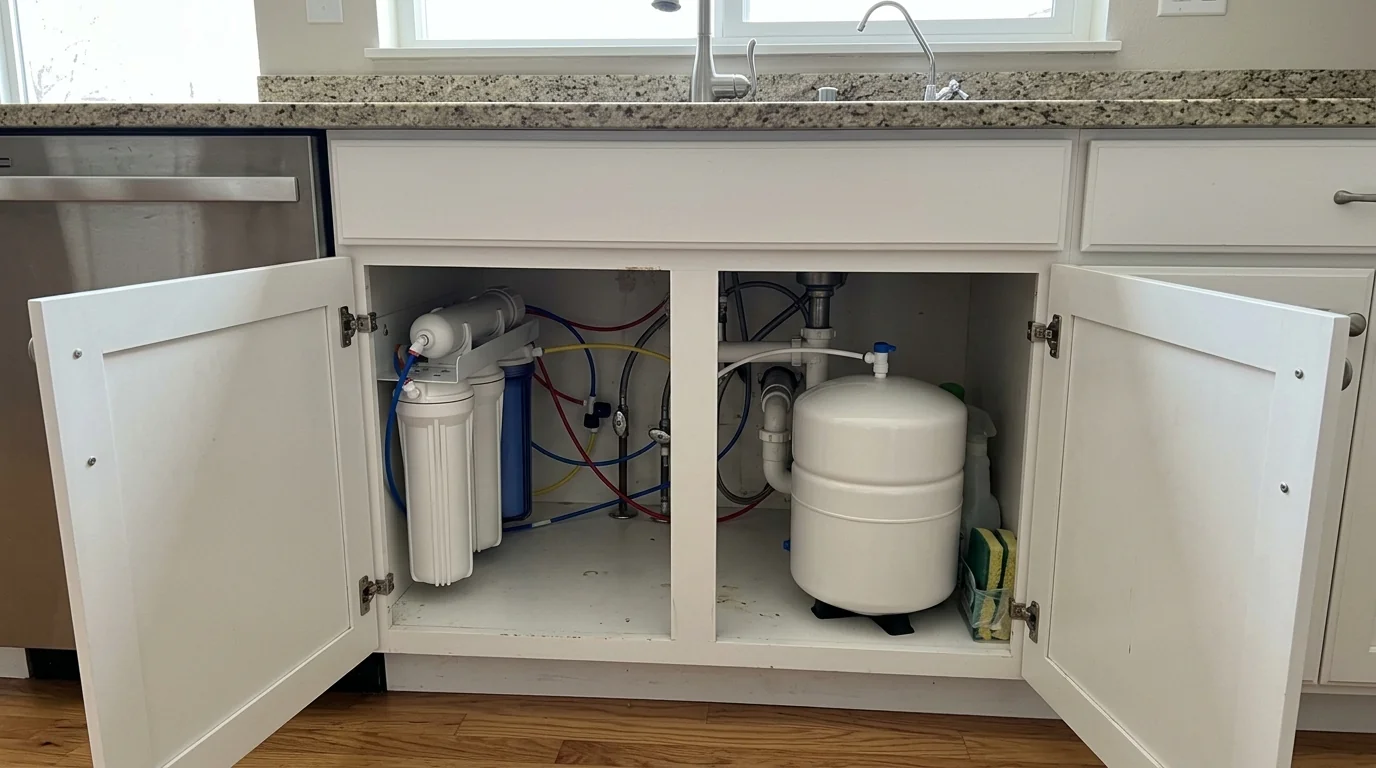
Whole-house systems versus a drinking water filter
Whole-house systems sit on the main line and treat every gallon, including the water you use for showers, laundry and toilets. Large carbon tanks last a long time and keep flow strong. Cartridge housings cost less up front but need more frequent changes and can restrict flow if they are undersized for the house.
Reverse osmosis works differently. It pushes water through a fine membrane, removes much more than carbon alone, and stores the filtered water in a small tank under the sink. It is slow and sends some water to the drain, so it is best for drinking and cooking only. Many families pair a whole-house carbon system with one RO faucet in the kitchen.
Installation details that keep a filter working
We install whole-house filters after the main shutoff and pressure reducing valve, with a bypass valve so cartridge changes or service never leave the house without water. Shutoffs on both sides of each housing make swapping filters a five minute job. We also leave enough clearance underneath to remove housings without a struggle.
Outdoor spigots and the sprinkler line are usually left unfiltered, since the lawn doesn't need carbon treated water and running it through wears the media out faster. When a softener is also part of the plan, the filter typically goes first so sediment and chlorine are reduced before water reaches the softener resin.
Pricing
Price ranges for water filtration in Aurora
TYPICAL AURORA PRICE RANGES
| Whole-house sediment prefilter with housing | $285 to $585 |
|---|---|
| Whole-house carbon tank system for chlorine taste | $1,265 to $2,485 |
| Combination sediment and carbon whole-house system | $1,585 to $2,865 |
| Under-sink reverse osmosis with dedicated faucet | $465 to $985 |
| Refrigerator line tie-in to a reverse osmosis system | $125 to $245 |
Treat these as typical Aurora price ranges rather than a quote. Your real cost depends on the equipment and what we find at your main line.
- System typeA single sediment housing costs a fraction of a large carbon tank or a combination system with several stages and a bypass.
- Space at the main lineTight utility rooms or a main line in a finished wall may need extra piping to mount equipment where it can be serviced.
- Drain and power needsBackwashing carbon tanks and reverse osmosis units need a drain. Some backwashing systems also need an outlet for the control head.
- Ongoing filter costsCartridges, membranes and media have different lifespans. We show you the yearly maintenance cost so the total cost is clear before you choose.
Compare more jobs in our plumbing price guide.
Step by step
Our steps for a filtration install
- 01
Ask what you want fixed
Taste, smell, grit, drinking water or appliance protection. Your answer decides whether carbon, sediment, reverse osmosis or a combination is right for you.
- 02
Check the plumbing
We look at the main line, pressure, available space and drain access, and note where outdoor and sprinkler lines split off from the house supply.
- 03
Recommend and price a system
You see the equipment, the filter change schedule and the ongoing cartridge cost along with the install price before anything is ordered.
- 04
Install with bypass and shutoffs
We cut in on the main line, add a bypass and isolation valves, and mount housings or tanks where filter changes are easy.
- 05
Flush and walk you through it
We flush new media, check for leaks, test flow at the fixtures and show you how to change filters and when to do it.
Warning signs
Reasons homeowners ask us about filtration
Water tastes or smells like chlorine
Utilities disinfect water so it stays safe in the pipes. Some people dislike the taste and smell, and activated carbon is very good at reducing both.
Grit clogs faucet aerators
Sand or scale particles in aerators, showerheads and appliance screens suggest sediment is moving through the plumbing. A sediment prefilter catches it near the main.
Showers leave skin and hair dry
Chlorine in hot shower water bothers some people. A whole-house carbon system reduces it at every fixture, not just at one filtered showerhead.
Everyone buys bottled water
If the household refuses to drink from the tap, an under-sink reverse osmosis system gives you filtered drinking water for a fraction of the ongoing cost.
Pitcher filters can't keep up
Pitcher and faucet filters work, but they are slow and need frequent cartridge changes. A plumbed system delivers more filtered water with less effort.
You are protecting new fixtures
Fresh faucets, a new tankless heater or a steam shower last longer when grit and debris are stopped before they reach valves and small passages.
Aurora notes
Filtration choices for homes on Aurora Water
Aurora Water is the city-owned utility that treats and delivers water to most homes in Aurora. Because it is disinfected municipal water, the most common complaints we hear are about chlorine taste and smell rather than anything visible. A whole-house carbon system is a natural fit for that goal, and its media typically lasts years between changes in a normal household.
Older homes in Original Aurora and central Aurora sometimes have galvanized steel supply pipe, which corrodes inside and can shed rust and scale into the water. A sediment filter helps catch those particles, but it treats the symptom. If brown water and low pressure come together, the real fix may be repiping, and we will tell you that rather than selling a filter to cover it up.
Related work
Other plumbing jobs that often go with this one
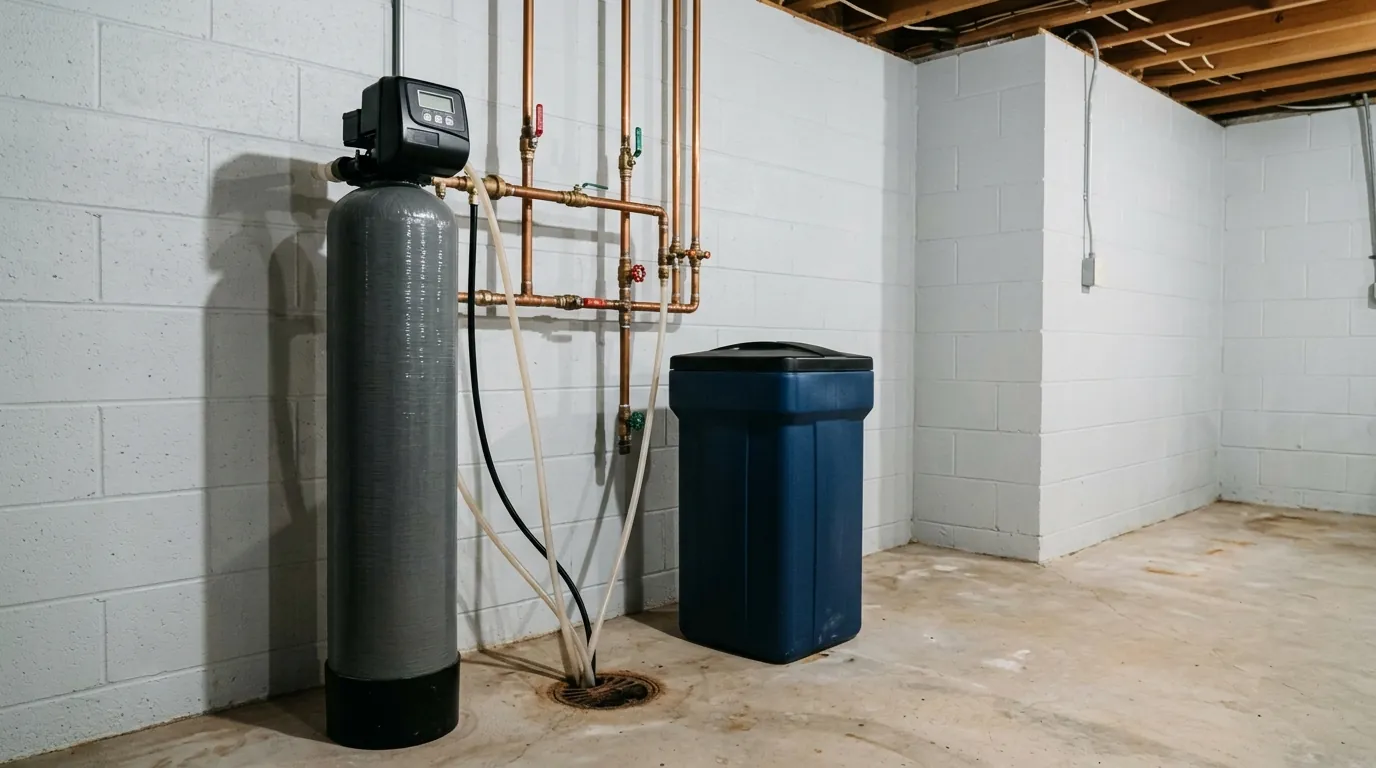
Water Softener Installation
Water softeners sized for your household, installed with a bypass, proper drain and an outdoor hose line left unsoftened.
Learn more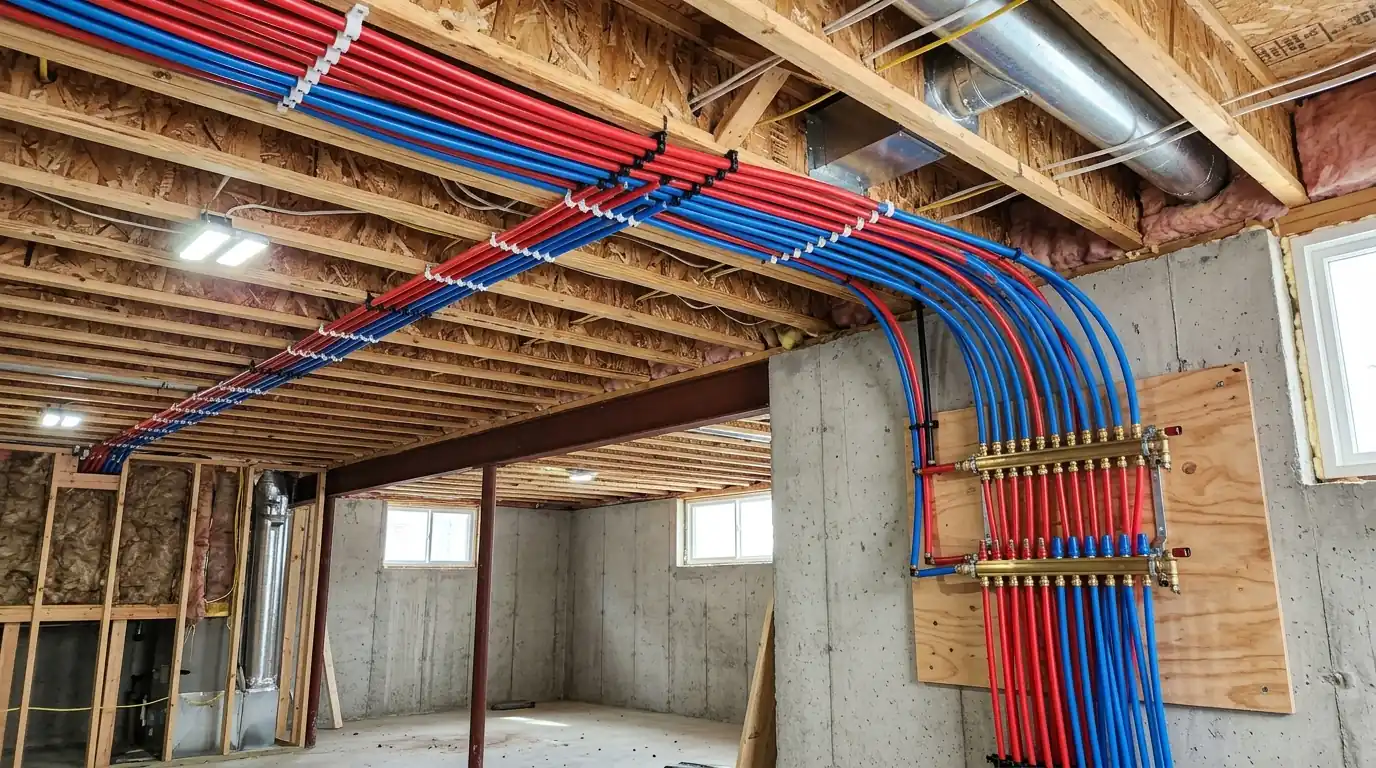
Whole-House Repiping
Replace failing galvanized, polybutylene or pinholed copper supply pipe with new PEX or copper throughout the whole house.
Learn more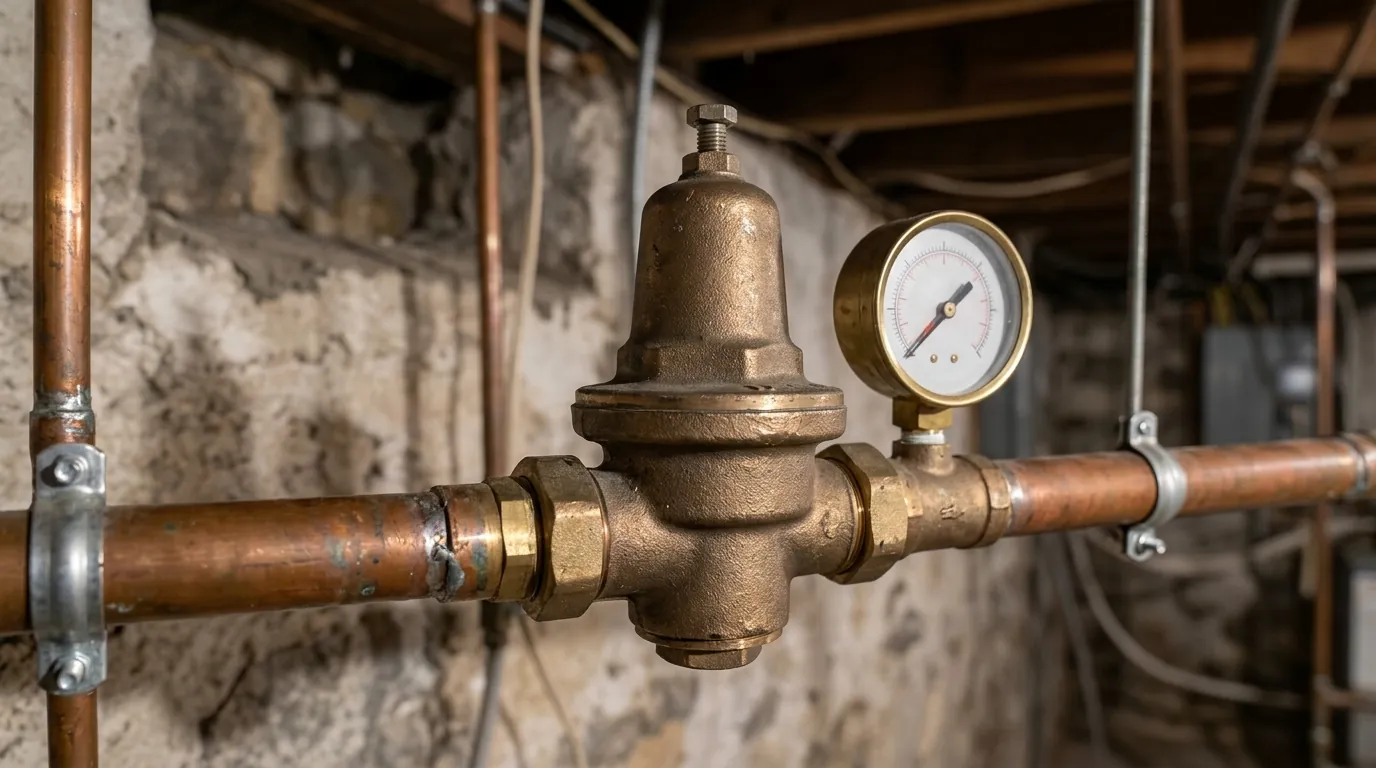
Pressure Reducing Valves
Test, adjust or replace the valve that keeps city water pressure from hammering your pipes, fixtures and water heater.
Learn more
Whole-Home Plumbing Inspection
A top-to-bottom plumbing checkup for buyers, sellers and owners: pipes, drains, water heater, valves, pressure and fixtures.
Learn moreQuestions
Whole-House Water Filtration questions from Aurora homeowners
Does a whole-house carbon filter remove chloramine as well as chlorine?
Standard carbon handles chlorine well. Chloramine takes longer contact time, so systems designed for it use catalytic carbon and larger tanks. If you are not sure which disinfectant affects your water, check with the utility or a lab test. We size the system to whichever one you are dealing with.
Is reverse osmosis better than a whole-house filter?
They do different jobs. Reverse osmosis removes far more from the water but works slowly and is meant for drinking and cooking at one sink. A whole-house filter treats every tap with less reduction. Many homes use both: carbon for the whole house and RO at the kitchen.
Will a whole-house filter lower my water pressure?
A properly sized system should not cause a noticeable drop. Undersized cartridge housings or clogged filters can restrict flow, especially when several fixtures run at once. We size housings and tanks for your home's flow and remind you of change intervals so pressure stays steady.
How often do whole-house filter cartridges need changing?
Sediment cartridges often need changing every few months, depending on how much debris is in the water. Large carbon tanks can go years before the media needs replacing. Reverse osmosis prefilters are usually changed yearly, and membranes last longer. We leave you a written schedule for your specific system.
Should the filter go before or after the water softener?
Usually before. A sediment and carbon stage ahead of the softener protects the resin from grit and chlorine, which can shorten resin life. The exact order depends on the equipment, so we follow the manufacturers' guidance and plan the layout when both are installed together.
Coverage
Where we do whole-house water filtration around Aurora
These neighborhoods and nearby cities cover most of the households we serve. Not listed? Call and ask.
- Original Aurora, Aurora 80010
- Del Mar, Aurora 80010
- Hoffman Heights, Aurora 80011
- Aurora Hills, Aurora 80012
- Village East, Aurora 80012
- Willow Park, Aurora 80012
- Aurora Knolls, Aurora 80012
- Heather Gardens, Aurora 80014
- Aurora 80012
- Denver 80202
- Centennial 80112
- Parker 80134
- Englewood 80110
- Littleton 80120
- Greenwood Village 80111
- Lone Tree 80124
Need help with whole-house water filtration?
Call any time, day or night. A real person answers and tells you what happens next.