Gas, water quality & more
Water softener installation in Aurora, CO
Scale on faucets, crusty showerheads and spotted glasses are signs of mineral buildup that also coats the inside of your water heater. We size, install and set up a water softener so it protects the plumbing without wasting salt or water.
SERVICE PLATE
- Service
- Water Softener Installation
- Typical range
- $1,385 to $2,465
- Area
- Aurora and the east metro
- Hours
- Answered 24/7
- Phone
- (720) 894-1012
Brands we work on every week
Aurora has moderately hard water, so a softener is a comfort and maintenance upgrade rather than a must. The right unit is sized to your household's daily use, installed after the main shutoff with a bypass valve, drained through an air gap, and set up so outdoor spigots stay on hard water. Done well, it cuts scale in fixtures and heaters.
Sizing a softener so it doesn't waste salt
Softener capacity is about how much hardness the resin bed can remove between regenerations. We start with your household size and typical water use, and we test the hardness at your tap. A unit that is too small regenerates constantly and burns through salt and water. One that is too large can let the resin sit too long between cycles.
We recommend metered, demand-initiated control valves. They track actual water use and regenerate only when the resin needs it, instead of on a fixed calendar. Over a year, that usually means noticeably less salt and fewer regeneration cycles than a timer-based unit, especially in homes where usage swings when kids are away or guests visit.
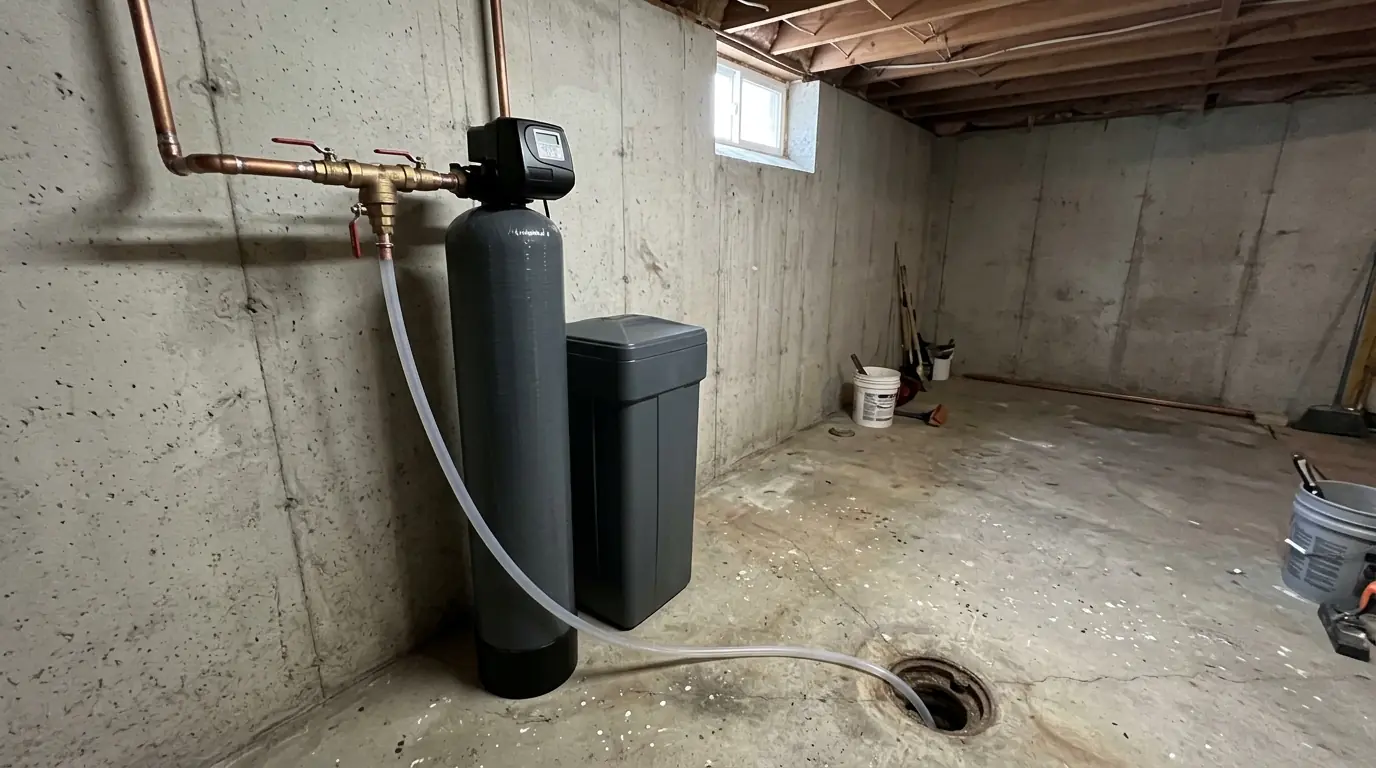
Where the softener goes and how it ties in
The softener belongs right after the main shutoff and any pressure reducing valve, ahead of the water heater, so both hot and cold lines inside get treated. We install a bypass valve so you can isolate the unit for service without losing water to the house. Most homes also keep at least one cold kitchen tap on hard water for drinking.
Outdoor hose bibs and sprinkler lines should stay unsoftened. Lawns and gardens don't need softened water, and running them through the softener wastes salt and resin capacity. The brine drain needs an air gap at a floor drain, laundry standpipe or other approved spot, so wastewater can never be pulled back into the unit.
Salt-based softeners versus salt-free conditioners
Salt-based ion exchange softeners actually remove hardness minerals, which is why water feels slick and soap lathers. They need salt added every few weeks and a drain for regeneration. If anyone in the house is watching sodium, potassium chloride can replace salt, or a drinking water filter can be added at the kitchen sink.
Salt-free systems, often called conditioners, change how minerals behave so they cling less to surfaces, but they don't remove them. Water won't feel soft and spotting may continue. They make sense for owners who want lower maintenance and some scale protection without a drain or salt. We explain both honestly and install whichever fits.
Pricing
What does a water softener installation cost in Aurora?
TYPICAL AURORA PRICE RANGES
| Standard metered softener supplied and installed | $1,385 to $2,465 |
|---|---|
| High-capacity softener for larger households | $2,185 to $3,345 |
| Installing a softener you already purchased | $345 to $685 |
| Softener loop or bypass for a home with no loop | $385 to $945 |
| Removing and replacing an old softener | $1,465 to $2,685 |
These are typical Aurora ranges, not a quote. Your price depends on the equipment you choose and what we find at the main line and drain.
- Existing loopSome homes already have a softener loop near the main line. Others need new piping to separate softened and unsoftened lines.
- Drain and power accessA unit far from a floor drain or outlet needs a longer brine line or a new outlet, which adds time to the install.
- Equipment typeMetered softeners, dual-tank units, salt-free conditioners and combination softener filters all carry very different equipment prices.
- Pipe materialTying into galvanized, polybutylene or older copper may mean replacing a short section so fittings seal properly and stay dry.
Compare more jobs in our plumbing price guide.
Step by step
How we install a water softener
- 01
Test your water
We check hardness at the tap and look at iron or chlorine levels, since both affect which resin and control valve make the most sense for your home.
- 02
Size the unit
Based on household size, water use and hardness, we recommend a capacity and control valve, and you get the price before we order or install.
- 03
Plan the location
We pick a spot near the main line with access to a drain and an outlet, and decide which spigots and taps stay on unsoftened water.
- 04
Install and plumb
We cut in after the main shutoff, add a bypass valve, run the brine drain with an air gap and connect power to the control head.
- 05
Program and start up
We set the hardness and regeneration schedule, add salt, run an initial regeneration and show you how to check salt and use the bypass.
Warning signs
Signs your home would benefit from softer water
White crust on faucets and showerheads
Calcium and magnesium leave chalky deposits where water dries. If you scrub aerators and showerheads often and the crust keeps coming back, hardness is the reason.
Spots on dishes and glassware
Hard water leaves cloudy film on glasses and spots on dishes even with rinse aid. Softened water rinses cleaner and usually needs less detergent too.
A noisy or slow water heater
Minerals settle at the bottom of tank heaters and scale up heat exchangers in tankless units. Softening slows that buildup and reduces flushing and descaling trips.
Soap that won't lather
Hard water reacts with soap and shampoo, so they lather poorly and leave a film on skin and shower walls. Many people notice the difference within days of softening.
Dingy laundry and stiff towels
Minerals trap soap in fabric, which leaves whites looking gray and towels feeling rough. Softer water helps detergent rinse out completely.
An old softener that stopped working
If salt levels never drop, or water feels hard again, the control valve, resin or brine system may have failed. Sometimes repair works, but older units are often replaced.
Aurora notes
Softening water in Aurora homes
Aurora Water is the city-owned utility, and the water it delivers is moderately hard. That is enough to scale up showerheads, faucets and water heaters over time, but not so extreme that every home needs a softener. We usually recommend one when you are tired of scrubbing fixtures, when you just installed a tankless heater you want to protect, or when an older softener has quit working.
Placement follows the house. Many Aurora homes have a basement utility room with the main shutoff, water heater and floor drain together, which makes an easy spot for a softener and its brine drain. In newer homes where the water heater sits in a garage or a utility closet, we plan the install around that location and make sure the unit and salt tank are protected from freezing.
Related work
Other plumbing jobs that often go with this one
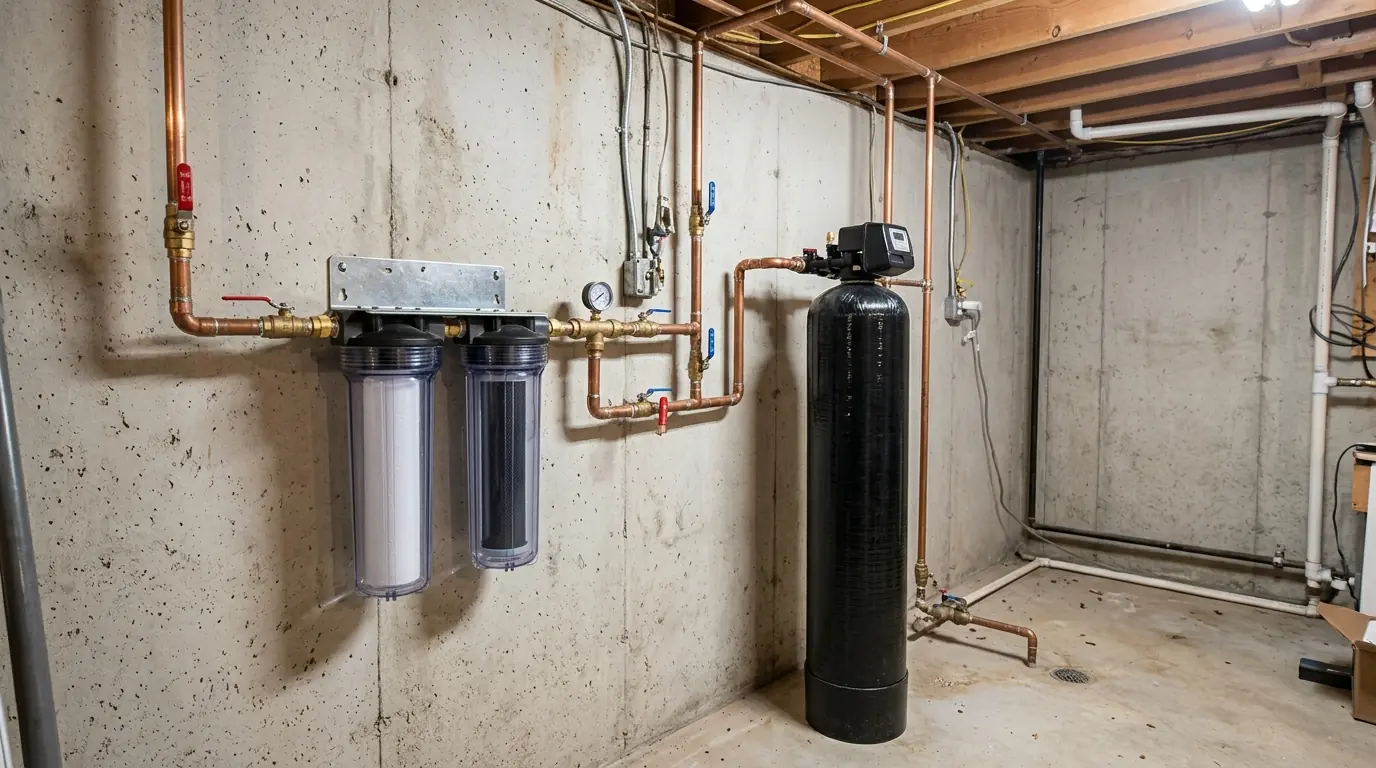
Whole-House Water Filtration
Whole-house carbon, sediment and combination filters installed at the main line, plus under-sink reverse osmosis for drinking water.
Learn more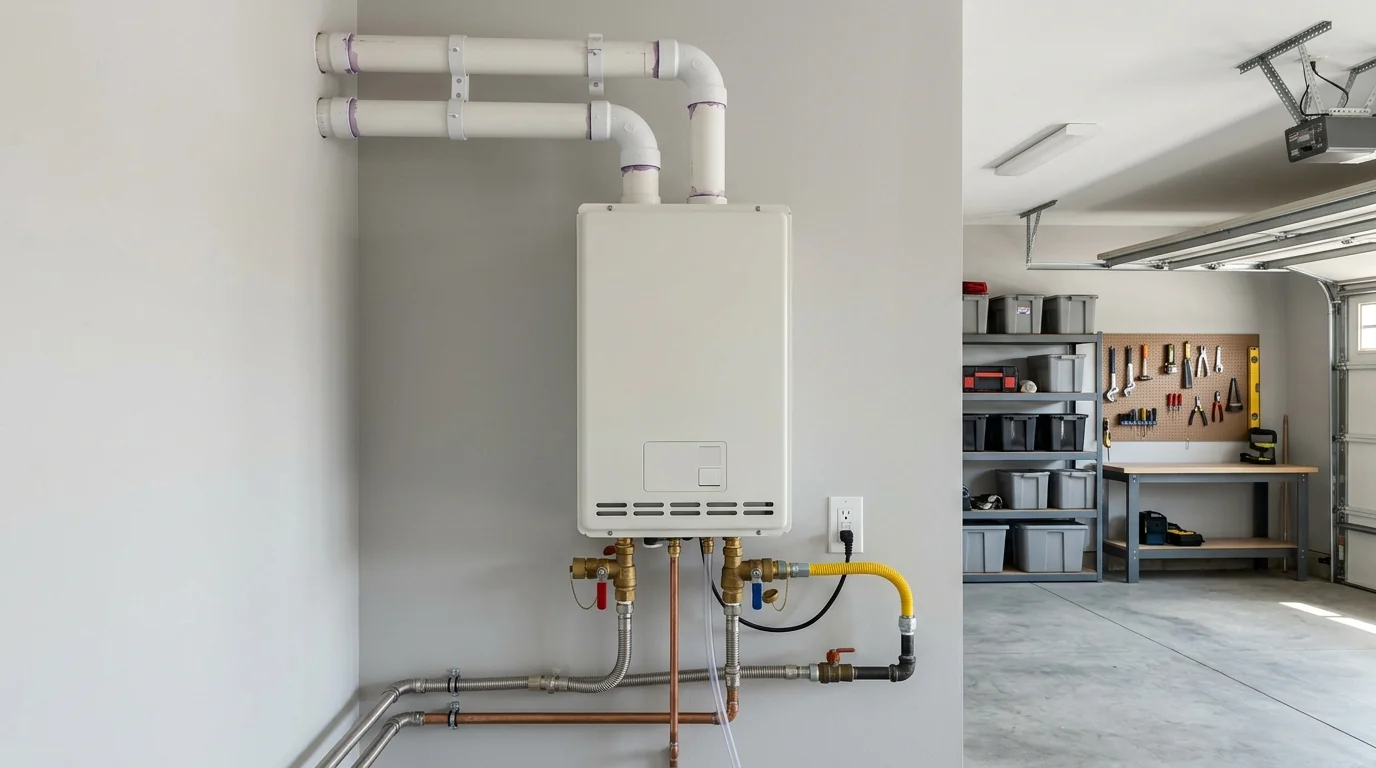
Tankless Water Heater Installation
Gas tankless water heaters sized for cold winter water, installed with the gas line, venting and condensate drain done properly.
Learn more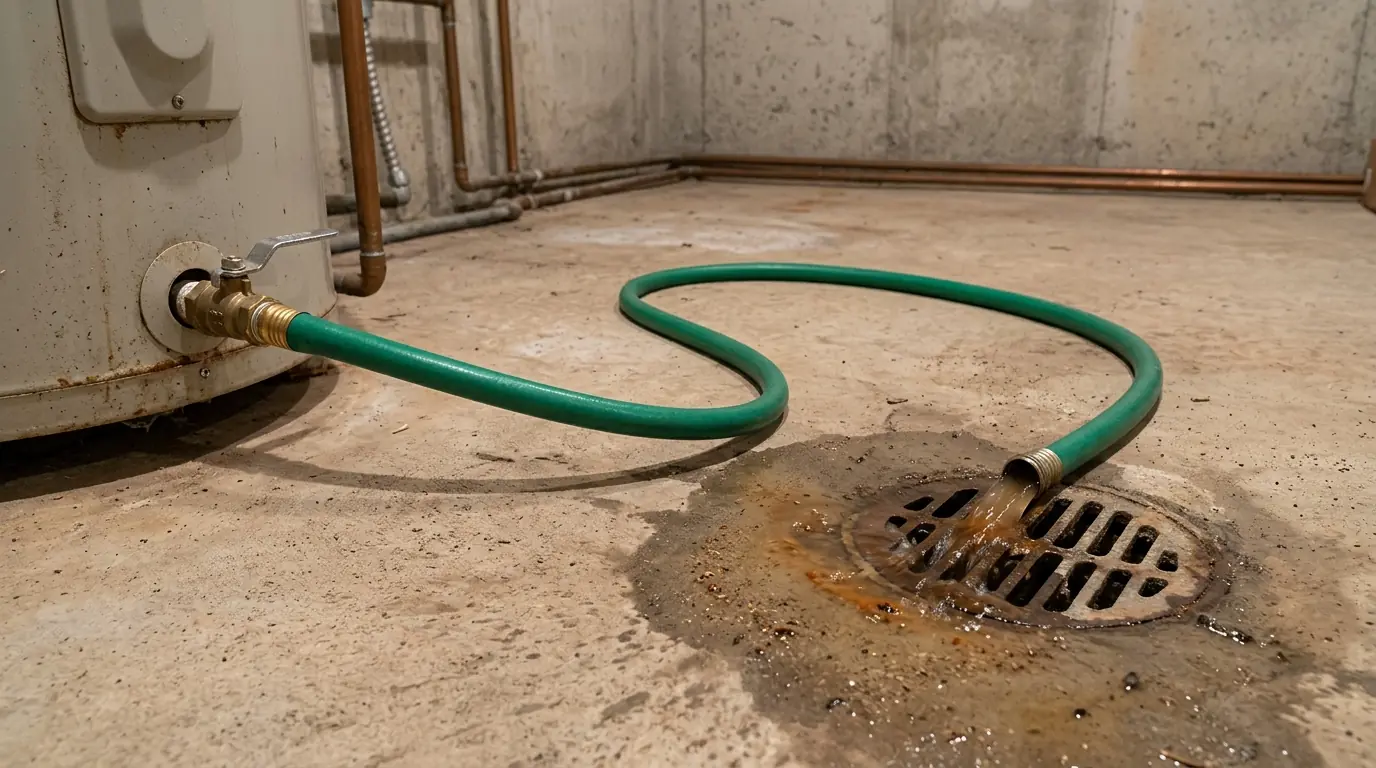
Water Heater Flush & Maintenance
Yearly tank flushing, anode rod checks and relief valve testing that keep a water heater running longer and quieter.
Learn more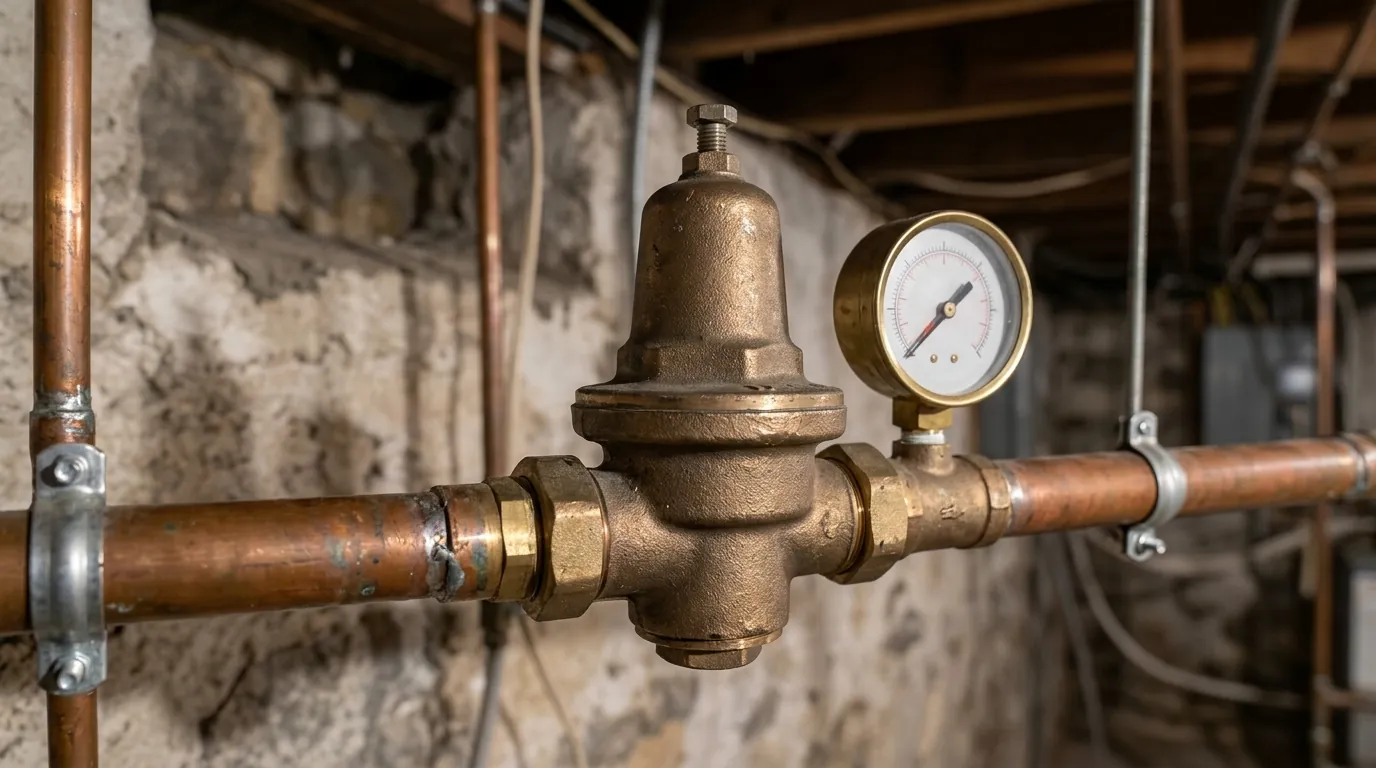
Pressure Reducing Valves
Test, adjust or replace the valve that keeps city water pressure from hammering your pipes, fixtures and water heater.
Learn moreQuestions
Water Softener Installation questions from Aurora homeowners
Is Aurora water hard enough to need a water softener?
Aurora's water is moderately hard. Many homes do fine without a softener, while others want one to cut scale on fixtures, glassware and water heaters. If you are scrubbing showerheads often or protecting a new tankless heater, a softener is a reasonable upgrade. We test your water and give you a straight answer.
Will a water softener protect my tankless water heater?
It helps a great deal. Tankless heat exchangers are sensitive to scale, and softened water slows that buildup significantly. You still want periodic descaling, but usually much less often. Many tankless owners in Aurora add a softener specifically to protect the heater and keep flow and temperature steady.
Should my outside spigots and sprinklers get softened water?
No. Outdoor water use does not need softening, and running it through the softener uses up salt and resin capacity for no benefit. We leave hose bibs and the sprinkler supply on unsoftened water whenever the plumbing allows it, which is part of planning the loop during installation.
How often do I add salt to a water softener?
It depends on hardness, water use and tank size, but many households add salt every few weeks to every couple of months. Metered softeners use less because they only regenerate as needed. Check the brine tank monthly and keep it at least a third full, without packing it to the lid.
Can a softener drain into my sump pit or sewer cleanout?
The brine discharge needs to go to an approved drain with an air gap, such as a floor drain or laundry standpipe. Sump pits often discharge to the yard, where salty water can harm grass and soil. We route the drain to a proper spot and add the air gap during the install.
Coverage
Where we do water softener installation around Aurora
These neighborhoods and nearby cities cover most of the households we serve. Not listed? Call and ask.
- Original Aurora, Aurora 80010
- Del Mar, Aurora 80010
- Hoffman Heights, Aurora 80011
- Aurora Hills, Aurora 80012
- Village East, Aurora 80012
- Willow Park, Aurora 80012
- Aurora Knolls, Aurora 80012
- Heather Gardens, Aurora 80014
- Aurora 80012
- Denver 80202
- Centennial 80112
- Parker 80134
- Englewood 80110
- Littleton 80120
- Greenwood Village 80111
- Lone Tree 80124
Need help with water softener installation?
Call any time, day or night. A real person answers and tells you what happens next.