Leaks & pipes
Frozen pipe thawing and repair in Aurora, CO
No water at a faucet on a bitter morning usually means ice has blocked a pipe somewhere in a cold wall or crawlspace. We thaw it safely, check for hidden splits and fix any damage before the ice melts into a leak.
SERVICE PLATE
- Service
- Frozen Pipe Thawing & Repair
- Typical range
- $185 to $425
- Area
- Aurora and the east metro
- Hours
- Answered 24/7
- Phone
- (720) 894-1012
Brands we work on every week
If a tap gives little or no water during a hard freeze, a pipe is likely frozen. We locate the ice, thaw it gradually with controlled heat, then check the line for splits before full pressure returns. Thawing alone usually runs $185 to $425 in Aurora, with repairs extra if the pipe cracked while frozen.
Warning signs
How to tell a pipe has frozen
One faucet gives a trickle or nothing
If other taps work but one sink, tub or the washer line goes dry during a cold snap, ice is likely blocking the line that feeds it.
Frost on exposed pipe
In a crawlspace, garage or unfinished basement, visible frost or a light coating of ice on the outside of a pipe is a clear sign it has frozen inside.
Toilets do not refill
A toilet tank that stays empty after a flush points to a frozen supply line, often one running through an outside wall in that bathroom.
Strange smells from a drain
A frozen drain or vent can push sewer gas back through a fixture. It is less common than a frozen supply line but happens in very cold weather.
Bulging or frost-covered pipe sections
A pipe that looks swollen or has a crack forming is under pressure from ice. Do not try to bang the ice loose, because it could split.
No water at all in the house
If every fixture is dry, the main service line or the meter area may have frozen, especially where the line enters the foundation or passes through a garage.
Step by step
Our steps for a frozen pipe call
- 01
Talk through what you see
On the phone, we ask which fixtures are dry, where the pipes run and whether any water is leaking, then help you open faucets on the affected line.
- 02
Locate the ice
We trace the line from the dry fixture back toward the main, checking outside walls, garages and crawlspaces where the freeze most likely formed.
- 03
Thaw with controlled heat
Using heat guns, heat tape or a pipe thawing machine, we warm the line gradually from the faucet side until water flows again.
- 04
Watch for splits
As water moves, we look and listen for leaks along the line and nearby fittings, shutting off and repairing any damage we find.
- 05
Point out the cold spot
Once water is flowing, we show you where the cold reached the pipe and explain how to protect it before the next deep freeze.
Safe ways to thaw a frozen pipe and what to avoid
We thaw pipes with controlled heat: heat guns at low settings, heat tape, warm air and, for longer runs, electric pipe thawing machines that pass low voltage current through metal pipe to warm it from the inside. We always work from the faucet side back toward the ice, so melting water has an open path out instead of building pressure behind the blockage.
Open flame is the one thing to avoid. Propane torches near framing and insulation start fires, and overheating a pipe can damage joints. Space heaters set too close to walls are also a fire risk. If you start thawing on your own, use a hair dryer and keep the faucet open, but call us if the pipe is hidden in a wall or will not thaw.
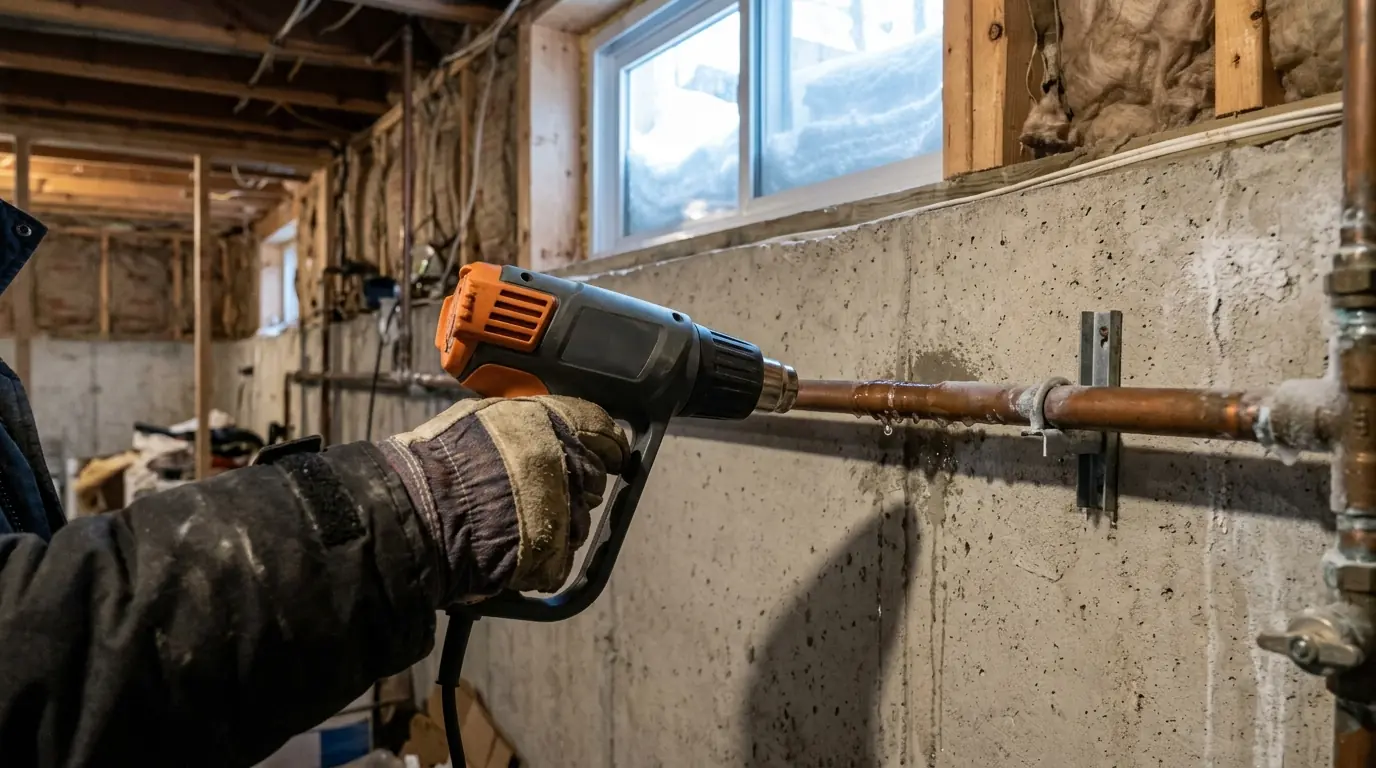
Checking for damage before the water comes back
Ice expands as it forms, and that pressure can split copper, crack PEX fittings or break a valve body without any visible sign until the line thaws. We thaw a section, then watch it closely as water starts to move. If the pipe weeps or sprays, we shut it off right away and repair the split before turning the house water fully back on.
We also check pipes and fittings near the frozen section, because cold air that froze one line often reaches others nearby. A hose bib, a washing machine valve or a sprinkler backflow device on the same cold wall may have cracked too. Catching those before full pressure returns prevents a second leak an hour later.
Why the same pipe freezes again
A pipe that freezes once tends to freeze again in the next deep cold. The usual reasons are an exterior wall with little insulation, a gap where cold air leaks in around a rim joist, a garage or crawlspace with no heat, or a run through an unheated attic. Thawing solves today's problem without fixing the cause.
After thawing, we show you where the cold is getting in. Sometimes the fix is simple foam insulation and sealing a gap. Sometimes the line needs heat cable or a reroute to a warmer interior wall. We note what we would do so you can plan the protection before the next cold front arrives.
Aurora notes
Freeze hot spots in Aurora houses
Aurora winters bring sudden arctic cold fronts with temperatures that can fall well below zero, plus big swings between day and night. That pattern catches pipes off guard, especially after mild weather. The lines we thaw most often run through outside walls, garages, crawlspaces and attics. Kitchen sinks on exterior walls and bathrooms over garages are common trouble spots across the east metro.
Many newer homes in far southeast and northeast Aurora have PEX supply lines, which flex more and resist splitting, but their fittings can still crack under ice. Older homes in Original Aurora often have galvanized pipe that does not tolerate freezing well. Homes with water heaters in garages also need attention, because the cold supply line and any nearby valves sit in the coldest part of the house.
Pricing
Typical costs for thawing and repairing frozen pipes in Aurora
TYPICAL AURORA PRICE RANGES
| Thawing an accessible frozen line | $185 to $425 |
|---|---|
| Thawing a line inside a wall or ceiling | $365 to $785 |
| Electric pipe thawing for a frozen service line | $345 to $685 |
| Repairing a split found after thawing | $285 to $745 |
| Insulating the exposed section after thawing | $95 to $245 |
These are typical Aurora ranges, not a quote. The final price depends on where the ice is and what we find once the line thaws.
- Where the ice isA frozen line in an open crawlspace thaws faster than one buried in an outside wall behind finished drywall or cabinets.
- Length of the frozen runA short ice plug clears quickly. Long frozen sections, or a frozen service line, take more time and heavier equipment.
- Damage foundIf thawing reveals splits or cracked fittings, the repair is priced separately based on pipe material and access.
- TimingFrozen pipe calls cluster in cold snaps, often at night. After-hours rates apply then, and we tell you the rate before we come out.
Compare more jobs in our plumbing price guide.
Questions
Frozen Pipe Thawing & Repair questions from Aurora homeowners
Should I leave a frozen faucet open?
Yes. Opening the faucet gives melting water and ice a path out and relieves pressure in the line. Open both hot and cold on the affected fixture. If water starts spraying from a wall or ceiling once it thaws, close the main shutoff immediately.
Is it safe to use a hair dryer on a frozen pipe?
On a pipe you can see and reach, a hair dryer is a reasonable first step. Start at the faucet end and work toward the frozen area. Keep it away from water and never use an open flame. If the pipe is hidden in a wall, call us instead.
How long does it take a frozen pipe to thaw?
An exposed pipe with gentle heat may thaw in under an hour. A line inside a wall, a long frozen run or a frozen service line can take several hours. Waiting for the weather to warm up can take days and raises the risk of a burst.
Can PEX pipe freeze and split?
PEX can freeze, though it stretches more than copper and is less likely to split along its length. The fittings and connections are the weaker points, and ice can crack them. After a PEX line freezes, we check every fitting along the run before restoring full pressure.
What if my water meter or main line froze?
If every fixture in the house is dry during a hard freeze, the service line or meter area may be frozen. Do not try to thaw a meter yourself. We can thaw the line on your side, and if the meter is the problem, Aurora Water handles it.
Related work
Other plumbing jobs that often go with this one
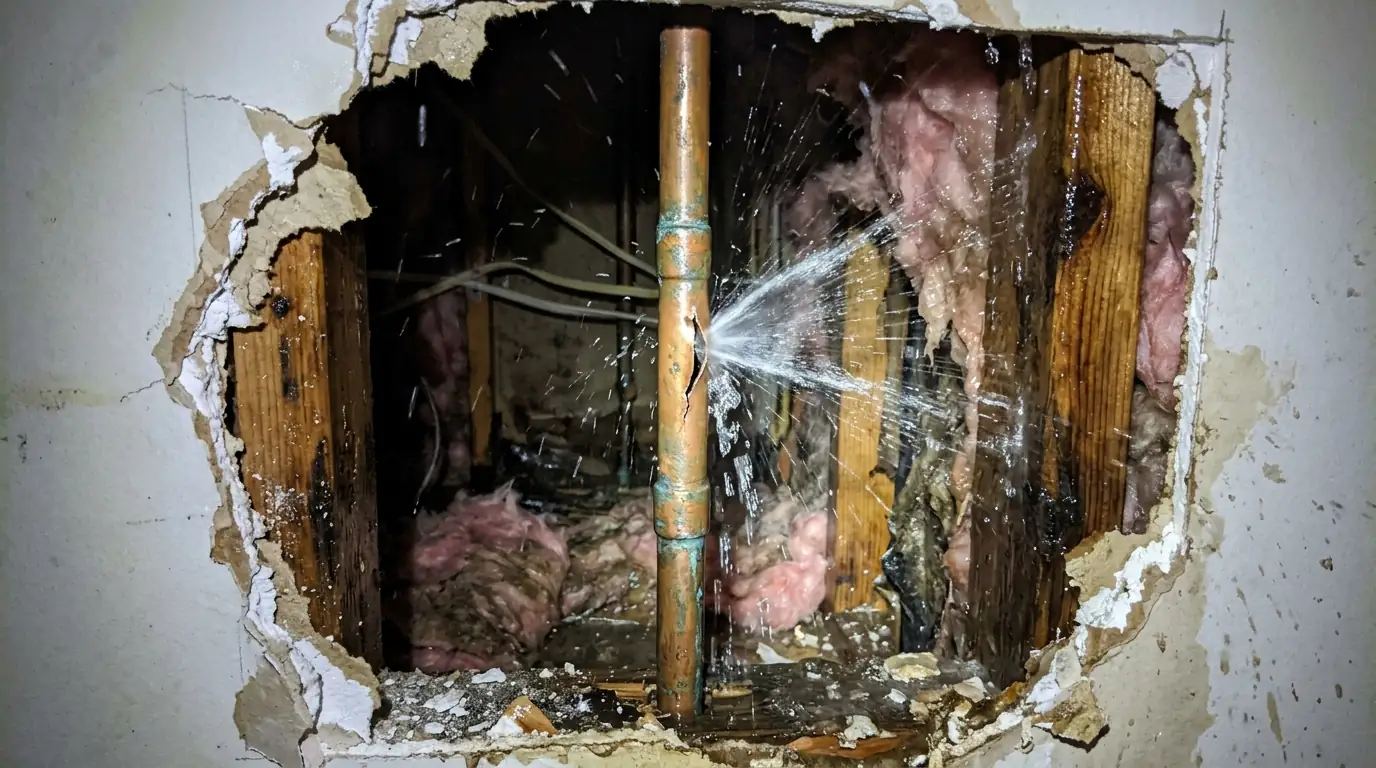
Burst Pipe Repair
Split and burst water pipes stopped, cut out and repaired fast, day or night, with damage kept to a minimum.
Learn more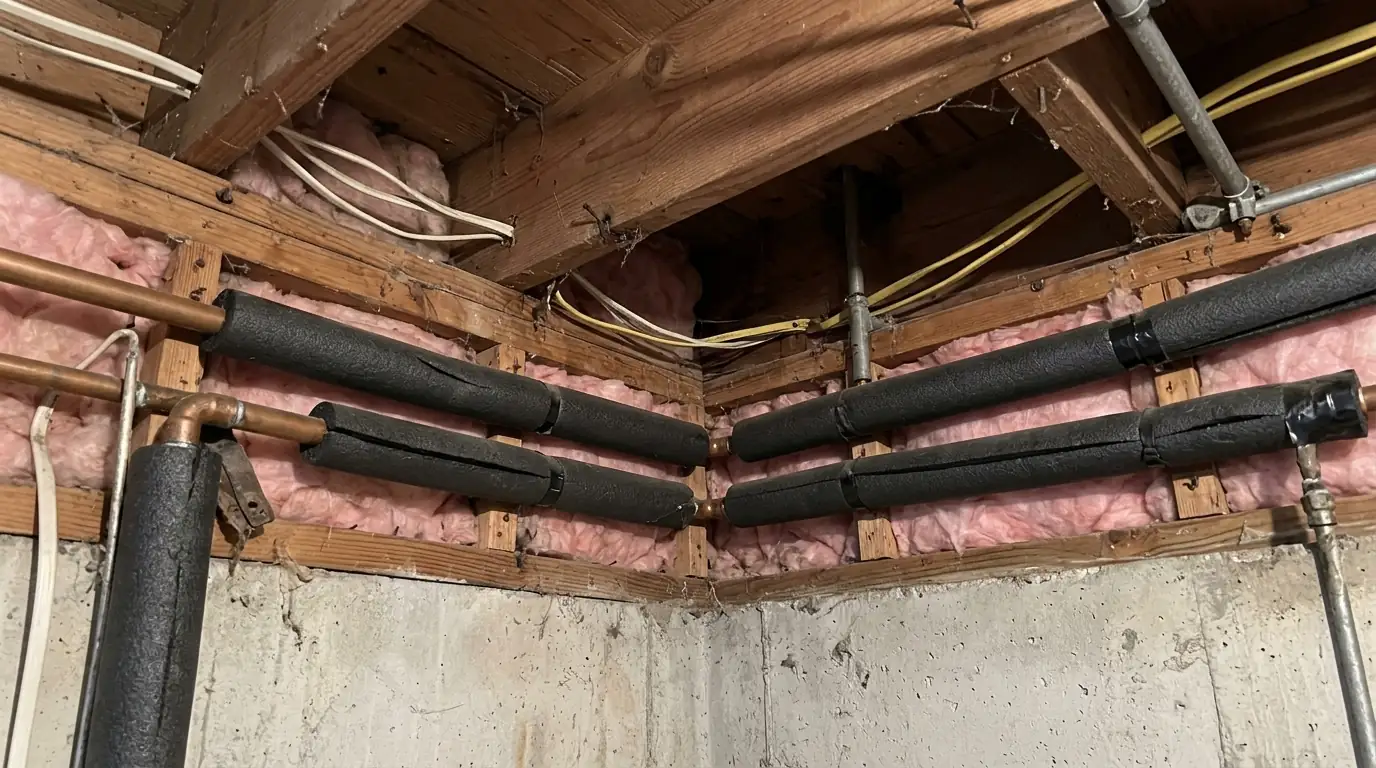
Pipe Freeze Protection
Pipe insulation, heat cable, rerouting and winter shutdown plans that keep water lines from freezing in deep cold.
Learn more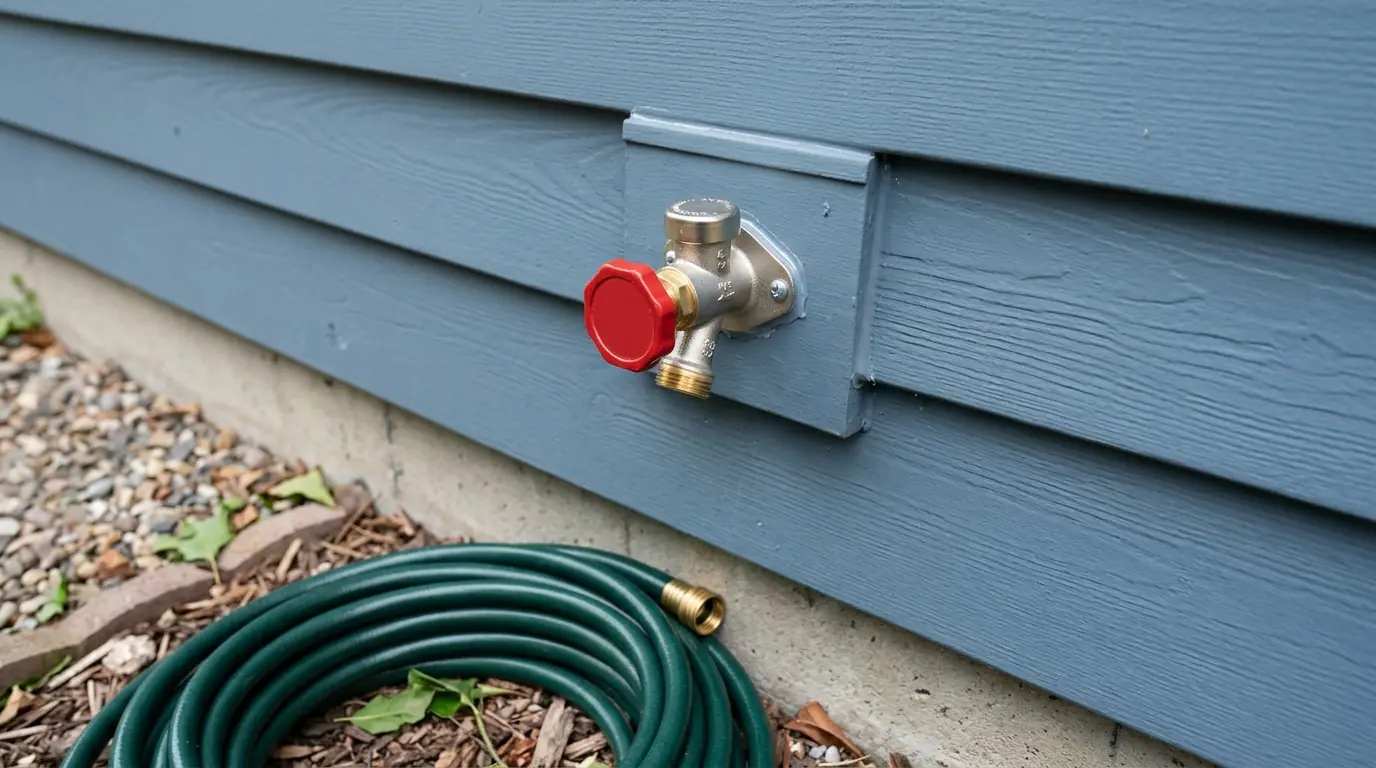
Outdoor Faucet & Sillcock Repair
Leaking hose bibs and freeze-damaged sillcocks repaired or replaced with frost-free valves built for Colorado winters.
Learn more
Emergency Plumber
Burst pipes, sewage backups, overflowing toilets and no water at night, handled 24/7 across Aurora and the east metro.
Learn moreCoverage
Where we do frozen pipe thawing & repair around Aurora
These neighborhoods and nearby cities cover most of the households we serve. Not listed? Call and ask.
- Original Aurora, Aurora 80010
- Del Mar, Aurora 80010
- Hoffman Heights, Aurora 80011
- Aurora Hills, Aurora 80012
- Village East, Aurora 80012
- Willow Park, Aurora 80012
- Aurora Knolls, Aurora 80012
- Heather Gardens, Aurora 80014
- Aurora 80012
- Denver 80202
- Centennial 80112
- Parker 80134
- Englewood 80110
- Littleton 80120
- Greenwood Village 80111
- Lone Tree 80124
Need help with frozen pipe thawing & repair?
Call any time, day or night. A real person answers and tells you what happens next.