Water heaters
Expansion tank installation in Aurora, CO
Heated water expands, and in a closed plumbing system that extra volume has nowhere to go but into your pipes and fixtures. An expansion tank gives it a place to go, which protects the water heater and stops relief valve drips.
SERVICE PLATE
- Service
- Expansion Tank Installation
- Typical range
- $245 to $465
- Area
- Aurora and the east metro
- Hours
- Answered 24/7
- Phone
- (720) 894-1012
Brands we work on every week
You need a thermal expansion tank when a check valve, backflow device or pressure reducing valve keeps heated water from pushing back toward the street. Without one, pressure spikes every time the heater runs. In Aurora, installation usually costs $245 to $465, and the tank must be pre-charged to match your house pressure to work properly.
What an expansion tank actually does
A 50 gallon water heater can expand by more than half a gallon when it heats from cold to its set temperature. In an open system, that water simply pushes back into the city main. Once a check valve or pressure reducing valve blocks that path, the extra volume has to compress somewhere, and pressure in the house climbs fast.
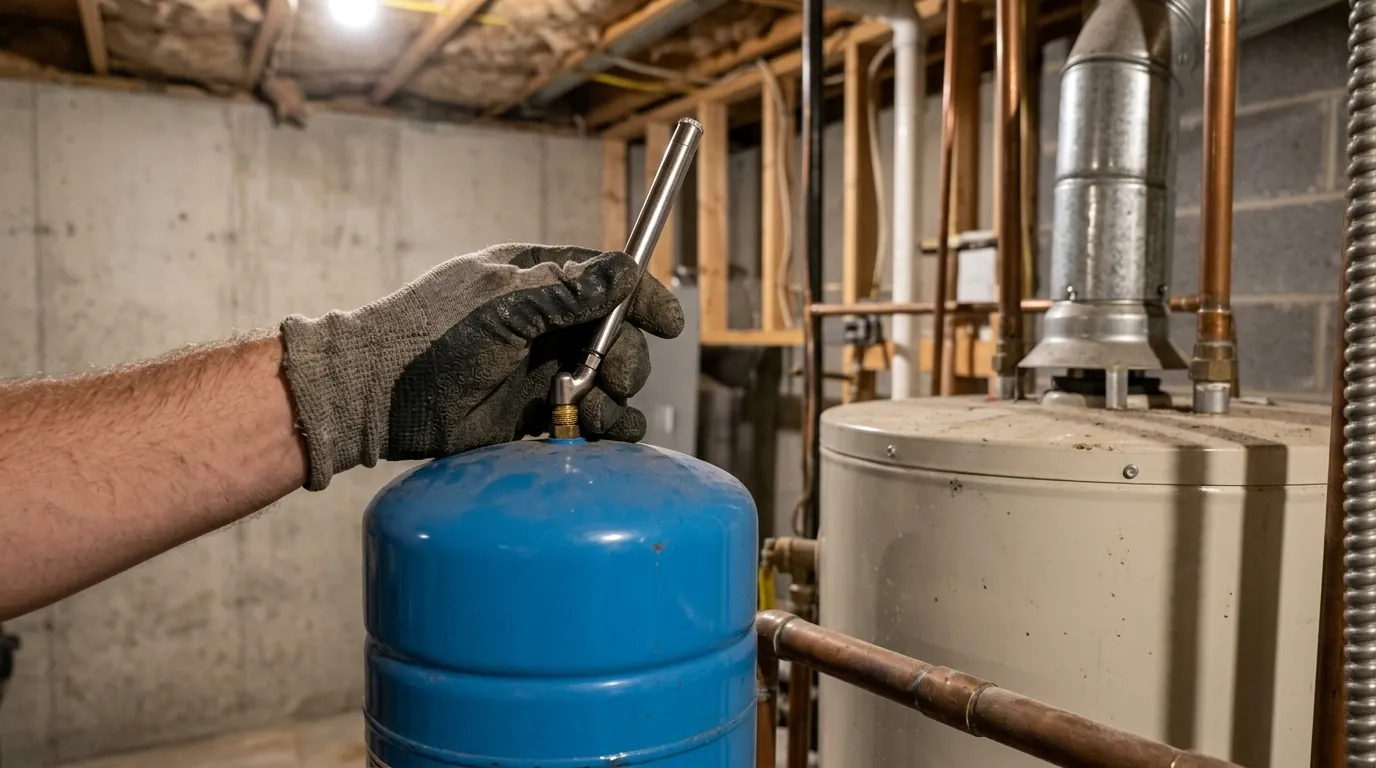
An expansion tank is a small steel vessel with an air chamber and a rubber bladder or diaphragm inside. As water expands, it pushes into the tank against the air cushion, which compresses and keeps house pressure close to normal. When you open a hot tap, the air pushes that water back out into the system.
Getting the size and pre-charge right
Expansion tanks come in a few sizes, and the right one depends on the water heater's capacity and your incoming water pressure. Higher house pressure needs a larger tank, because the air cushion starts out more compressed. Most homes with a 40 or 50 gallon heater use a two gallon tank, while larger heaters or higher pressure call for something bigger.
Pre-charge matters as much as size. Tanks ship from the factory at a standard air pressure, and that setting needs to match your house water pressure before the tank is installed. A tank charged too low fills with water and does nothing. We measure your static pressure, set the air charge with a gauge, then mount the tank.
Where the tank goes and how it is supported
The tank installs on the cold water supply line feeding the water heater, between the heater and the shutoff valve. A full expansion tank is heavier than it looks, so it needs support rather than hanging from a thin copper line. We use a bracket or strap to the wall or framing so the weight never stresses the pipe.
Orientation is flexible on most models, but we avoid spots where a future leak would damage finished drywall or flooring. If your heater sits in a tight closet, we plan the tank position so it does not block the gas valve, the drain valve or the relief valve discharge line you may need to reach later.
Warning signs
How do you know thermal expansion is a problem in your home?
The relief valve drips after heating
If the temperature and pressure relief valve weeps a little after the heater finishes a cycle, pressure is building past its limit. That is classic thermal expansion in a closed system.
Toilets run or hiss randomly
Pressure spikes can force water past a toilet fill valve, so the tank refills with no one using it. Several toilets doing it at once is a clue.
Faucets drip only some of the time
Worn cartridges drip constantly. A faucet that drips mostly after the water heater runs is often being pushed by pressure spikes rather than wear alone.
You have a pressure reducing valve
Most PRVs block water from flowing back toward the street, which creates a closed system. If your home has one, it almost certainly needs an expansion tank too.
The existing tank sounds hollow or full
Tap the tank. The top half should sound hollow and the bottom solid. A tank that sounds solid all over has a failed bladder and no longer absorbs anything.
Water comes out of the tank's air valve
Press the valve stem on the end of the tank briefly. Air is normal. Water means the internal diaphragm has ruptured and the tank needs replacing.
Aurora notes
Why so many Aurora homes have closed plumbing systems
Over the years, many Aurora homes have gained pressure reducing valves, backflow devices or check valves at the meter. Each one can turn an open system into a closed one. Homes built before those parts were common often went decades without an expansion tank, and the first sign of trouble is usually a dripping relief valve or a toilet that runs on its own at night.
Water heater replacement usually requires a permit and inspection in Aurora and nearby cities, and expansion control is one of the items an inspector looks at on a closed system. If you are replacing a heater soon, adding the tank at the same time saves a separate visit. Many basement utility rooms here have plenty of wall space, which makes mounting and supporting the tank simple.
Step by step
How we install an expansion tank
- 01
Measure house pressure
We put a gauge on a hose bib or laundry valve to read static pressure, and we watch it while the heater runs to see how high it climbs.
- 02
Pick the tank size
Based on the heater's capacity and your pressure reading, we choose a tank large enough to absorb the expansion without straining its diaphragm.
- 03
Set the air charge
Before installation, we adjust the tank's air pre-charge with a gauge so it matches your house water pressure, which is the step most often skipped.
- 04
Plumb and support it
We shut off the water, cut a tee into the cold supply line at the heater, connect the tank and secure it with a bracket or strap.
- 05
Test the system
We restore water, purge air, run the heater through a cycle and recheck pressure to confirm the spikes are gone and the relief valve stays dry.
Pricing
What expansion tank installation costs in Aurora
TYPICAL AURORA PRICE RANGES
| Two gallon expansion tank, installed | $245 to $465 |
|---|---|
| Larger tank for big heaters or high pressure | $345 to $585 |
| Replacing a failed expansion tank | $215 to $425 |
| Adding a tank during a water heater replacement | $165 to $295 |
| Pressure test with relief valve check | $85 to $145 |
These ranges are typical for Aurora homes, not a quote. Your price depends on the tank size, the piping and what we find at the heater.
- Tank sizeLarger tanks cost more and weigh more, sometimes needing stronger mounting. Most homes use a small tank, but high pressure or a large heater changes that.
- Pipe materialCopper, PEX and CPVC each connect differently. Older galvanized supply lines at the heater may need a short section replaced to make a sound connection.
- Mounting spaceA crowded closet may need extra fittings to place the tank where it can be supported and still leave the heater's controls easy to reach.
- Other pressure issuesIf house pressure is too high even before heating, a pressure reducing valve repair may be needed too. We price that separately.
Compare more jobs in our plumbing price guide.
Questions
Expansion Tank Installation questions from Aurora homeowners
How long does an expansion tank last?
Most last five to ten years. The rubber bladder inside eventually fails, and once it does, the tank fills with water and stops absorbing pressure. Checking it with a quick tap test or a press of the air valve once a year tells you whether it still works.
Does a tankless water heater need an expansion tank?
Usually not, because a tankless unit holds very little water at any moment, so expansion is small. Some manufacturers or local inspectors still call for one in certain closed systems. We check your unit's instructions and the system layout before recommending it.
Can a bad expansion tank cause high water pressure?
A failed tank does not raise your static pressure, but it lets pressure spike every time the heater runs. Those spikes can hit well above normal and stress the heater, valves and supply lines. Replacing the tank stops the spikes.
Why is my new expansion tank already full of water?
The most common reason is a pre-charge that was never adjusted to match house pressure. If the air charge is lower than the water pressure, water fills the tank right away. It can also mean a defective bladder. A gauge on the air valve tells us which.
Is it safe to leave thermal expansion untreated?
It is not an immediate danger, because the relief valve opens to protect the tank. But repeated spikes wear out the relief valve, fill valves, faucet cartridges and appliance hoses faster. Treating it is inexpensive compared with replacing those parts over and over.
Related work
Other plumbing jobs that often go with this one
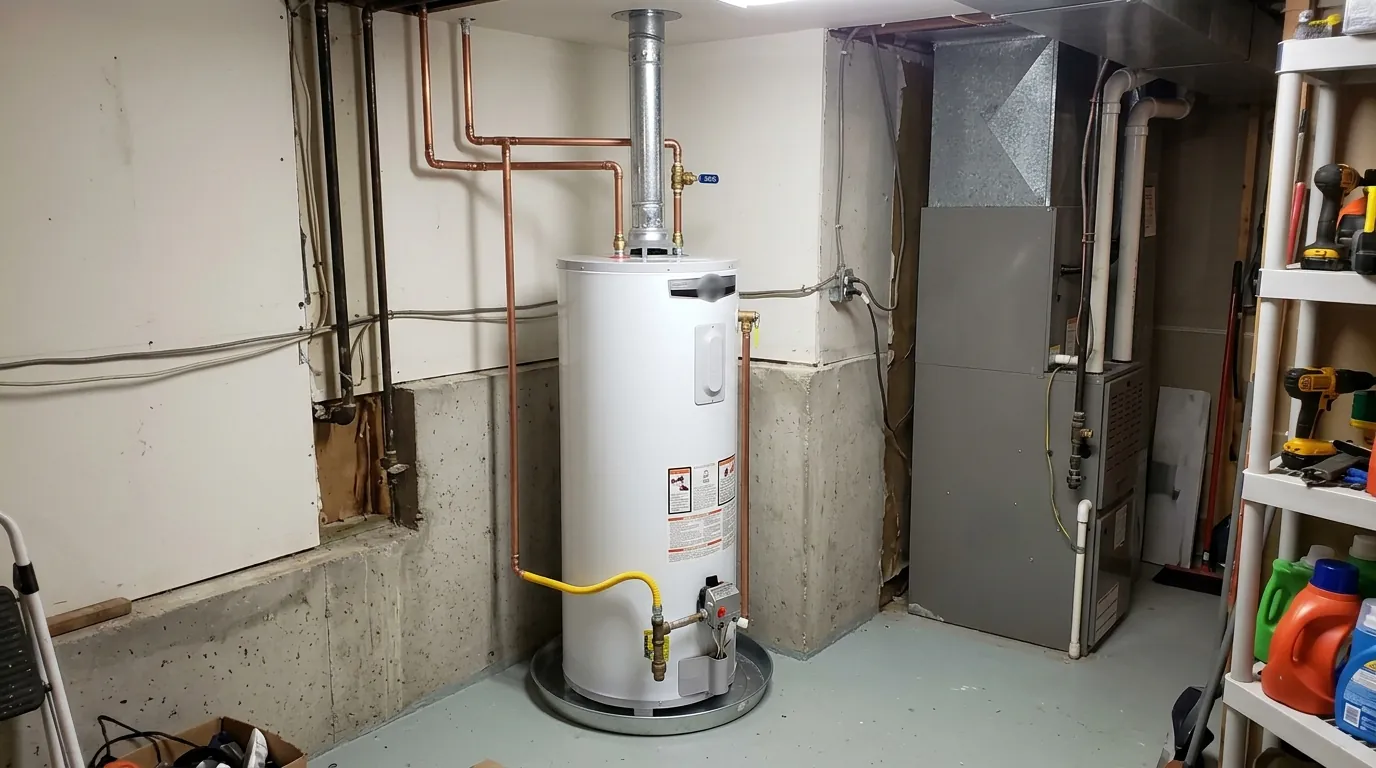
Water Heater Installation
New gas and electric tank water heaters sized for your household, set up for altitude, permitted, with the old tank hauled away.
Learn more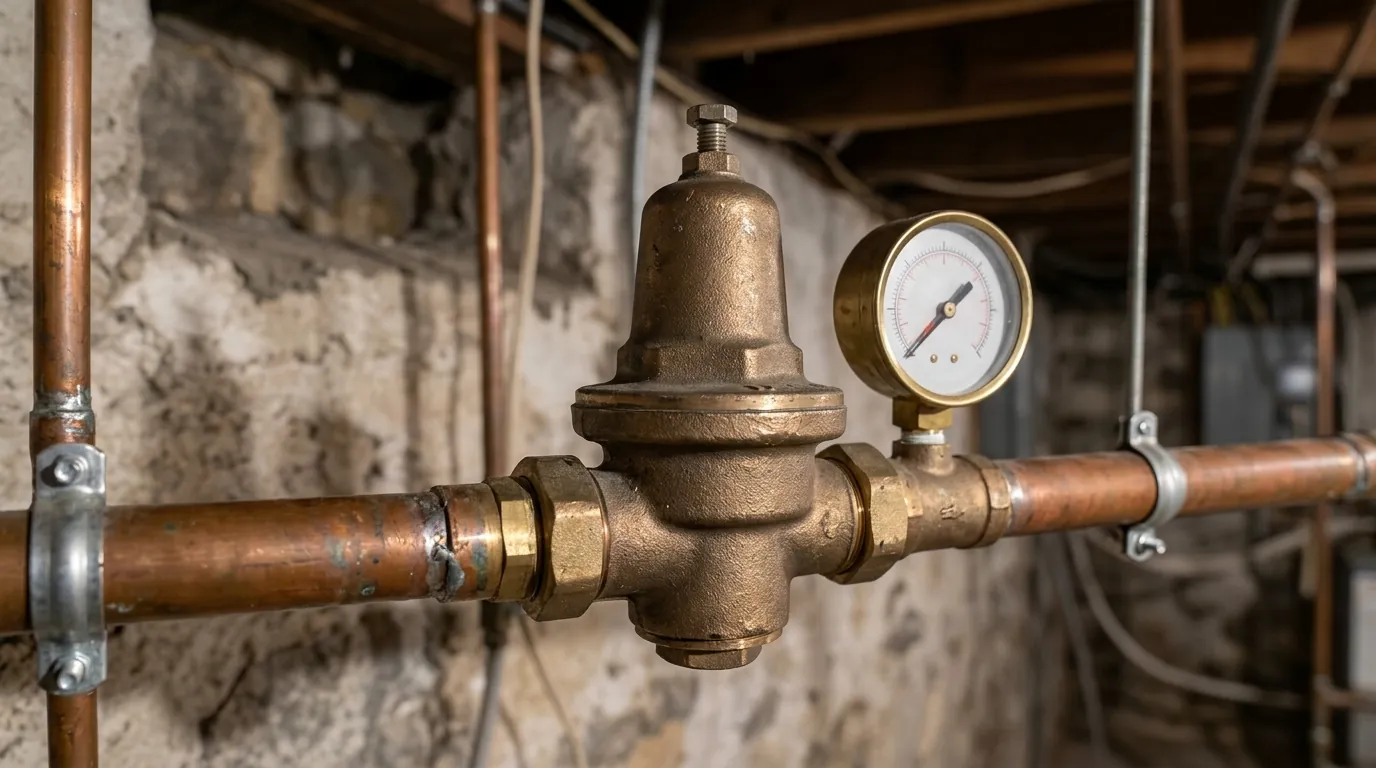
Pressure Reducing Valves
Test, adjust or replace the valve that keeps city water pressure from hammering your pipes, fixtures and water heater.
Learn more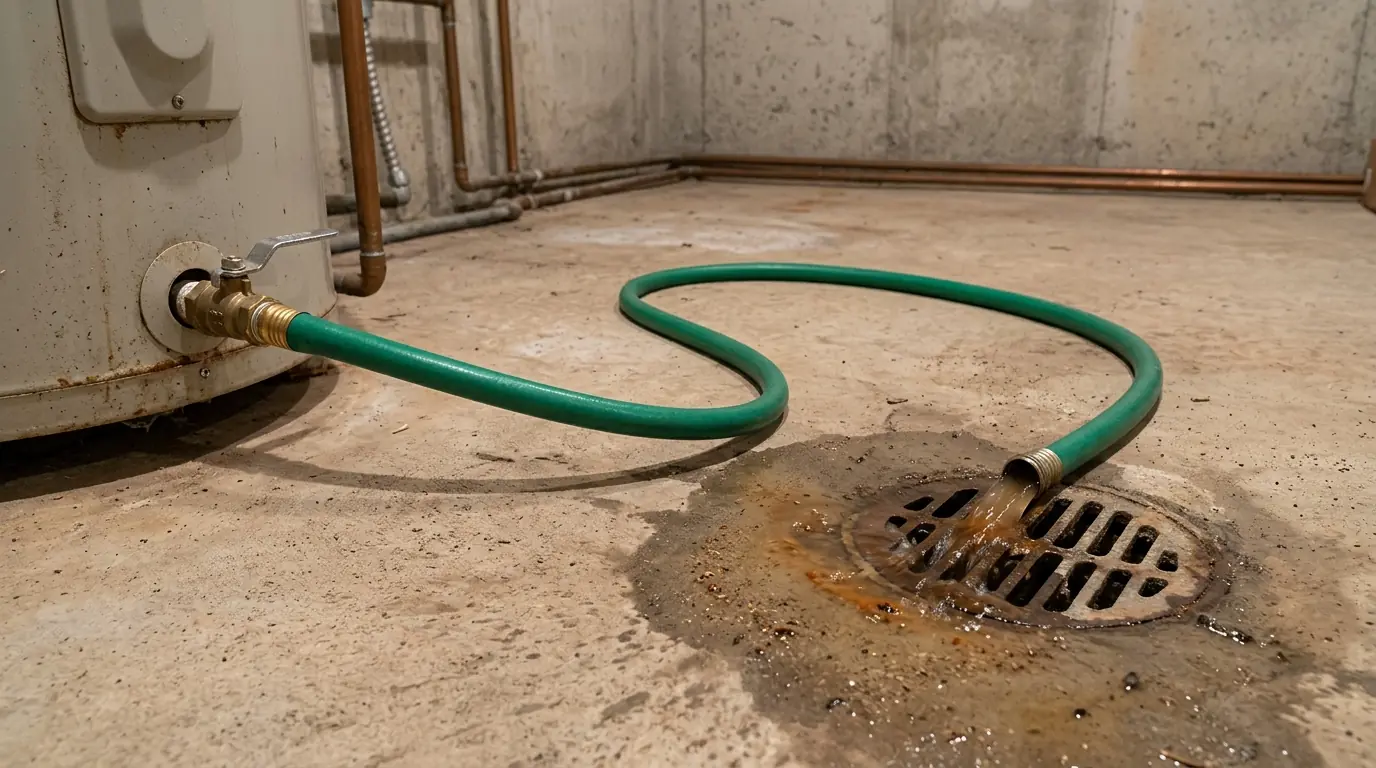
Water Heater Flush & Maintenance
Yearly tank flushing, anode rod checks and relief valve testing that keep a water heater running longer and quieter.
Learn more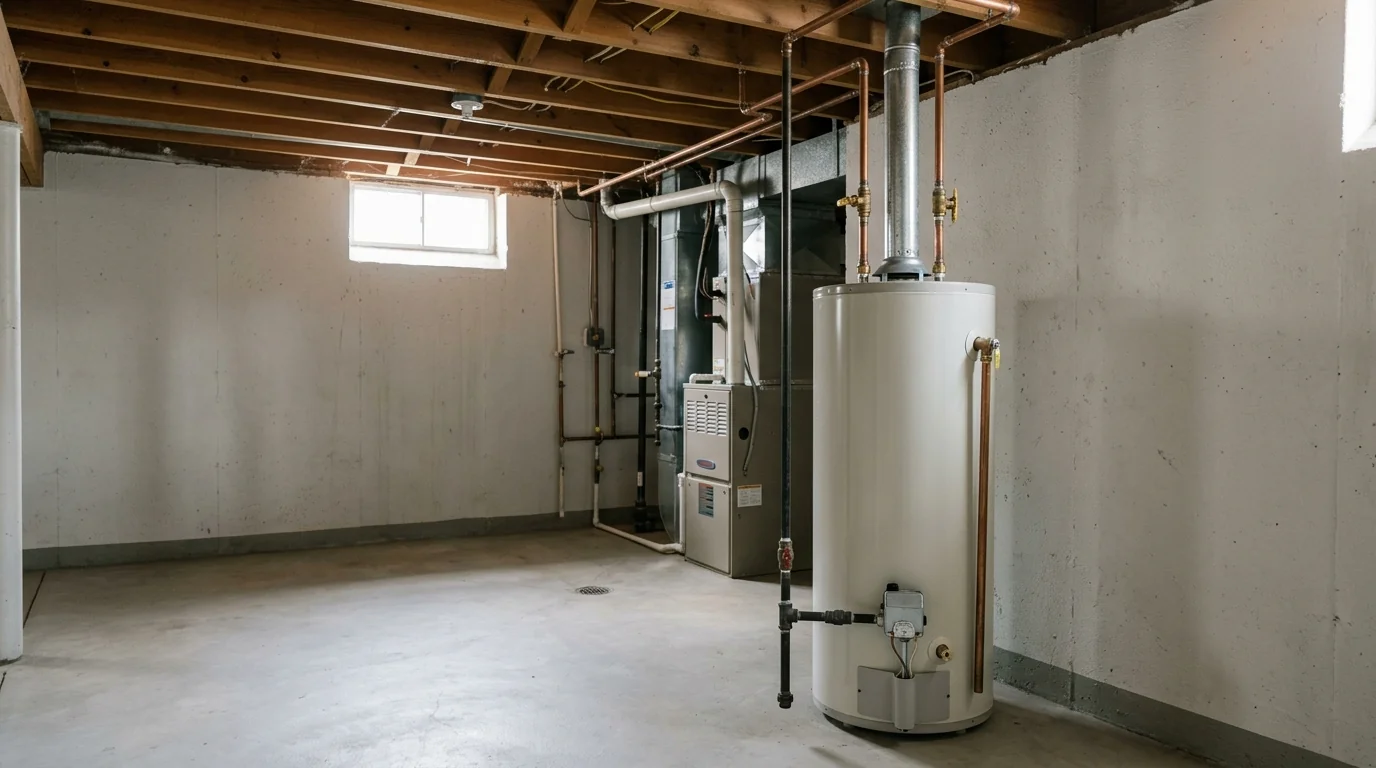
Water Heater Repair
No hot water, a leaking tank or a pilot that won't stay lit, fixed on gas and electric tank heaters.
Learn moreCoverage
Where we do expansion tank installation around Aurora
These neighborhoods and nearby cities cover most of the households we serve. Not listed? Call and ask.
- Original Aurora, Aurora 80010
- Del Mar, Aurora 80010
- Hoffman Heights, Aurora 80011
- Aurora Hills, Aurora 80012
- Village East, Aurora 80012
- Willow Park, Aurora 80012
- Aurora Knolls, Aurora 80012
- Heather Gardens, Aurora 80014
- Aurora 80012
- Denver 80202
- Centennial 80112
- Parker 80134
- Englewood 80110
- Littleton 80120
- Greenwood Village 80111
- Lone Tree 80124
Need help with expansion tank installation?
Call any time, day or night. A real person answers and tells you what happens next.