Drains & sewer
Trenchless sewer repair in Aurora, CO
Digging a trench under a driveway, a mature tree or a finished patio costs almost as much to restore as the pipe work itself. Trenchless methods rebuild or replace the sewer line through small openings, so most of your property stays untouched.
SERVICE PLATE
- Service
- Trenchless Sewer Repair
- Typical range
- $1,865 to $3,945
- Area
- Aurora and the east metro
- Hours
- Answered 24/7
- Phone
- (720) 894-1012
Brands we work on every week
Trenchless sewer repair renews a line without digging its full length. Pipe lining coats the inside of the old pipe with a resin-soaked liner that hardens into a new pipe within a pipe. Pipe bursting pulls a new pipe through the old one, breaking it apart as it goes. Both work from one or two small access points.
How pipe lining builds a new pipe inside the old one
Lining starts with a thorough hydro jetting to remove roots, grease and scale, followed by a camera check. We then measure the line, wet out a flexible liner tube with epoxy resin and pull or invert it into the old pipe. An inflatable bladder presses the liner against the pipe walls while the resin cures and hardens.
The finished liner forms a smooth, jointless pipe inside the old host pipe. It seals cracks and root entry points and often improves flow because the walls are slicker than old clay or cast iron. Branch connections, like a second bathroom line tying in, are reopened afterward with a remote cutting tool guided by the camera.
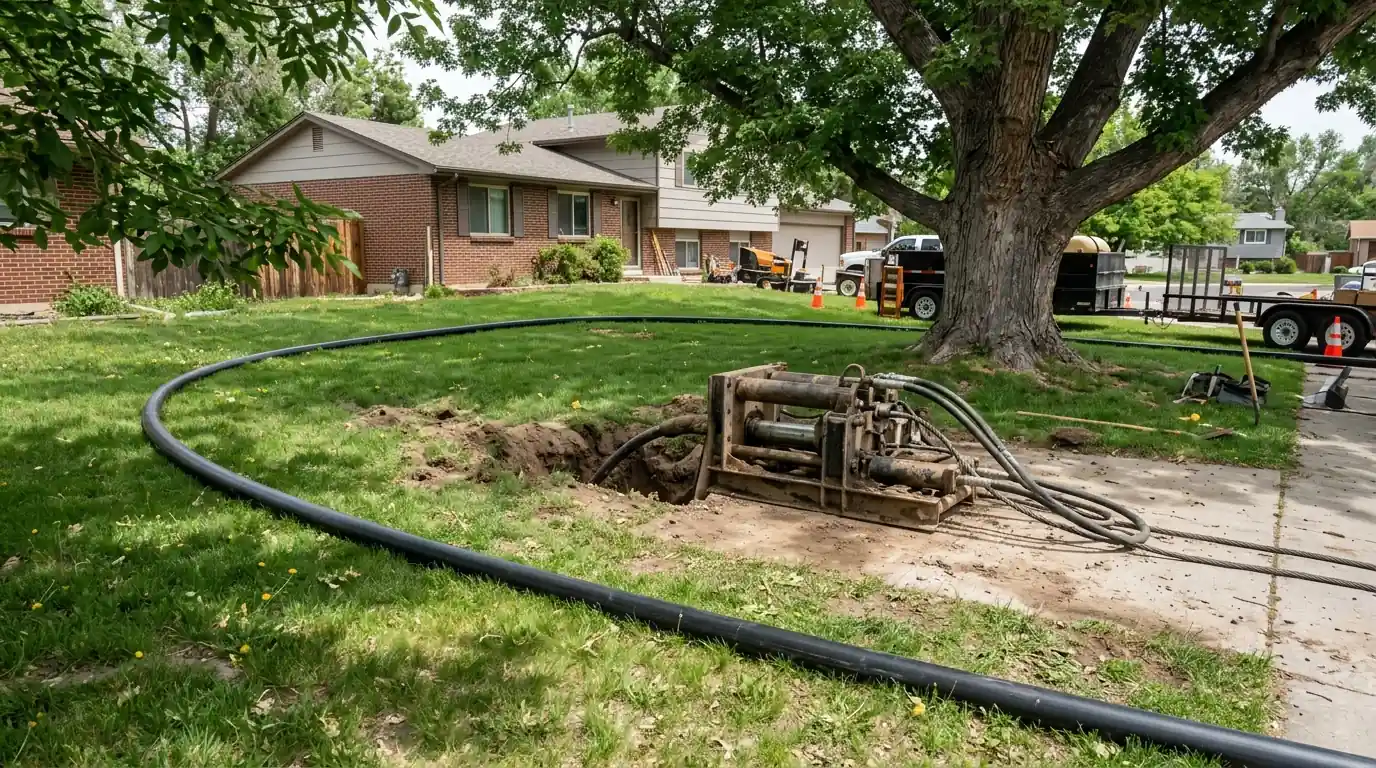
How pipe bursting replaces a line without a trench
Pipe bursting needs two access pits, one near the house and one near the city main or at the end of the damaged run. A cone-shaped bursting head is pulled through the old pipe by a cable and hydraulic machine. It fractures the old pipe outward into the soil and drags a new one-piece pipe in behind it.
Because the new pipe is a full replacement, bursting works on lines too damaged to line, such as pipe with missing sections or severe cracking. It does need a fairly straight path and enough space from other buried utilities. Gas lines, water lines and foundations close to the sewer can make bursting a poor fit, which we check before quoting.
Limits worth knowing before you choose a trenchless method
Neither method fixes a sag on its own. A liner follows the shape of the old pipe, so a belly stays a belly, and bursting tends to follow the existing grade too. Badly collapsed sections may need a small excavation first to restore the path. We check slope on camera so you aren't surprised later.
Lining reduces the inside diameter slightly, which is rarely a problem for a typical home lateral but matters on smaller pipes. Bursting needs room at both ends for the pits and machinery. If your line has several of these limits, a hybrid approach can work: dig the bad spot and line or burst the rest.
Pricing
Trenchless sewer repair cost in Aurora
TYPICAL AURORA PRICE RANGES
| Spot liner for a short damaged section | $1,865 to $3,945 |
|---|---|
| Full lateral pipe lining | $6,485 to $12,865 |
| Pipe bursting full lateral replacement | $7,465 to $14,385 |
| Reinstating a branch connection after lining | $465 to $945 |
| Pre-lining jetting and camera prep | $545 to $985 |
These are typical Aurora ranges, not a quote. Your price depends on the pipe, the method and what the camera shows before we start.
- MethodA spot liner costs far less than a full lining. Bursting usually lands near full lining in price, depending on pits and pipe length.
- Pipe length and diameterLonger laterals need more liner or pipe and more resin. Larger diameters raise material costs for both methods.
- Branch connectionsEach tie-in that must be reopened after lining adds robotic cutting time and sealing work to the job.
- Site conditionsTight access, deep pits, nearby utilities and existing sags can add excavation or change which method is practical.
Compare more jobs in our plumbing price guide.
Step by step
Our step-by-step trenchless sewer process
- 01
We camera and measure the line
A camera run maps the pipe's condition, length, branch connections and slope, which tells us whether lining or bursting is the better fit.
- 02
We clean the pipe
Hydro jetting removes roots, grease and scale so a liner bonds properly or a bursting head travels cleanly through the old pipe.
- 03
We set up access
Lining often works from a cleanout. Bursting needs two small pits. Colorado 811 marks buried utilities before any digging begins.
- 04
We install the new pipe
The liner is placed and cured, or the bursting head pulls new pipe through. Branch connections are reopened and sealed as needed.
- 05
We verify and close up
A final camera run confirms the new pipe is smooth and properly connected. We fill the access pits and clean up the work area.
Warning signs
When is trenchless the better choice for your sewer?
The line runs under concrete
Driveways, garages, walkways and patios cost a lot to break and pour again. Trenchless work leaves them in place and saves that restoration expense.
Mature trees sit over the path
Trenching near a large tree can cut major roots and harm the tree. Lining or bursting works below without disturbing the root zone.
Roots enter at many joints
When roots come through joint after joint, a liner seals every joint at once. The result is a continuous pipe with no seams for roots to find.
The pipe is cracked but holding shape
Cracked clay or corroded cast iron that still holds its round shape is a good candidate for lining, which seals cracks from the inside.
Landscaping you want to keep
Finished yards with sprinklers, garden beds and stone work are costly to rebuild. Trenchless methods keep surface damage to a pit or two.
A line that must stay in its current path
Bursting replaces the pipe along its existing path, which is useful when other utilities or property lines make a new trench route difficult.
Aurora notes
Trenchless options for Aurora's older lines and shifting soil
Many homes in Original Aurora and the northwest part of the city have clay or cast iron sewer laterals from the 1940s and 1950s, often running under driveways and mature trees that came later. Central Aurora's 1960s and 1970s homes commonly have cast iron that has corroded but still holds its shape, which is often a good fit for lining. Matching the method to the pipe is the first decision we help you make.
Expansive clay soil across the Front Range shifts buried pipe over time. That movement can create offsets and bellies that affect which trenchless method works. A liner can bridge small offsets but not large ones, and neither method lifts a sagging line. Before any trenchless work, we call Colorado 811 to have buried utilities marked near the access pits, especially gas and water lines close to the sewer path.
Related work
Other plumbing jobs that often go with this one
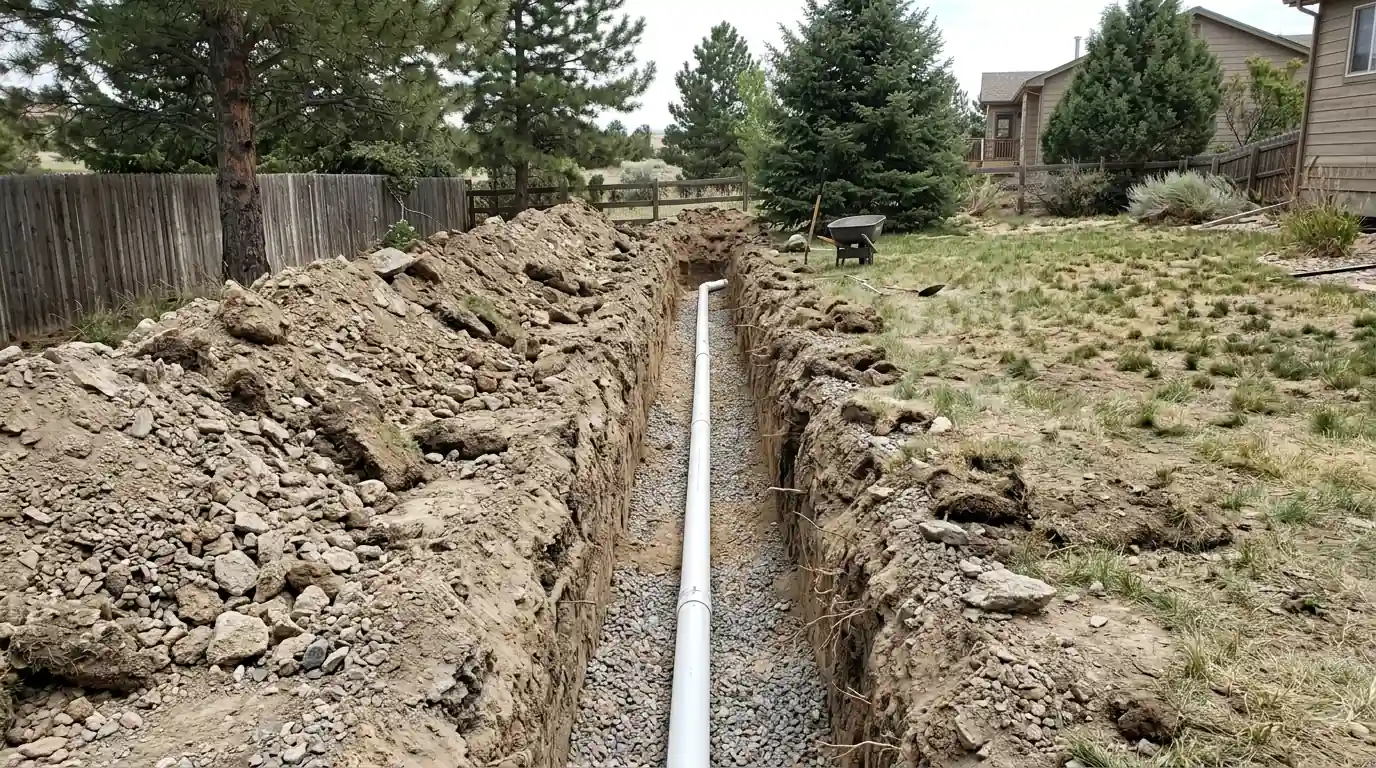
Sewer Line Replacement
Worn out clay, cast iron or Orangeburg laterals replaced end to end, by open trench or trenchless method.
Learn more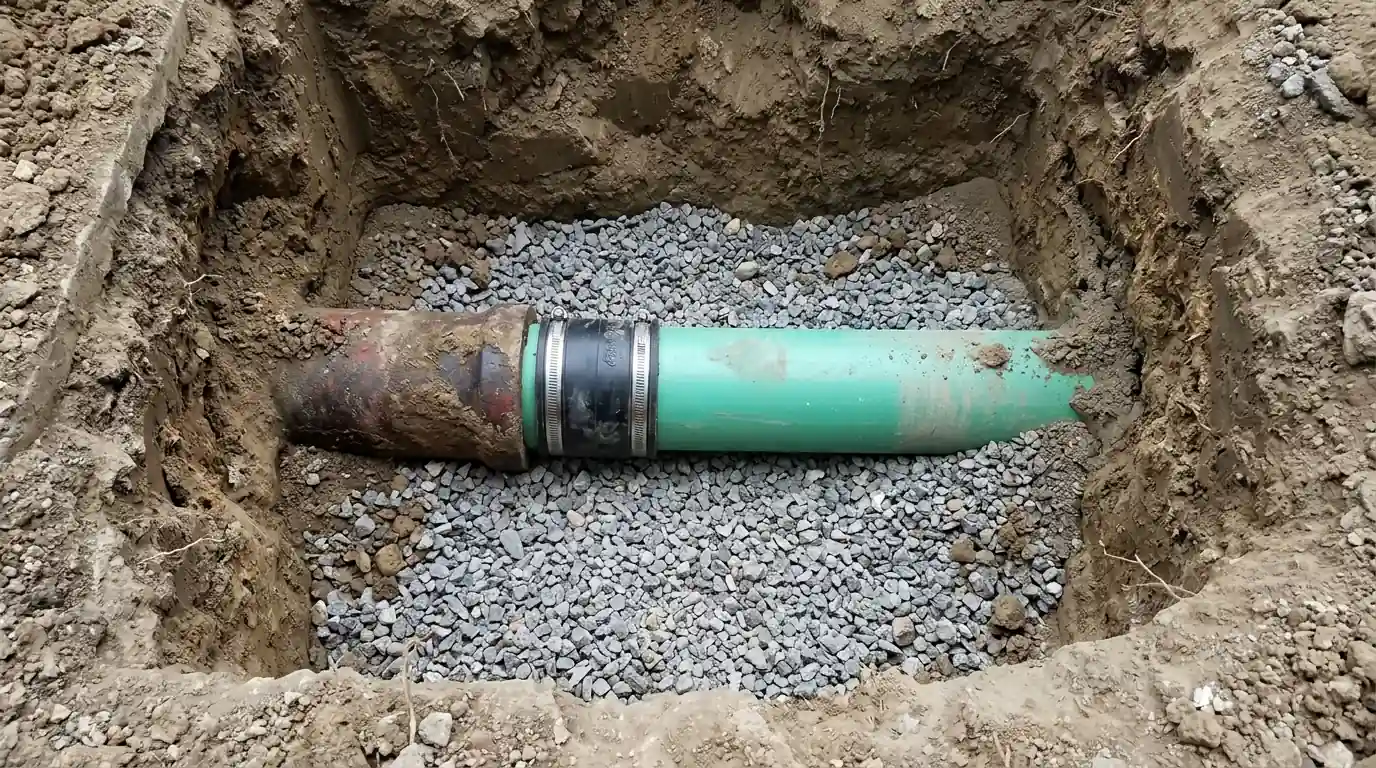
Sewer Line Repair
A cracked, offset or sagging section of sewer pipe dug up and replaced on its own, without redoing the whole line.
Learn more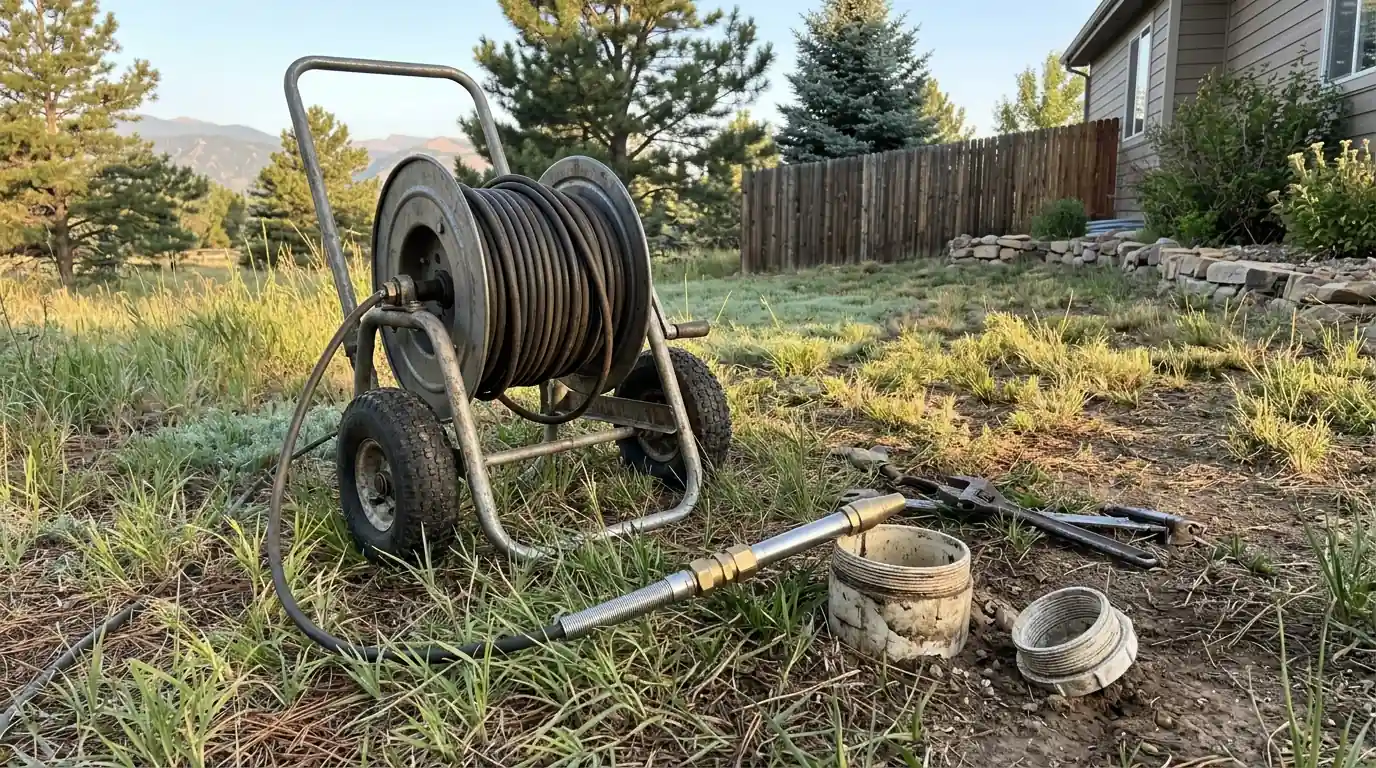
Hydro Jetting
High-pressure water scours grease, scale and fine roots from drain and sewer pipe walls instead of just punching a hole.
Learn more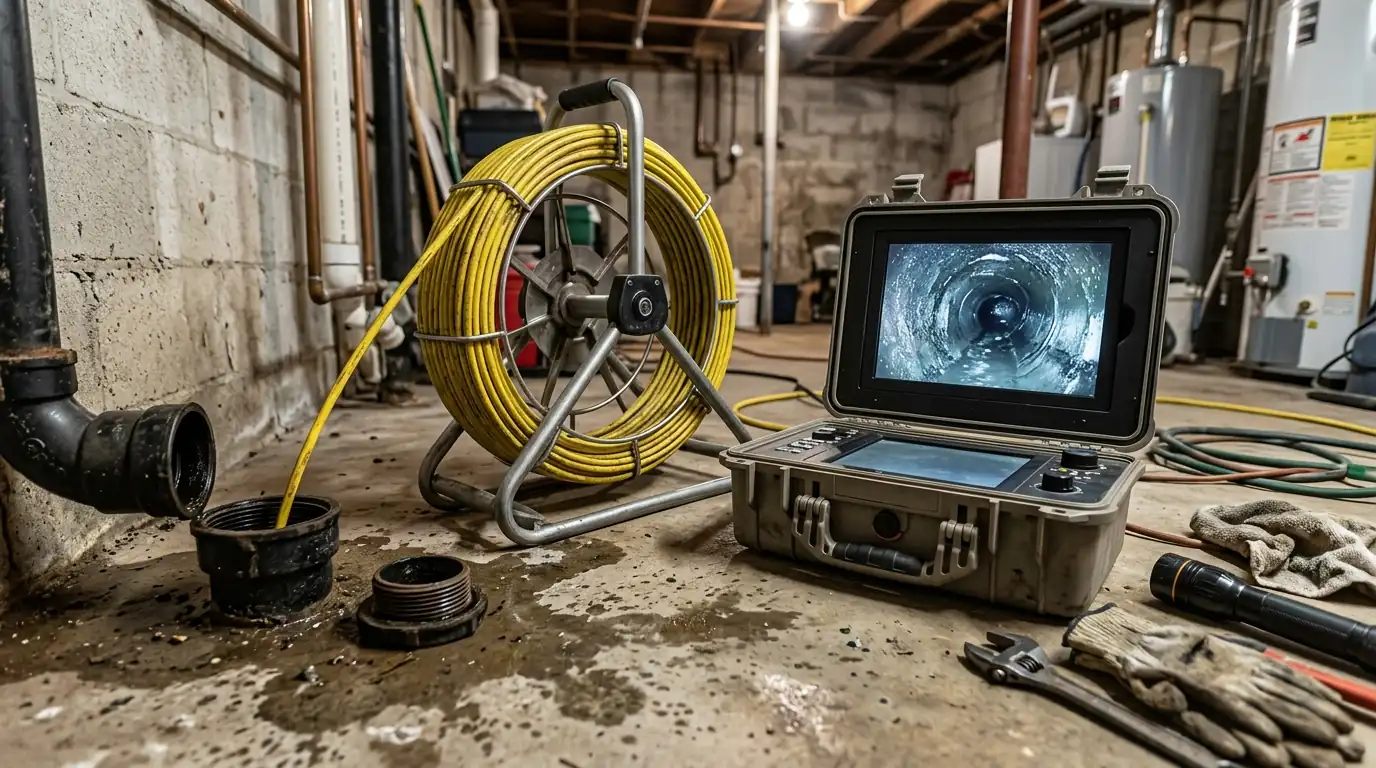
Sewer Camera Inspection
A waterproof camera shows roots, cracks, sags and pipe material in your sewer line, with recorded video you keep.
Learn moreQuestions
Trenchless Sewer Repair questions from Aurora homeowners
How long does a cured-in-place sewer liner last?
A properly installed epoxy liner is designed for many decades of service. It forms a jointless pipe that roots can't enter, and it resists the corrosion that wears out cast iron. Results depend on good cleaning and curing, which is why we camera the line before and after.
Can a sewer liner be installed if my pipe has a belly?
A liner follows the existing pipe, so a sag stays in place after lining. Small bellies may not cause trouble, but deeper ones keep collecting waste. We often fix a significant belly with a short excavated repair first, then line the rest of the line.
What is the difference between pipe lining and pipe bursting?
Lining keeps the old pipe and builds a new resin pipe inside it, often working from one access point. Bursting breaks the old pipe apart and pulls a brand new pipe through its path, which needs two pits. Bursting handles more severe damage, while lining saves even more digging.
Does trenchless sewer work need any digging at all?
Usually a little. Lining can often be done through a cleanout with no excavation. Bursting needs a small pit at each end of the run. Compared with a trench across the yard, either approach leaves most of your lawn, driveway and landscaping untouched.
Will a pipe liner make my sewer line narrower?
Slightly. The liner adds a thin wall inside the old pipe, so the inside diameter shrinks a little. For a typical home lateral this rarely affects drainage, and the smoother liner surface often improves flow compared with rough clay or cast iron.
Coverage
Where we do trenchless sewer repair around Aurora
These neighborhoods and nearby cities cover most of the households we serve. Not listed? Call and ask.
- Original Aurora, Aurora 80010
- Del Mar, Aurora 80010
- Hoffman Heights, Aurora 80011
- Aurora Hills, Aurora 80012
- Village East, Aurora 80012
- Willow Park, Aurora 80012
- Aurora Knolls, Aurora 80012
- Heather Gardens, Aurora 80014
- Aurora 80012
- Denver 80202
- Centennial 80112
- Parker 80134
- Englewood 80110
- Littleton 80120
- Greenwood Village 80111
- Lone Tree 80124
Need help with trenchless sewer repair?
Call any time, day or night. A real person answers and tells you what happens next.