Water heaters
Tankless water heater installation in Aurora, CO
Running out of hot water halfway through a shower gets old, and a tank heater takes up floor space you could use. We install tankless units sized for your home, with the gas supply and venting they actually need.
SERVICE PLATE
- Service
- Tankless Water Heater Installation
- Typical range
- $3,285 to $5,465
- Area
- Aurora and the east metro
- Hours
- Answered 24/7
- Phone
- (720) 894-1012
Brands we work on every week
A tankless heater makes sense in Aurora when you want steady hot water, a smaller footprint and lower standby losses, and you are willing to spend more up front. Most gas installs run $3,285 to $5,465 because the unit often needs a larger gas line and new direct venting. We size it for cold winter water and real flow demand.
How we size a tankless heater for Colorado winters
Tankless units are rated by how many gallons per minute they can heat by a given temperature rise. In winter, water entering a Front Range home is much colder than in summer, so the heater has to work harder to deliver the same shower. We size for the coldest months of the year, not the brochure's best case in July.
Next we add up the fixtures likely to run at once. Two showers and a kitchen faucet need far more flow than one shower and a bathroom sink. A unit that is too small delivers lukewarm water at full demand, and one that is far too large costs more without any real benefit. We show you the numbers behind our recommendation.
The gas line is usually the hidden cost
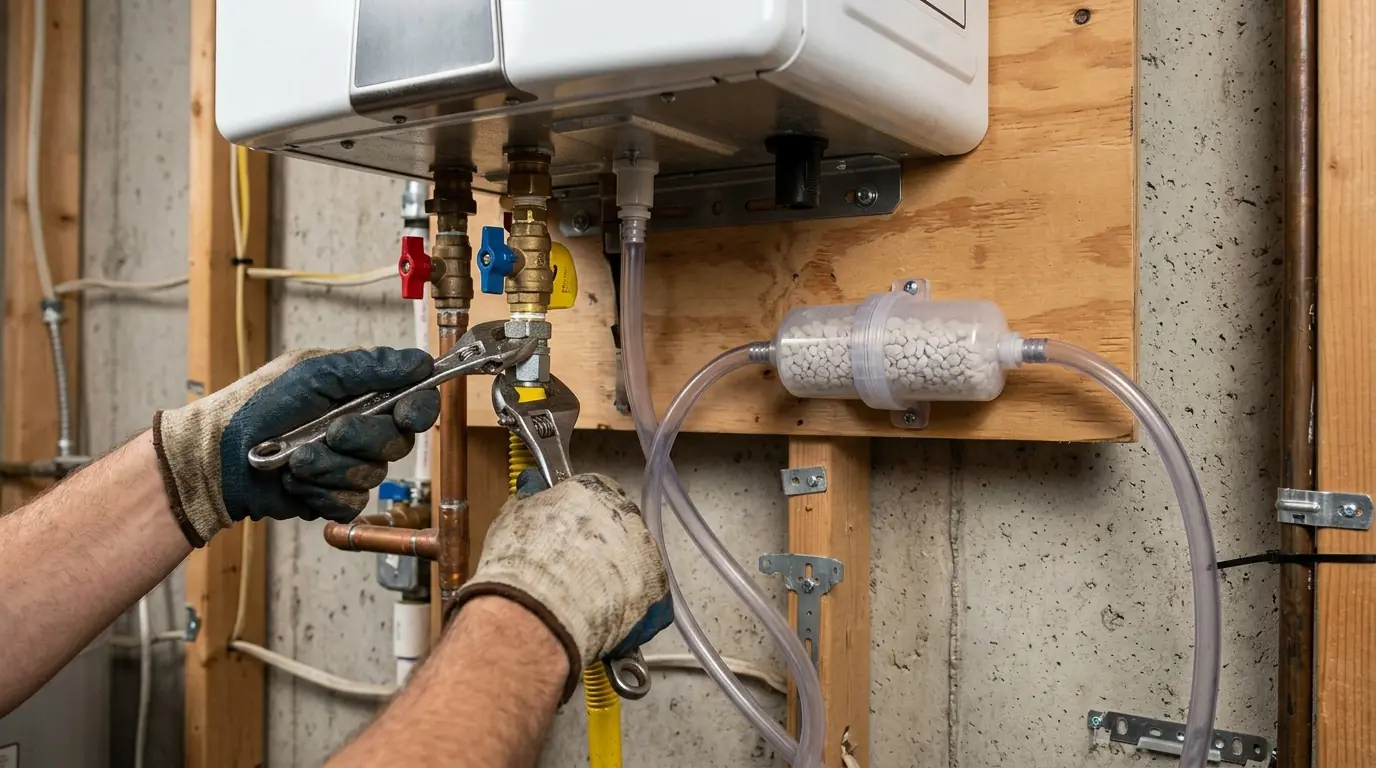
A whole-house gas tankless heater can draw several times the gas of a standard tank heater. The half inch line that fed your old tank is often too small, especially on a long run from the meter. Undersized gas piping starves the burner and causes error codes, temperature swings and early wear on the unit.
We measure the run and calculate the total load with your furnace, range and dryer included, then upsize the line where needed. In some homes Xcel Energy needs to confirm the meter can handle the added load, and we tell you up front if that step applies, so the schedule accounts for it.
Condensing or non-condensing, and why venting decides it
Condensing tankless units squeeze extra heat from the exhaust, so they run more efficiently and vent through PVC. They also produce acidic condensate that needs a neutralizer and a drain. Non-condensing units send hotter exhaust through stainless steel vent pipe, which costs more per foot but skips the condensate line altogether.
Your home's layout often makes the choice for you. A basement mechanical room near a floor drain suits a condensing unit well. A garage location with no drain nearby may favor a different setup or a small condensate pump. We walk through both options before you decide, so the install fits the house you actually have.
Pricing
Typical tankless installation prices in Aurora
TYPICAL AURORA PRICE RANGES
| Tank to gas tankless conversion, installed | $3,285 to $5,465 |
|---|---|
| Tankless to tankless replacement | $2,465 to $3,885 |
| Gas line upsizing from meter to heater | $485 to $1,265 |
| New direct venting through a wall or roof | $365 to $845 |
| Electric point-of-use tankless at one fixture | $685 to $1,345 |
Every tankless job depends on the gas line, venting and location, so these ranges are not a quote. We price your home once we see what we find there.
- Gas supplyThe length and size of the existing gas line decide whether it can feed a tankless unit. Upsizing a long run is the biggest variable in most of our tankless quotes.
- Unit capacity and typeCondensing units and higher flow models cost more, but they may save money on venting or deliver more hot water for larger households.
- Vent routeA short run through an outside wall costs far less than snaking venting up through two floors and out the roof.
- Condensate and drainageCondensing models need a drain and a neutralizer. A location far from a floor drain or standpipe may also need a small condensate pump.
Compare more jobs in our plumbing price guide.
Step by step
How a tankless installation day goes
- 01
Site check and sizing
We look at the heater location, the gas meter and line, the venting route and the nearest drain, then confirm the unit size and give you a written price.
- 02
Permit and gas planning
We pull the permit and plan any gas line upsizing ahead of time, so installation day is about building, not discovering problems in the middle of the job.
- 03
Remove the old tank
The old heater is drained, disconnected and hauled away. We cap or seal the old vent opening if the new unit will vent through a different route.
- 04
Mount, pipe and vent
The tankless unit is mounted on the wall with isolation valves, a relief valve, new gas piping, venting to the outside and a condensate line with a neutralizer where required.
- 05
Program and test
We set the altitude configuration and temperature, run several fixtures at once to confirm flow, check every gas joint for leaks and show you how the controls work.
Warning signs
Signs your home is a good candidate for tankless
Your tank is due for replacement anyway
Switching at the end of a tank's life avoids paying for two heaters. If yours is ten or more years old, it is a sensible time to compare a tankless price with a like-for-like tank.
Showers run cold during busy mornings
A tankless unit heats water as it flows, so back to back showers do not drain a stored supply. Sizing still matters, but there is no empty tank to wait on.
You want the floor space back
A wall-hung tankless heater frees up the footprint of a 50 gallon tank, which helps in a finished basement, a tight garage or a utility closet you would like to use for storage.
The heater sits near an outside wall
Direct-vent tankless units vent through a nearby wall or the roof with PVC or stainless pipe. A location close to an exterior wall keeps the vent run short and the cost down.
You plan to stay in the house a while
Tankless heaters cost more to install, and the payback comes from lower standby losses and a longer service life. The longer you stay, the more of that benefit you collect.
Your soaking tub never fills hot
A large tub can outlast a standard tank's hot water before it is full. A properly sized tankless unit keeps up as long as the flow stays within its rating.
Aurora notes
What Aurora's altitude and water mean for tankless heaters
Gas appliances at about 5,400 feet need high-altitude setup, and tankless heaters are no exception. Most manufacturers publish altitude settings, sometimes a dip switch and sometimes a menu option, that adjust the burner for thinner air. We set that on every install, because a unit left at sea level settings can misfire, soot up the heat exchanger or throw ignition errors within its first winter.
Aurora has moderately hard water, and minerals collect inside a tankless heat exchanger faster than many owners expect. We install isolation valves on every unit so it can be flushed without cutting pipe, and we can add a scale filter where it makes sense. Newer master-planned neighborhoods in far southeast and northeast Aurora often have tankless heaters already, so many of our installs there are straight swaps.
Related work
Other plumbing jobs that often go with this one
Tankless Water Heater Repair
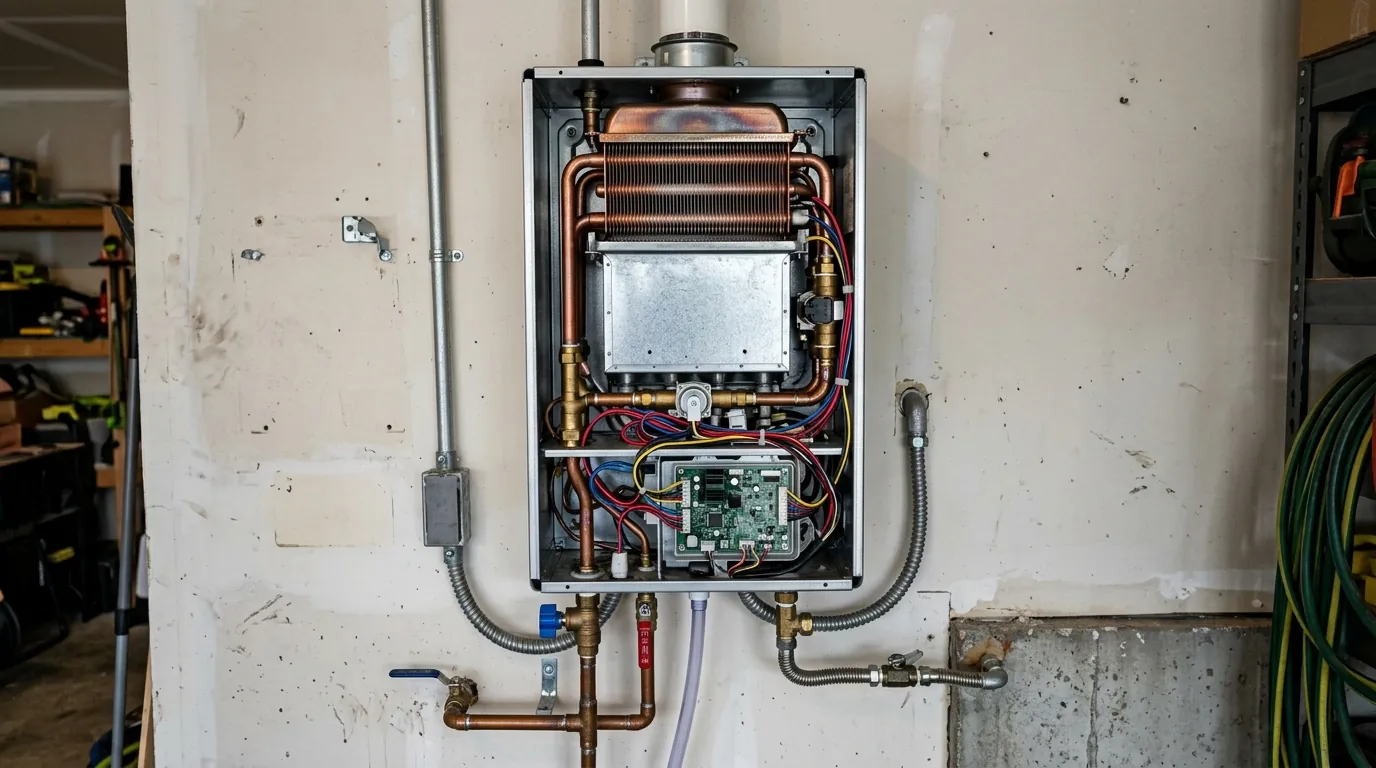
Error codes, ignition failures, temperature swings and scale buildup diagnosed and repaired on gas and electric tankless units.
Learn more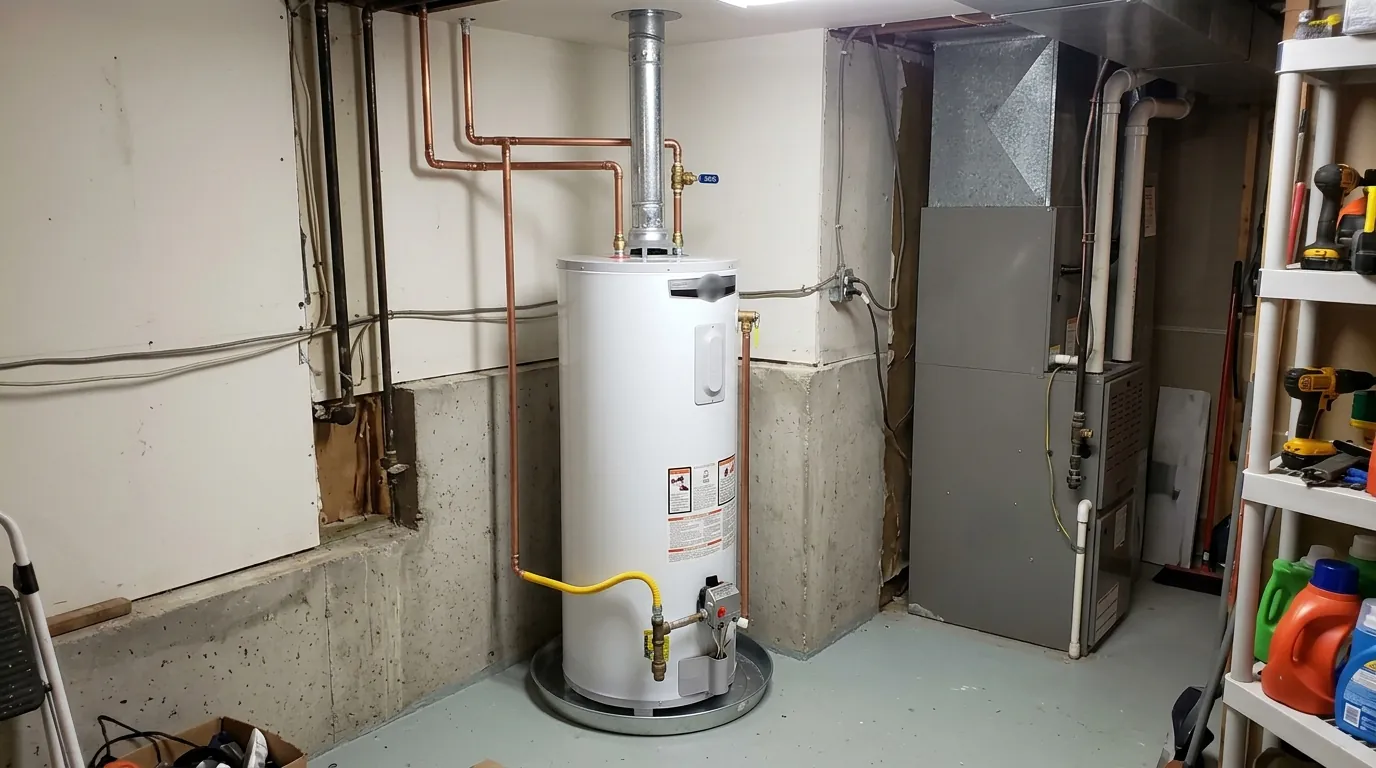
Water Heater Installation
New gas and electric tank water heaters sized for your household, set up for altitude, permitted, with the old tank hauled away.
Learn more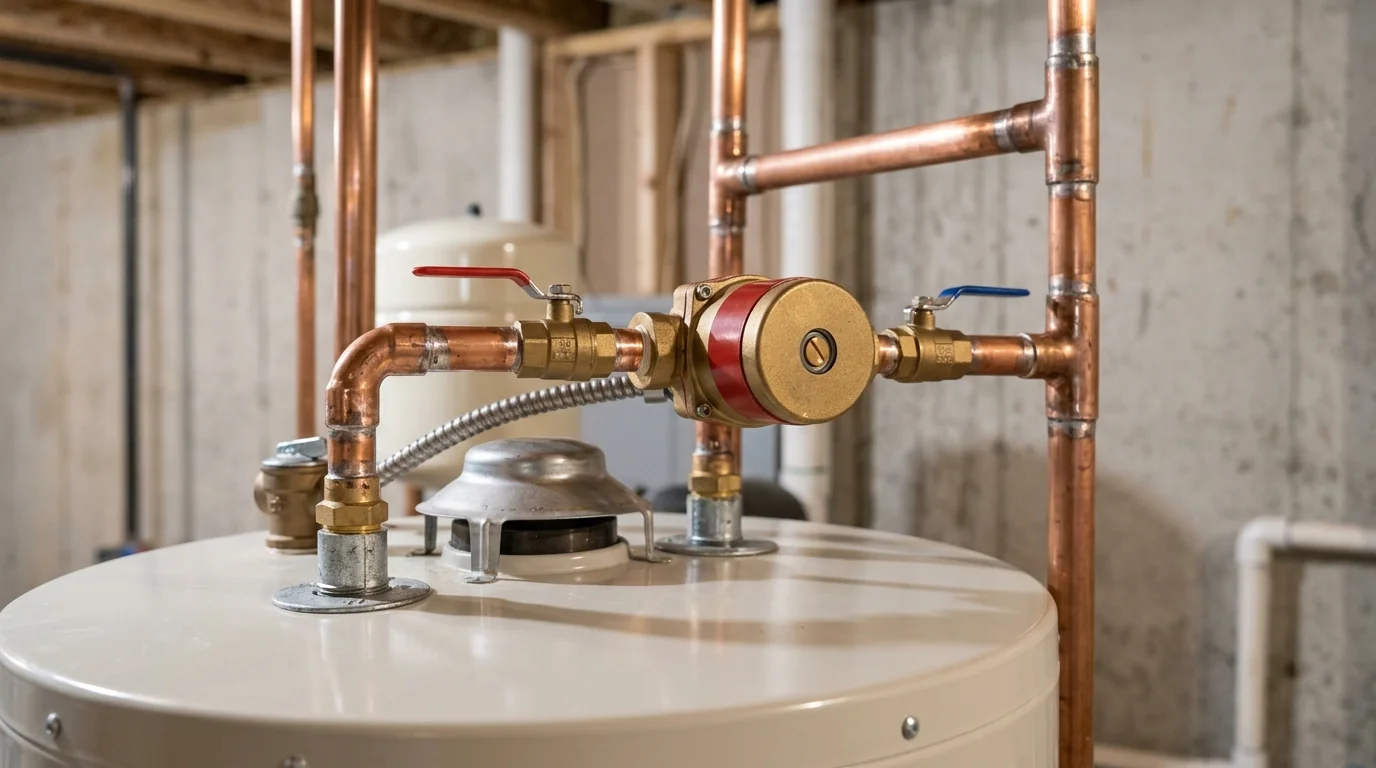
Hot Water Recirculation Pumps
Recirculation pumps that bring hot water to far bathrooms in seconds, with timer, demand and sensor controls to limit waste.
Learn more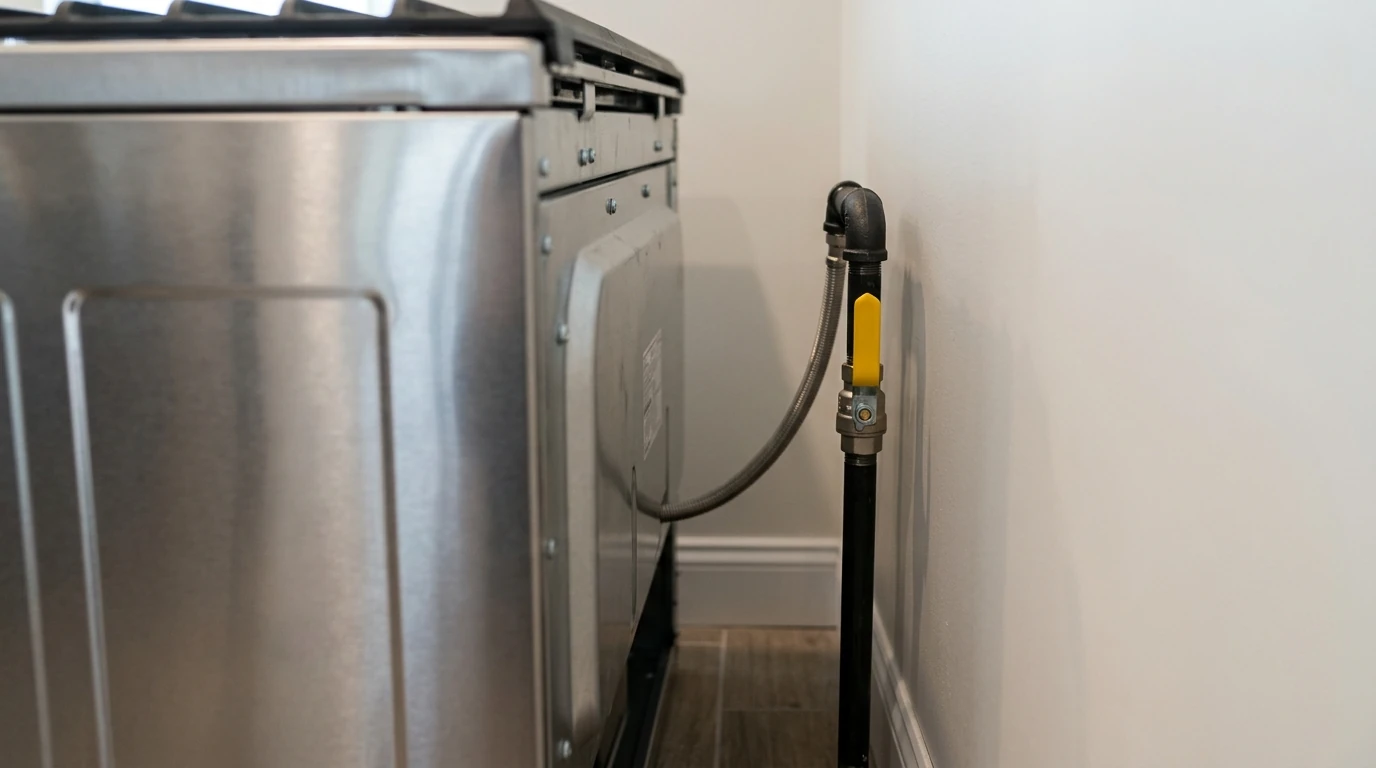
Gas Line Installation
New gas lines for ranges, dryers, fire pits, grills, garage heaters and generators, sized for the load and pressure tested.
Learn moreQuestions
Tankless Water Heater Installation questions from Aurora homeowners
Can a tankless heater run two showers at once in winter?
Yes, if it is sized for it. A mid-size gas unit can usually handle two showers in winter when the incoming water is cold, though a third fixture may push it past its limit. We calculate flow at winter temperatures so you know what the unit can carry before you buy it.
Will a tankless water heater work during a power outage?
No. Gas tankless units need electricity for the controls, fan and ignition, so they stop when the power does. A tank heater with a standing pilot keeps working. If outages worry you, ask us about a small battery backup sized for the unit's power draw.
How long do tankless water heaters last compared with tanks?
A well-maintained tankless heater often runs around twenty years, versus roughly eight to twelve for a tank. That longer life depends on regular descaling, especially with moderately hard water. Skipping maintenance narrows the gap considerably.
Do I need a water softener before installing tankless?
It is not required, but scale is the main enemy of a tankless heat exchanger. Some homeowners pair a new unit with a softener or a scale filter, and others simply have it flushed every year. We explain the tradeoffs and leave the choice with you.
Is there a delay before hot water arrives with tankless?
The water still has to travel through the pipes, so the wait at a far bathroom is similar to a tank. Some people also notice a brief cold slug when a shower is turned off and back on. A recirculation setup or a unit with a small buffer can reduce both.
Coverage
Where we do tankless water heater installation around Aurora
These neighborhoods and nearby cities cover most of the households we serve. Not listed? Call and ask.
- Original Aurora, Aurora 80010
- Del Mar, Aurora 80010
- Hoffman Heights, Aurora 80011
- Aurora Hills, Aurora 80012
- Village East, Aurora 80012
- Willow Park, Aurora 80012
- Aurora Knolls, Aurora 80012
- Heather Gardens, Aurora 80014
- Aurora 80012
- Denver 80202
- Centennial 80112
- Parker 80134
- Englewood 80110
- Littleton 80120
- Greenwood Village 80111
- Lone Tree 80124
Need help with tankless water heater installation?
Call any time, day or night. A real person answers and tells you what happens next.