Advice Center
Seven signs your water heater is near the end of its life
Water heaters rarely fail without warning. Most give months of hints before the tank leaks, and catching them lets you replace the unit on your schedule instead of on a cold morning. Here are the seven to watch for.
By Mavis Vickery, Advice Center EditorUpdated October 18, 20266 minute read
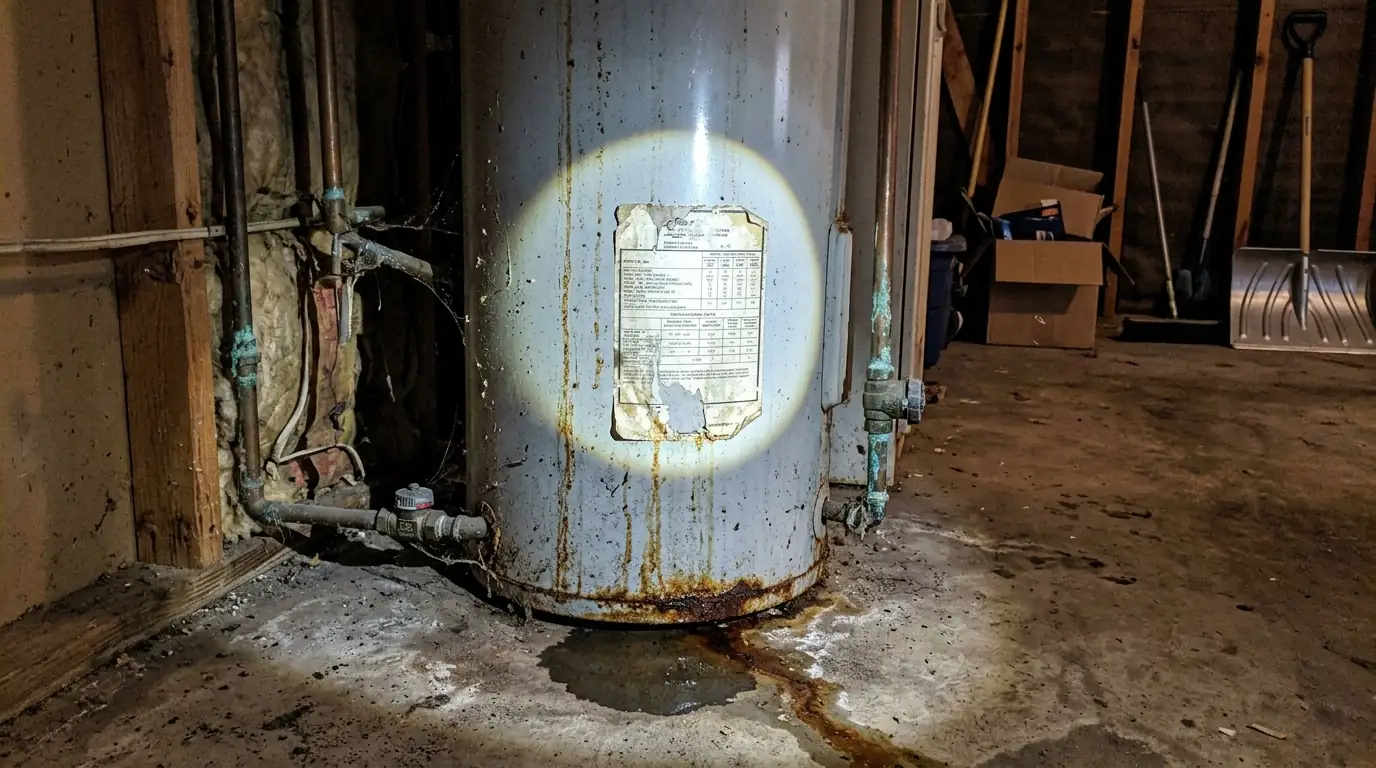
A tank water heater spends its whole life full of hot water under pressure, and eventually the steel gives out. When it goes, it often goes with a leak that soaks a basement carpet or a garage floor. The good news is that most tanks warn you first. If you know what to look for, you can plan the replacement, compare options and avoid an emergency. Here are the seven signs, roughly in order of how urgent they are.
Sign one: the tank is past its expected life span
Most gas and electric tank heaters last about 8 to 12 years. Hard water, high water pressure, high temperature settings and skipped maintenance push that toward the short end. Tanks that were flushed and had their anode rods replaced often last longer. Age alone doesn't mean a tank is failing, but once it passes about ten years, the other signs below deserve more weight.
To find the age, look at the label on the side of the tank for the serial number. Most manufacturers code the manufacture date into it, often with a letter for the month and two digits for the year, or with the year and week as the first four digits. Search the brand name and the words serial number date code to decode yours.
Signs two and three: rusty hot water and a metallic smell
If your hot water comes out brown or reddish and your cold water runs clear, the inside of the tank may be rusting. Every tank has an anode rod, a metal rod that corrodes on purpose so the steel tank doesn't. When the anode is used up, the tank starts rusting instead. Rusty hot water can also come from old galvanized pipe, so check whether it appears only at one faucet or everywhere.
A rotten egg smell from hot water only is a related clue. It's usually a reaction between the anode rod and bacteria or minerals in the water. It isn't always a sign of failure, and an anode replacement often cures it. But combined with age and rust, it adds to the case for replacement.
Signs four and five: rumbling noises and less hot water
Aurora's water is moderately hard, about 8 grains per gallon on average, and the minerals settle at the bottom of a tank as sediment. On a gas unit, water trapped under that layer flashes to steam when the burner fires, and you hear popping or rumbling. On an electric unit, the lower element can get buried and burn out. Either way, the sediment takes up space and makes the heater work harder.
The result is less usable hot water. If the second shower of the morning turns cold sooner than it used to, sediment or a failing part is often the reason. A flush may help on a younger tank. On an older one that was never flushed, the sediment may be hardened in place, and flushing can stir up debris or reveal a leak the sediment was sealing.
Once a month, take a flashlight and look at the floor around the base of the tank and under the drain valve. A small damp spot is easy to miss in a basement utility room or a garage closet, and it's often the earliest sign of a tank that is about to let go.
Signs six and seven: moisture and repeat repairs
Water around the base is the most urgent sign, but check where it is coming from before you assume the worst.
| Where the water is | Likely cause | Repairable? |
|---|---|---|
| Dripping from the relief valve pipe | Pressure or temperature too high, or a worn valve | Usually yes |
| Around the drain valve at the bottom | A loose or failing drain valve | Usually yes |
| At the pipe connections on top | A loose fitting or corroded nipple | Usually yes |
| Seeping from the tank body or bottom seam | The tank has rusted through | No, replace the heater |
| Condensation that dries quickly | Cold water in a humid room | Not a leak |
The seventh sign is a pattern of repairs. A thermocouple this year, a gas valve last year, an element the year before: each one is reasonable on its own, but together on an older tank they suggest the money would do more good going toward a new unit.
Why waiting for the leak usually costs more
It's tempting to run an old water heater until it quits. Sometimes that works out. More often, the tank fails at a bad time, and the replacement costs more than it would have as a planned job. An emergency swap can mean after-hours rates, a rushed choice of whatever unit is in stock, and cleanup from the water that came out of the tank first.
Location makes a big difference. A 50 gallon tank that lets go in an unfinished basement near a floor drain leaves a mess that a wet vacuum can handle. The same tank in a closet beside a finished basement bedroom, or in a garage over stored boxes, can ruin carpet, drywall and belongings. If your heater sits where a leak would do real damage, the case for replacing it on your schedule gets stronger as it ages.
Planning ahead also gives you time to think about upgrades: a different size, a tankless unit, better venting, or moving the heater somewhere easier to service.
How to decide between repair and replacement
- Find the age from the serial number.
- Note which of the seven signs you're seeing. One minor sign on a young tank usually means repair. Several signs on an older tank usually means replacement.
- Check the water around the base, and confirm whether it comes from the tank itself or from a fitting or valve.
- Compare the repair price with a replacement price, and think about how much more life the repair actually buys.
- Plan the replacement before it becomes an emergency. You get time to compare tank and tankless options, sizes and venting.
When you do replace, a few local details apply. The City of Aurora requires a permit for water heater replacement, with a plumbing inspection and an electrical inspection where it applies, and we pull that permit as part of the job. Gas units must be set up for high altitude according to the manufacturer and the code, since Aurora sits at about 5,471 feet. An expansion tank, a properly piped relief valve and a drain pan are worth asking about too.
- Before an old tank fails, know how to shut off its cold water valve and its gas or power.
- If the tank sits over a finished floor, a drain pan with a line to a floor drain, or a leak sensor, can limit damage.
- Keep the area around the heater clear so a leak shows up quickly and a plumber can work safely.
If your water heater is showing two or three of these signs, it's time to have a plumber take a look before the tank decides for you. Call us and we'll check the unit, tell you honestly whether a repair makes sense, and price the replacement options so you can choose with no water on the floor.
Questions readers ask about this
How do I read the date code on my water heater's serial number?
Most brands build the date into the serial number on the rating label. Some start with a letter for the month and two digits for the year, while others start with the year and the week. Because codes differ by brand, search the brand name with the words serial number date code, or call a plumber with the full serial number and model.
Can replacing the anode rod add years to an older water heater?
On a tank that hasn't started leaking, yes, it can. The anode rod corrodes in place of the tank, so replacing it before it's gone slows rust inside. It works best on tanks under about eight years old. Once a tank is rusting through or leaking from its body, a new anode won't fix it.
Is it safe to keep using a water heater that is rumbling loudly?
Usually it is safe in the short term, since the noise comes from sediment and steam bubbles. It does mean the tank is working harder and wearing faster. If the relief valve is also dripping, the water is very hot, or you smell gas, stop using it. If you smell gas, leave the house first, then call 911 or the gas utility from outside.
Services related to this guide
Water Heater Installation
New gas and electric tank water heaters sized for your household, set up for altitude, permitted, with the old tank hauled away.
Learn moreWater Heater Repair
No hot water, a leaking tank or a pilot that won't stay lit, fixed on gas and electric tank heaters.
Learn moreWater Heater Flush & Maintenance
Yearly tank flushing, anode rod checks and relief valve testing that keep a water heater running longer and quieter.
Learn moreRather have a plumber look at it?
Call any time. We answer around the clock.