Advice Center
Burst pipe? What to do in the first ten minutes
A burst pipe can push a startling amount of water into a house in a few minutes. What you do before help arrives decides how much of it soaks into floors and walls. Here is the order that matters.
By Mavis Vickery, Advice Center EditorUpdated October 18, 20266 minute read
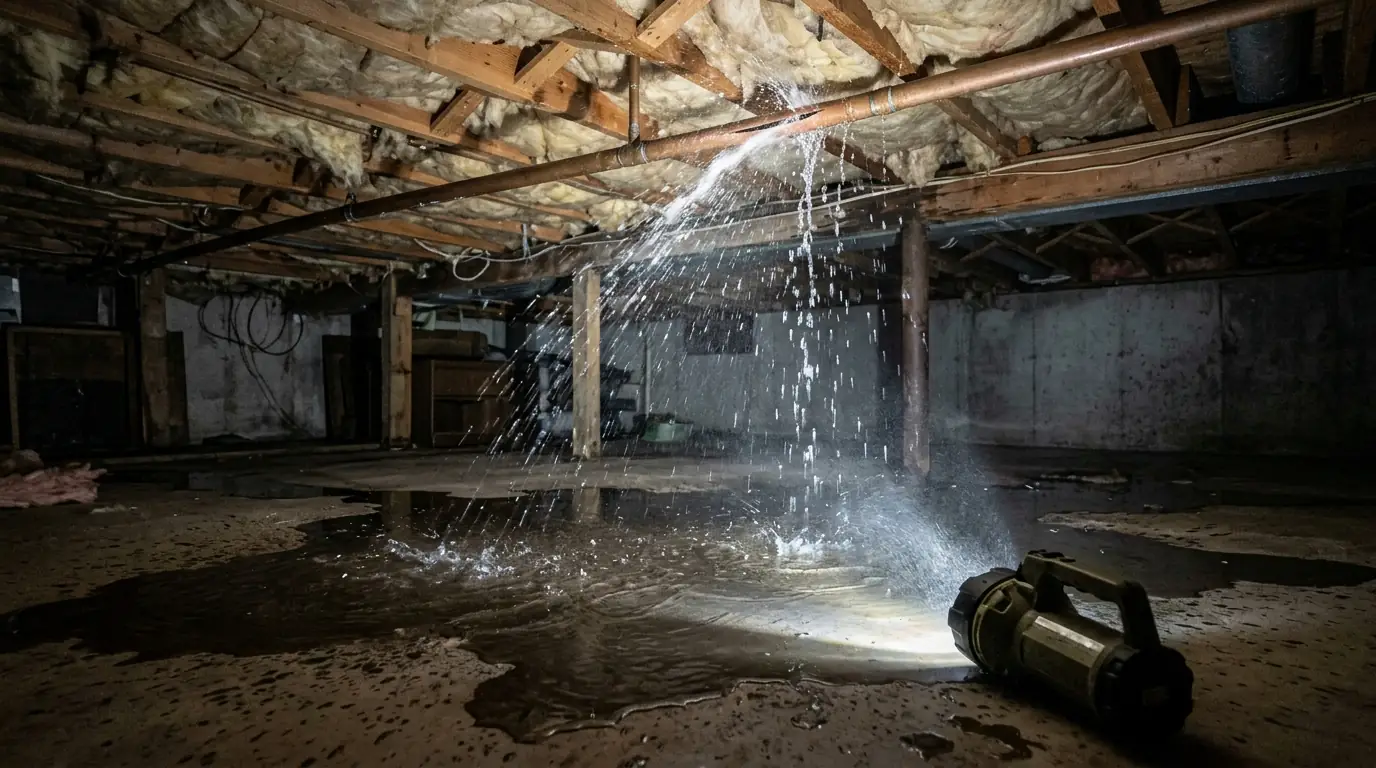
A split pipe doesn't drip politely. Under normal household pressure, a half inch line can push several gallons a minute across a floor, and a crack in a ceiling can bring down drywall in a hurry. The first ten minutes are about three things: stopping the water, keeping everyone safe, and limiting the damage. Read this now, while everything is dry, and you'll move faster if it ever happens.
Minute one: stop the water at the main
Go straight to the main water shutoff and close it. Don't grab towels first, and don't try to tape the pipe. Every second the valve stays open, more water comes in. In many Aurora homes the main is in the basement utility room on the street side, often near the water heater or the floor drain. Homes without basements usually have it in the garage or a utility closet near the water heater.
- A lever handle closes with a quarter turn, so the lever ends up crosswise to the pipe.
- A round wheel handle closes clockwise, usually several turns. Turn firmly but don't force it, since old gate valves can snap.
- If the leak is on a single fixture, such as a toilet supply or a sink line, its own small shutoff valve may stop it faster.
- If the main won't close, or the leak is between the floor and the valve, call Aurora Water to shut off service at the meter, and call a plumber right after.
Minutes two to four: make the area safe
Water and electricity are the biggest danger. If water is near outlets, a power strip, a furnace, light fixtures or the breaker panel, stay out of the wet area. Shut off power at the panel only if you can reach it while standing on a dry floor. If you can't, leave it alone and tell the utility or the plumber when they arrive.
Look up, too. A sagging ceiling with a bulge of water above it can fall without warning. Keep people and pets out from under it. Poking a small hole at the lowest point of the bulge, with a bucket underneath, lets the water drain in a controlled way, but only do it if you can stay out from under the sag.
If you smell gas at any point, for example because water or a fallen ceiling has reached a gas appliance or its piping, stop what you are doing. Leave the house first, without touching light switches, then call 911 or the gas utility from outside.
Minutes four to six: drain the lines and protect the water heater
- Open a faucet on the lowest level of the house, such as a basement laundry tub or an outside spigot. This drains the water left in the pipes away from the break.
- Open a cold faucet on an upper floor to let air into the system so the pipes drain faster.
- Set a gas water heater's control to pilot or off, or switch off the breaker for an electric heater. A heater shouldn't run if its supply is cut and the tank may begin to drain.
- Flush toilets once, if you need to, but don't keep using fixtures until the line is repaired.
Keep a flashlight, a pair of rubber boots, a few old towels and a bucket in the same spot as your main shutoff. When a pipe breaks at 2 a.m., you won't want to search the house for any of them.
Minutes six to ten: limit the damage and document it
Once the water is stopped, damage control starts. Water spreads under baseboards, into carpet pad and through subfloors, and the sooner you move it, the less you lose. Before you clean up, take photos and video of the break, the standing water and anything that got wet. Insurance adjusters want to see the scene as it was.
| Task | Why it matters |
|---|---|
| Photograph the break and every wet area | Supports an insurance claim and shows the extent of the damage |
| Move electronics, rugs, boxes and furniture to a dry room | Stops wicking and staining, and saves items that can still be dried |
| Put foil or wood blocks under furniture legs | Keeps finish and stain from bleeding into wet carpet |
| Mop or wet vacuum standing water | Shortens drying time for floors and walls |
| Open cabinets and closet doors near the leak | Lets trapped moisture escape |
| Run fans and a dehumidifier once it is safe to use power | Slows mold growth, which can start within a day or two |
Save a piece of the failed pipe or fitting if it comes free, and write down the time you discovered the leak. Both details help with an insurance claim and help a plumber see why it failed.
What not to do while you wait for help
Panic leads to a few common mistakes. Most of them either make the damage worse or create a new hazard, so it's worth knowing them ahead of time.
- Don't use a torch, a heat gun or an open flame to thaw a frozen section near the break. It can start a fire inside the wall.
- Don't run a regular household vacuum on wet floors. Use a wet vacuum made for water, plugged into a dry outlet.
- Don't walk through standing water in a room where outlets or cords are submerged.
- Don't turn the main back on to test whether the leak stopped. Wait until the pipe is repaired or capped.
- Don't throw away wet items before you photograph them, since your insurer may want to see them.
- Don't assume a small break means small damage. Water travels inside walls and under flooring, so check the rooms below and beside the leak.
If you have to leave the house while you wait, keep the main closed and the heat on. In winter, a house with the water off and the heat off is an invitation for more pipes to freeze before the repair is done.
Why pipes burst, and what comes next
In Aurora, winter is the main season for burst pipes. An arctic front can drop temperatures far below zero in a few hours, and pipes in garages, crawlspaces, exterior walls and attics freeze first. Ice itself rarely splits the pipe at the frozen spot. It pushes pressure toward a closed faucet, and the pipe gives way somewhere in between. That's why many breaks show up when the pipe thaws and water starts moving again, sometimes days after the cold snap.
Other causes include old galvanized pipe that has rusted thin, failed polybutylene fittings in homes built roughly 1978 to 1995, a washer hose that cracked with age, and water pressure that runs too high. A good repair fixes the break and also answers why it happened, so it doesn't happen again in the same spot.
- If the break came from freezing, ask what can be done to protect that run: insulation, sealing air leaks or rerouting the pipe into heated space.
- If it came from old pipe, ask how much of the system shares the same material and age.
- If pressure is high, a pressure reducing valve may be due for service or replacement.
- Keep the plumber's invoice. Your insurer will want it, and so will a future buyer.
A burst pipe is an emergency, and you shouldn't wait until morning to get it looked at if the water is off to the whole house or a ceiling is soaked. Call us, day or night, and we'll get the water stopped for good, repair the break and help you figure out why it happened.
Questions readers ask about this
Should I turn the main water back on after a pipe bursts so I can use the bathroom?
Not until the broken section is repaired or isolated. If the break is on a line with its own shutoff, a plumber can sometimes close that valve or cap the pipe so the rest of the house can have water again. Until then, keep the main closed and use bottled water and a neighbor's bathroom if needed.
Does homeowners insurance usually cover water damage from a burst pipe?
Many policies cover sudden, accidental water damage, such as a pipe that splits in a freeze. They often exclude slow leaks, wear and tear, and damage from a home left without heat. Coverage for the pipe repair itself may differ from coverage for the damaged floors and walls. Call your insurer early and keep photos and invoices.
How long does it take for mold to grow after a burst pipe?
Mold can begin growing within a day or two on wet drywall, carpet pad and wood if they aren't dried. That's why fast water removal, fans and a dehumidifier matter so much. If drywall or insulation stayed soaked for more than a day or two, it's often safer to cut it out and replace it than to try to dry it in place.
Services related to this guide
Burst Pipe Repair
Split and burst water pipes stopped, cut out and repaired fast, day or night, with damage kept to a minimum.
Learn moreEmergency Plumber
Burst pipes, sewage backups, overflowing toilets and no water at night, handled 24/7 across Aurora and the east metro.
Learn moreLeak Detection
Hidden water leaks pinpointed inside walls, ceilings, floors and yards with acoustic, thermal and pressure testing, with minimal opening up.
Learn moreRather have a plumber look at it?
Call any time. We answer around the clock.