Advice Center
Why a sewer scope belongs in every Aurora home inspection
The pipe that carries everything out of the house runs where no home inspector can see it. A sewer scope puts a camera inside it for a modest fee, and in Aurora the results can change what you offer.
By Mavis Vickery, Advice Center EditorUpdated October 18, 20266 minute read
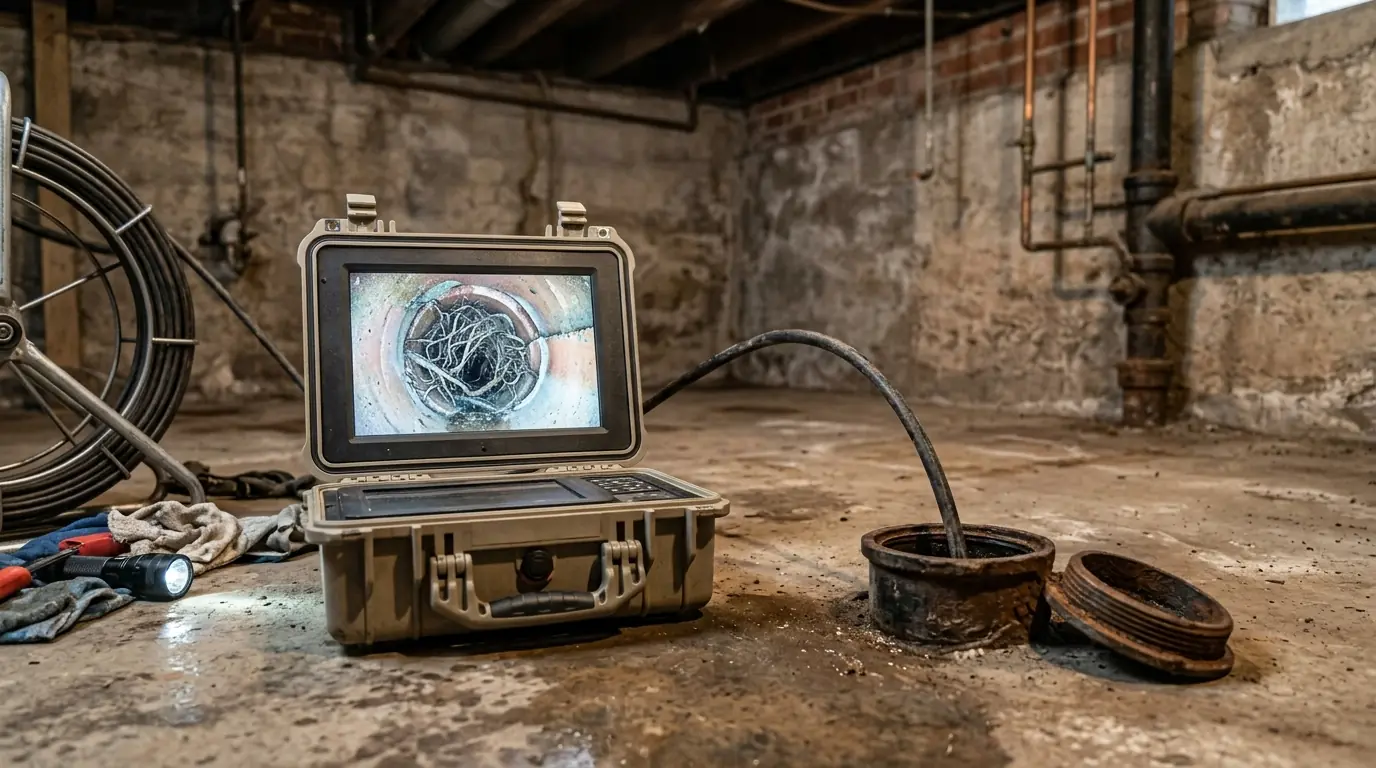
A standard home inspection covers the roof, the furnace, the electrical panel and the visible plumbing. It stops at the foundation. The sewer lateral, the buried pipe that carries every flush and drain from the house to the city main, runs underground where no inspector can see it. In Aurora that pipe can be 70 years old, made of clay, and sitting in soil that has been moving it for decades. A sewer scope is a camera inspection of that line, and for a buyer it is one of the best values in the whole transaction.
Why the sewer line is the buyer's problem in Aurora
Under Aurora City Code, the property owner owns and maintains the sewer service line from the building to the tap on the public main, including the tap saddle. When you close on a house, you take on that whole run of pipe, including any part that runs under the sidewalk or street. If it is cracked, sagging or full of roots, the repair is yours. Homeowners insurance often limits or excludes coverage for wear and tear on buried pipe, so it's wise not to count on a policy to pay for a failing lateral.
Front Range soil adds to the risk. The Colorado Geological Survey calls expansive soil Colorado's most significant geologic hazard and lists disrupted sewer lines among its effects. Clay that swells and shrinks with the seasons can open joints, offset sections and create sags that catch waste. None of that shows from the yard until it causes a backup.
What a sewer scope actually shows
A camera on a flexible push cable goes into the line through a cleanout and travels toward the main while recording video. A locator in the camera head lets the operator mark the depth and the position of problems on the surface. A good report notes the distance from the cleanout to each issue.
| What the camera finds | What it usually means | How serious it tends to be |
|---|---|---|
| Light root hairs at a joint | Roots found a small gap | Low to moderate; clearing and monitoring may be enough |
| Heavy root mass | A joint is open, and the roots are blocking flow | Moderate to high, with repeat clogs likely |
| Offset joint | Soil movement shifted a section | Depends on size; large offsets catch waste |
| Belly or sag | A section sank and holds standing water | Moderate to high if long or deep |
| Crack or fracture | Rigid pipe broke under pressure | High if it is open, leaking or growing |
| Collapse or deformed pipe | The line failed structurally | High; repair is usually needed soon |
| Heavy scale in cast iron | Corrosion inside an older pipe | Moderate; the line may be nearing its end |
Which Aurora homes need a scope the most?
Every house benefits, but some carry more risk. Homes in Original Aurora and the northwest part of the city often date from the 1940s and 1950s, with clay or cast iron laterals. Central Aurora's 1960s and 1970s ranches and split-levels often have cast iron drains and laterals that are reaching the end of their expected life. Large mature trees in the front yard raise the odds of roots in any older line.
Newer homes are not exempt. A PVC lateral in a 2000s neighborhood can still have a belly if the trench settled after construction, or damage from later landscaping, fence posts or utility work. A scope is quick, and it is much cheaper than a surprise repair in your first year in the house.
Ask for the full video file, not just a written summary. Watch the whole thing with the inspector if you can, and keep the file. If you later need a repair, any plumber can see exactly what was there on the day you bought the house.
How to get a useful scope during the inspection window
- Order the scope as soon as your offer is accepted, because inspection periods are short and schedules fill up in busy seasons.
- Confirm there is a usable cleanout. Many older Aurora homes have one in the basement floor near the front wall. If there isn't one, the camera may need to go through a toilet flange or a roof vent, which takes more time.
- Ask the seller to run water through the drains before the scope. A line flushed with water shows bellies more clearly, because standing water pools where the pipe sags.
- Make sure the camera goes all the way to the main, or as close as it can reach, not just a few feet past the foundation.
- Get the report with distances and depths, plus the video, before your inspection objection deadline.
If the line is full of roots and the camera can't get through, the inspector may recommend clearing it and scoping again. That second look matters. A clog can hide a broken pipe right behind it.
What to do with bad news
A scope that finds a problem doesn't have to end the deal. It gives you facts to negotiate with. Common outcomes include a price reduction, a seller credit toward the repair, or the seller making the repair before closing. Each has tradeoffs.
- A credit lets you choose who does the work and how, which is often the better deal for the buyer.
- A seller repair can be done quickly and cheaply, so ask for the invoice, any permit and a follow-up camera video showing the finished work.
- For a single offset or crack, a spot repair may be enough. For a line with many problems, get a price for a full replacement or a liner as well.
- Get the repair estimate in writing during the inspection window, so your objection is based on a real number.
Sewer line replacement usually requires a permit and inspection in Aurora and nearby cities, and Colorado law requires a call to Colorado 811 before digging. A repair done right will have both behind it, and the paperwork belongs in your closing file.
What a scope can't tell you
A camera shows the inside surface of the pipe. It can't always show a pipe that is leaking into the soil without visible damage, and it can't predict how much the clay will move next spring. A line that looks fair today is still worth scoping again every few years, especially if it is clay or cast iron. Think of the first scope as a baseline you can compare against later.
It also doesn't cover everything else that drains. Basement floor drains, a sewage ejector pit, a sump pump discharge and branch lines under the slab are separate items. If the house has a finished basement with a bathroom below the level of the sewer, ask the inspector to check the ejector pump and its alarm, too.
If you're under contract on an Aurora home, or you got a scope report and aren't sure what the footage means, call us. We'll run the camera through the line, walk you through what we see, and price any repair so you can make a clear decision before your deadline passes.
Questions readers ask about this
Who usually pays for the sewer scope in an Aurora home purchase?
The buyer usually orders and pays for the scope as part of the inspection period, the same way they pay for the general home inspection. Some sellers order one before listing so they can fix problems or disclose them up front. If a seller offers you their own scope video, it's still worth getting your own if the line is older.
Can a seller hide sewer problems by cleaning the line before a scope?
A fresh cleaning can remove roots and debris for a while, which makes a line look better than it will in six months. It can't hide cracks, offsets, bellies or a collapse, though. If the video shows a freshly scoured pipe with cut root stubs at the joints, ask the seller when the line was last cleaned and how often it has needed it.
Is a sewer scope needed for a condo or townhome?
It depends on how the building is plumbed. Many condo buildings share a main sewer line that the HOA maintains, so a scope of your unit alone may not tell you much. Townhomes with their own lateral are a different story, because that line may be the owner's responsibility. Read the HOA documents to see who owns the sewer line before you decide.
Services related to this guide
Sewer Camera Inspection
A waterproof camera shows roots, cracks, sags and pipe material in your sewer line, with recorded video you keep.
Learn moreSewer Line Replacement
Worn out clay, cast iron or Orangeburg laterals replaced end to end, by open trench or trenchless method.
Learn moreMain Sewer Line Cleaning
Backups at the lowest drain, tree roots and buildup cleared from the main lateral between your house and the city main.
Learn moreRather have a plumber look at it?
Call any time. We answer around the clock.