Advice Center
What Front Range clay soil does to your sewer line
The clay under many Aurora yards swells when wet and shrinks when dry, year after year. That slow movement bends, separates and sags buried sewer pipe. Here is how it happens and what you can do about it.
By Mavis Vickery, Advice Center EditorUpdated October 18, 20266 minute read
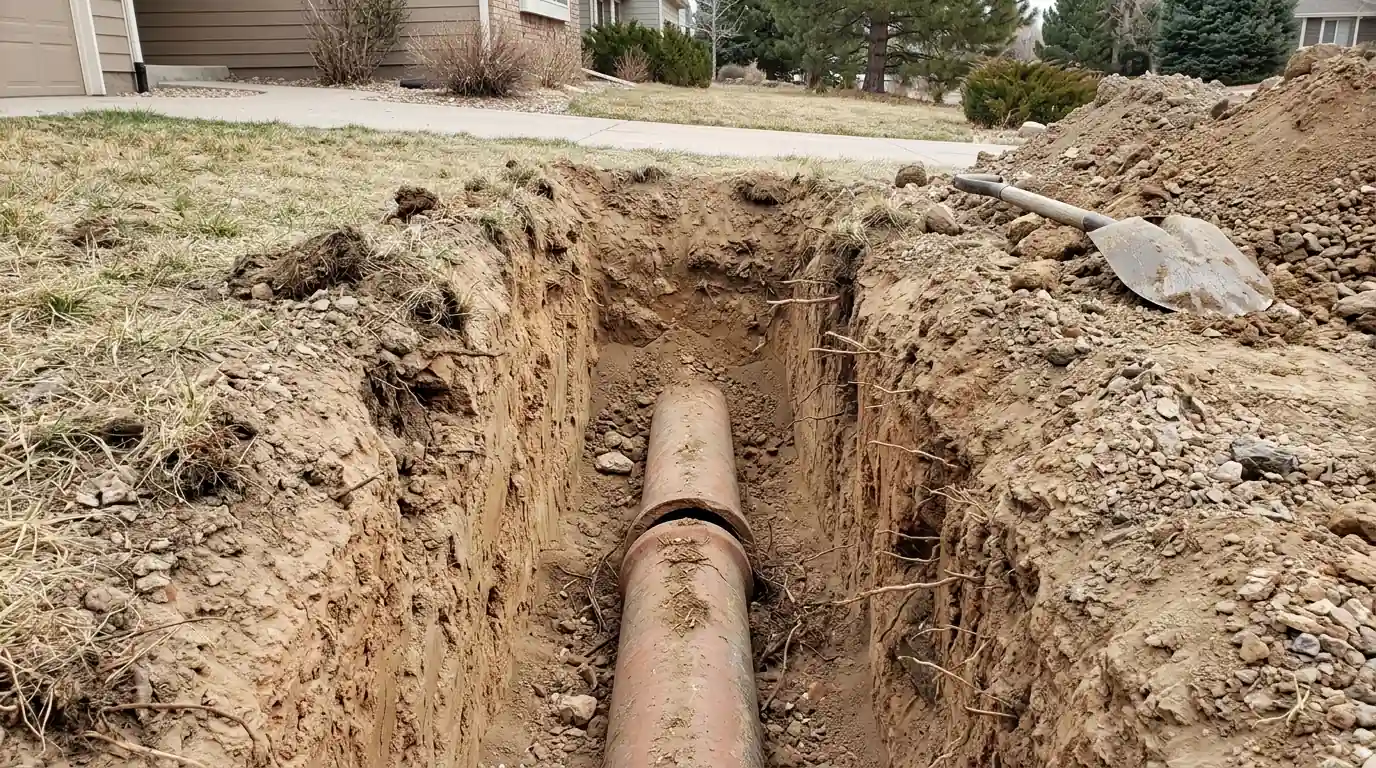
Most people think of tree roots when a sewer line fails, and roots are a real problem. But much of the damage under Front Range yards starts with the ground itself. The soil beneath many Aurora homes contains expansive clay that swells when it gets wet and shrinks as it dries. Over decades, that movement works on the sewer pipe buried in it, opening joints, pulling sections out of line and creating low spots where waste collects. Understanding the process helps you spot trouble early and make better repair choices.
Why does Front Range clay move so much?
Clays like bentonite are made of tiny, flat mineral particles that soak up water between their layers. When they get wet, they swell. When they dry, they shrink and crack. The Colorado Geological Survey calls expansive soil Colorado's most significant geologic hazard, and it lists disrupted pipelines and sewer lines among the effects, along with damage to foundations, basements and slabs.
The movement follows the seasons. Spring snowmelt and lawn watering push moisture into the soil, and dry summers and winters pull it back out. The same soil may rise and fall many times over the life of a house. The top few feet move the most, and that is exactly where a sewer lateral runs on its way from the house to the main.
What that movement does to different pipe materials
How a sewer line handles moving soil depends on what it is made of and how it was joined.
| Pipe material | Common in | How clay soil affects it |
|---|---|---|
| Vitrified clay | Homes from the 1940s and 1950s | Short sections with many joints; joints open and offset, and roots enter the gaps |
| Cast iron | Homes from the 1950s through the 1970s | Strong but rigid; joints shift, and corrosion inside thins the pipe over time |
| Orangeburg (fiber pipe) | Some mid-century homes | Soft wall that deforms and collapses under pressure |
| PVC or ABS plastic | Homes from about the 1980s onward | Long sections with glued joints; resists cracking but can still sag into a belly |
In Original Aurora and much of central Aurora, laterals are often clay or cast iron, so many of the joints along the line have had 50 or more years of soil movement working on them. Newer plastic lines in southeast and northeast Aurora handle movement better, but they are not immune. Poor bedding during construction, or soil that settles after a trench was backfilled, can leave a stretch of plastic pipe sagging below grade.
Bellies, offsets and cracks: the damage clay leaves behind
- Offset joints: one section shifts up, down or sideways relative to the next. Waste and paper catch on the lip, and roots find the opening.
- Bellies: a section sinks and forms a low spot that holds water. Solids settle there, and that spot clogs again and again.
- Cracks and fractures: rigid pipe can't flex, so it breaks under uneven pressure, especially near the foundation where the house and yard move differently.
- Separated joints: the pipe pulls apart enough to leak sewage into the soil, which softens the ground and can let the pipe settle further.
- Collapse: old fiber pipe and badly corroded cast iron can give way completely, which stops the drain.
If a backup always clears with a snake and returns a few months later, that pattern often points to a belly or an offset rather than a simple clog. A camera inspection shows which one, so you stop paying to clear the same spot.
What are the warning signs inside the house?
Sewer problems usually show up first at the lowest drain in the house, often a basement floor drain or a basement shower. Watch for gurgling in a toilet when the washer drains, water rising in the floor drain during laundry, slow drains on every fixture at once rather than just one, and a sewer smell in the basement. Outside, a patch of lawn that stays soggy or grows unusually green above the sewer line can mean the pipe is leaking into the soil.
- Note which drains are slow and when. One slow sink is a branch clog. Several fixtures at once, especially on the lowest level, points to the main line.
- Find your cleanout. It is usually a capped pipe in the basement floor near the front wall, or outside near the foundation. A plumber uses it to clear and inspect the line.
- Have the line scoped. A camera inspection shows the material, joint condition, any bellies or roots, and the distance to each problem from the cleanout.
- Keep the video and the footage notes. They help you compare repair options and track whether a problem is getting worse.
Who is responsible, and what are the repair options?
Under Aurora City Code, the property owner owns and maintains the sewer service line from the building to the tap on the public main, including the tap saddle. That means a cracked or sagging lateral under your yard or even under the street is the owner's repair. Homeowners insurance policies vary on what they cover, so it's worth asking your agent before you need to know.
The right repair depends on what the camera shows. A single offset joint or crack can often be fixed by digging one hole and replacing a short section. A line with many open joints may be a good candidate for a cured-in-place liner, which creates a new pipe inside the old one without a long trench. A line with a serious belly usually needs that section dug up and re-bedded, because a liner follows the existing shape and keeps the low spot. Full replacement makes sense for collapsed fiber pipe or lines with damage along most of their length.
Whatever the method, ask about bedding. New pipe laid on properly compacted gravel holds its grade far better in expansive clay than pipe dropped into a trench and covered with the same clay that came out. Colorado law requires a call to Colorado 811 before any digging, so buried gas, electric and communication lines get marked first.
Can you reduce the stress on your sewer line?
You can't change the soil, but you can keep its moisture steadier. Direct downspouts several feet away from the foundation and away from the path of the sewer line. Avoid heavy watering directly over the lateral, and keep big, thirsty trees well clear of it. Keep grease, wipes and paper towels out of the drains, since an offset joint that would pass clean water will snag them.
A backwater valve is worth considering if your basement has a floor drain and the line has backed up before. It lets wastewater leave the house but closes when sewage tries to flow back in from a blocked or overloaded line. It doesn't fix a cracked or sagging lateral, but it can keep a backup in the yard from turning into one in your finished basement. It needs to be accessible and checked once a year so it doesn't stick.
If you're seeing repeat backups, gurgling at the lowest drains or a soggy strip of lawn, it's time to have the line looked at by a plumber before a slow problem becomes a basement full of sewage. Call us and we can run a camera through the line, show you what the clay has done, and lay out the repair choices that fit what we find.
Questions readers ask about this
Does expansive clay also cause slab leaks in water lines?
It can add to the risk. When soil under a slab swells and shrinks unevenly, the concrete moves, and water lines running through or under it take the stress, especially at points where they pass through the slab. Copper lines in contact with concrete can also wear over time. Unexplained water bills, warm spots on the floor and the sound of running water are the usual clues.
How often should I have an older clay sewer line scoped?
If the line has never given you trouble, a camera inspection every few years is reasonable for a clay or cast iron lateral, and before you buy or sell the home. If it has needed clearing before, scope it after each clearing so you know whether roots or a joint problem caused it. Repeat footage shows whether a defect is stable or getting worse.
Is a cracked sewer line under the street my responsibility in Aurora?
Under Aurora City Code, the owner is responsible for the sewer service line all the way from the building to the tap on the public main, including the tap saddle. That can include pipe under a sidewalk or street. The city may choose to repair portions in the public right of way, so it's worth contacting the city once the camera shows where the damage is.
Services related to this guide
Sewer Camera Inspection
A waterproof camera shows roots, cracks, sags and pipe material in your sewer line, with recorded video you keep.
Learn moreSewer Line Repair
A cracked, offset or sagging section of sewer pipe dug up and replaced on its own, without redoing the whole line.
Learn moreTrenchless Sewer Repair
Pipe lining and pipe bursting renew a damaged sewer line through small access points, saving driveways, trees and lawns.
Learn moreRather have a plumber look at it?
Call any time. We answer around the clock.